
 Activité, Système Moteur & Coordination
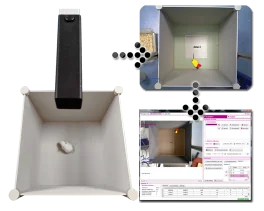
 Douleur - Allodynie/Hyperalgésie Thermique
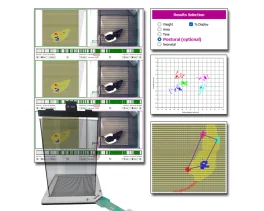
 Douleur - Spontanée - Déficit de Posture
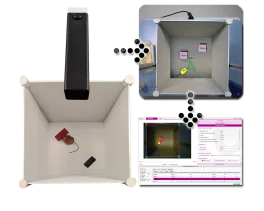
 Douleur - Allodynie/Hyperalgésie Mécanique
 Anxiété & Dépression
 Apprentissage/Mémoire - Attention - Addiction
 Physiologie & Recherche Respiratoire
 Métabolisme & Nutrition


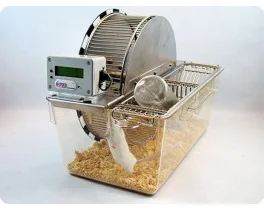


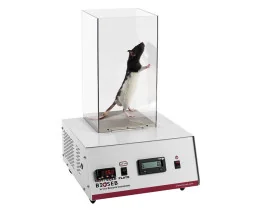
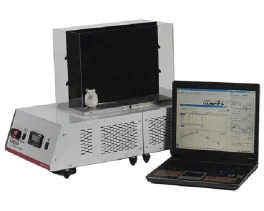



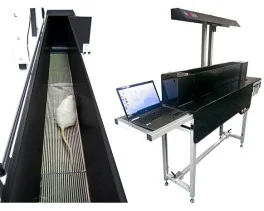





















 Douleur
 Système Nerveux Central (SNC)
  Neurodégénérescence
 Système sensoriel
 Système moteur
 Troubles de l'humeur
 Autres pathologies
 Système musculaire
 Articulations
 Métabolisme
 Thématiques transversales
 Congrès & Meetings 2026
 Authors
Xinying Zhang, Farin Bourojeni, Samuel Ferland, Anna McFarlane, Kieran A. Boyle, Madoka Koyanagi, Marie-Eve Paquet, Andrew J. Todd, Junichi Hachisuka, Yves De Koninck, Feng Wang, Artur Kania
Lab
McGill University; School of Psychology & Neuroscience; McGill University; McGill University; UK; Brown University; Morgridge Institute; Rutgers University; Stockholm University; The Rockefeller University; Berkeley; University of Guelph; University of Hong Kong; University of Sydney
Journal
bioRxiv
Abstract
Abstract
Cutaneous thermosensation is a fundamental sense allowing discrimination of external temperature changes and driving adaptive responses essential for survival and well-being. This sensory process begins with the activation of peripheral thermoreceptors, which encode the quality and intensity of thermal stimuli into neuronal activity that is further integrated by spinal cord circuits and relayed to supraspinal centres through the anterolateral tract (ALT). While classical experiments identified thermal responsive ALT neurons in the superficial spinal dorsal horn, the functional logic of innocuous temperature relay remains poorly understood. We show that, in mice, the majority of Phox2a-lineage lamina I ALT are selectively tuned to innocuous warming or cooling, and receive direct inputs from peripheral thermoreceptors. Their genetic ablation, chemogenetic or optogenetic manipulation impaired temperature discrimination. Our findings contrast with the previous finding that the majority of ALT neurons being mechano- and thermo-nociceptive and provide novel evidence for the existence of a large ensemble of genetically defined warming- and cooling- responsive ALT neurons. The large representation of innocuous temperature in supraspinal-relaying ALT neurons indicates substantial spinal amplification of thermal information and underscores the importance of innocuous thermosensation in the ascending sensory pathway.
Keywords/Topics
external temperature changes; thermal stimuli; neuronal activity; thermal responsive alt neurons; innocuous temperature relay; mice; thermal information; discrimination; adaptive responses; survival
Source :
https://www.biorxiv.org/content/10.64898/2026.01.19.700348.abstract