 Activité, Système Moteur & Coordination
 Douleur - Allodynie/Hyperalgésie Thermique
 Douleur - Spontanée - Déficit de Posture
 Douleur - Allodynie/Hyperalgésie Mécanique
 Anxiété & Dépression
 Apprentissage/Mémoire - Attention - Addiction
 Physiologie & Recherche Respiratoire
 Métabolisme & Nutrition

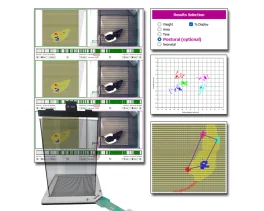
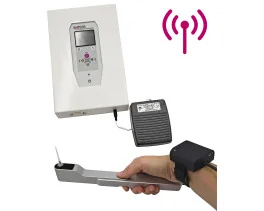
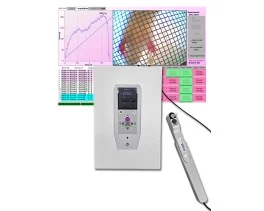
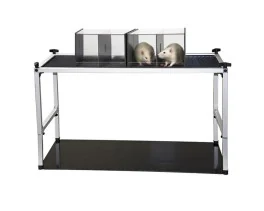



 Douleur
 Système Nerveux Central (SNC)
  Neurodégénérescence
 Système sensoriel
 Système moteur
 Troubles de l'humeur
 Autres pathologies
 Système musculaire
 Articulations
 Métabolisme
 Thématiques transversales
 Congrès & Meetings 2026
 Authors
Lin, Lilian Tsai-Wei, Shenouda, Marc, McGoldrick, Philip, Lau, Agnes, Robertson, Janice
Lab
Journal
Acta Neuropathologica Communications
Abstract
Cytoplasmic aggregates of the predominantly nuclear TAR DNA-binding protein 43 (TDP-43) are a pathological hallmark of amyotrophic lateral sclerosis (ALS) and frontotemporal dementia (FTD) cases caused by G4C2 hexanucleotide repeat expansions in C9orf72 (C9-ALS/FTD). While these repeat expansions are associated with both gain- and loss-of-function mechanisms, the contribution of C9orf72 loss of function to disease pathogenesis remains unclear. C9orf72 has been shown to regulate autophagy, and its deficiency has been shown to exacerbate phenotypes in gain-of-function G4C2 models, implicating impaired autophagic clearance in disease pathogenesis. Here, we directly test whether C9orf72 deficiency exacerbates TDP-43 pathology and neurodegeneration in vivo. Using AAV9-vectors to drive neuron-specific expression of pathologically relevant C-terminal species of TDP-43, TDP-35 and TDP-25, we established models of TDP-43 pathology that recapitulate key disease features, including cytoplasmic aggregates, motor and cognitive decline, and neuronal loss. TDP-25 expression in particular produced robust, abnormally phosphorylated, ubiquitinated and p62-labelled cytoplasmic aggregates, modelling TDP-43 pathology in disease. Loss of C9orf72 in TDP-25-expressing mice accelerated the onset of motor deficits, increased neurodegeneration, and impaired the autophagic response to TDP-25 expression. These findings reveal that C9orf72 deficiency disrupts autophagy and exacerbates TDP-25-mediated toxicity in vivo, supporting a contributory role for C9orf72 loss-of-function in driving neurodegeneration in C9-ALS/FTD.
Keywords/Topics
Neurodegeneration; Amyotrophic lateral sclerosis; Frontotemporal dementia; TAR DNA-binding protein 43; C9orf72; Protein aggregation; Autophagy
BIOSEB Instruments Used:
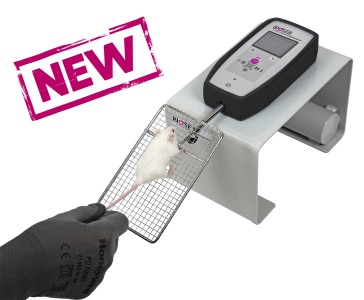
Grip strength test (BIO-GS4)
Source :
https://link.springer.com/article/10.1186/s40478-025-02061-5