
 Activité, Système Moteur & Coordination
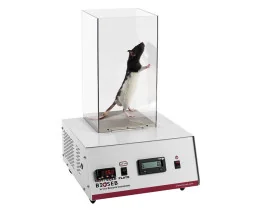
 Douleur - Allodynie/Hyperalgésie Thermique
 Douleur - Spontanée - Déficit de Posture
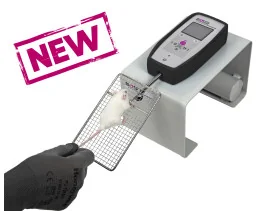
 Douleur - Allodynie/Hyperalgésie Mécanique
 Anxiété & Dépression
 Apprentissage/Mémoire - Attention - Addiction
 Physiologie & Recherche Respiratoire
 Métabolisme & Nutrition

























 Douleur
 Système Nerveux Central (SNC)
  Neurodégénérescence
 Système sensoriel
 Système moteur
 Troubles de l'humeur
 Autres pathologies
 Système musculaire
 Articulations
 Métabolisme
 Thématiques transversales
 Congrès & Meetings 2026
 Authors
Ammar Haouat, Habiba Rechek, Mohamed T.T. Derouiche, Adel Krid, Kaouther Hamaidia, Noureddine Soltani, Artur M.S. Silva, Diana C.G.A. Pinto, M.S. Nedjimi
Lab
Journal
Bulletin of the Chemical Society of Ethiopia
Abstract
In the present study, the phenolic content ofInula viscosa, a medicinal plant traditionally used to treat inflammation in Algeria, was determined using ultra-high-performance liquid chromatography coupled with a diode array detector and an electrospray mass spectrometer (UHPLC-DAD-ESI-MS2). The anti-inflammatory activity was evaluatedin vitrousing a nitric oxide scavenging assay andin vivousing an experimental model of carrageenan-induced acute inflammation. A tail pressure test was used to assess the analgesic activity. Additionally, anin-silicostudy was conducted to investigate further the interaction mechanisms between 1,5-O-dicaffeoylquinic acid (1,5-O-CQA), the main compound identified, and cyclooxygenases 1 and 2, two enzymes linked to inflammation. The results showed that the aqueous extract was rich in caffeoyl acid derivatives, mainly caffeoyl hexaric acids, described for the first time in this species. The biological activity assays demonstrated thatI. viscosaexhibited strong anti-inflammatory and analgesic activities compared to ascorbic acid, a powerful antioxidant that can reduce inflammation by neutralizing free radicals. The main compound identified in theI. viscosaextract showed high affinity for the binding sites of cyclooxygenases 1 and 2 in the molecular docking study. Overall, the findings of this study further support the traditional use ofI. viscosaas a remedy for inflammatory diseases.
Keywords/Topics
Analgesic activity; Anti-inflammatory activity; Inula viscosa; Molecular docking
Source :