 Activité, Système Moteur & Coordination
 Douleur - Allodynie/Hyperalgésie Thermique
 Douleur - Spontanée - Déficit de Posture
 Douleur - Allodynie/Hyperalgésie Mécanique
 Anxiété & Dépression
 Apprentissage/Mémoire - Attention - Addiction
 Physiologie & Recherche Respiratoire
 Métabolisme & Nutrition













 Douleur
 Système Nerveux Central (SNC)
  Neurodégénérescence
 Système sensoriel
 Système moteur
 Troubles de l'humeur
 Autres pathologies
 Système musculaire
 Articulations
 Métabolisme
 Thématiques transversales
 Congrès & Meetings 2026
 Authors
Priscilla Tjandra, Bethany Andoko, Jooyoung Kim, Andreana Gomez, Sonya Sar, Megha Aepala, Tiffany Pham, Darren Dumlao, Hope Welhaven, Kelsey Collins
Lab
Journal
Research Square
Abstract
Eicosanoids can be triggered by leptin in the synovium58and contribute to the perception of pain through cytokine and COX2 activity28,29,31,58. As such, eicosanoids are the targets in NSAID treatment, such as celecoxib, for OA pain. Interestingly, celecoxib has known sexually dimorphic responses in treatment efficacy. Male Sprague-Dawley rats demonstrate better pain relief compared to females59. Because NSAIDS can modulate the complement system24, we utilized a targeted lipidomics panel to understand how eicosanoids are mediated by FD in response to injury and OA disease entrenchment. Moderate overlap of eicosanoid profiles in serum and synovial fluid for both time points suggests that eicosanoid changes occur in both serum and synovial fluid but in a time-dependent manner. As expected, PLS-DA plots show distinct clusters at 2 weeks but more overlap at 8 weeks due to FD’s role in activating the alternative pathway in response to tissue injury60. Furthermore, lower levels of wound-healing factor 12-HHT were measured inFD−/−compared to WT after DMM. These findings suggest that FD likely plays a bigger role in the acute inflammatory phase following DMM. Differences were detected in the serum and synovial fluid at this early time point, highlighting both the local and systemic effects of FD after DMM and further supporting the paradigm that OA is a systemic disease that affects the rest of the body, and can be affected by tissues outside the joint7,11. Strikingly, eicosanoid profiling demonstrated that loss of FD results in the downregulation of pain suppression and upregulation of pain-driving factors that may be acting synergistically and explain the strong pain phenotype measured in these studies. The combined effects of reducing inhibitory factors and additive effects of pain driving factors are concordant with the pronounced pain phenotype inFD−/−. However, because pain levels were similar betweenFD−/−male and female mice, we focused on analyzing eicosanoid profiles in male mice. Our future work will investigate differences in the targeted eicosanoid profile and untargeted metabolome of femaleFD−/−and WT mice to better gain insight into how FD may be influencing pain in OA.
Keywords/Topics
pain
BIOSEB Instruments Used:
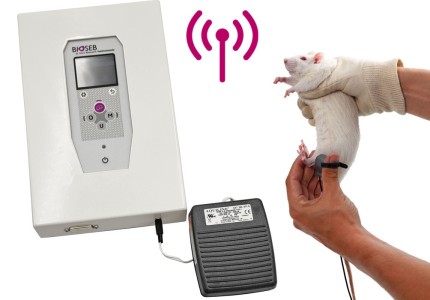
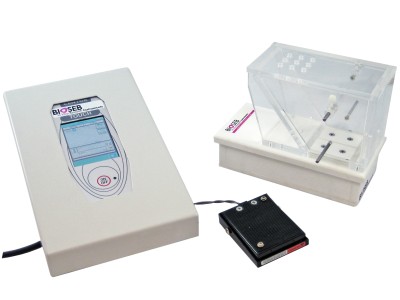
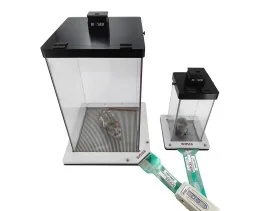
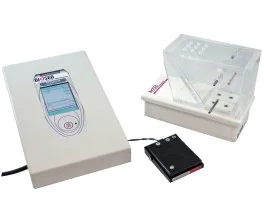
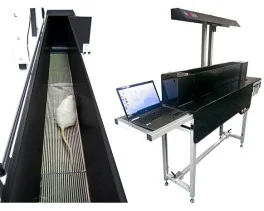
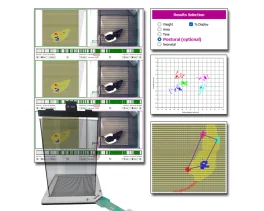
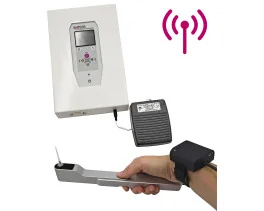
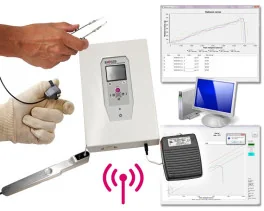
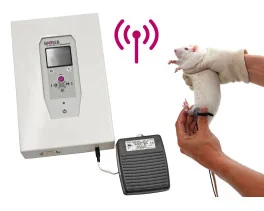
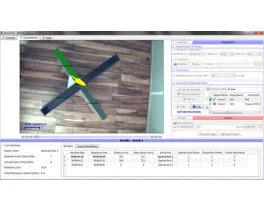
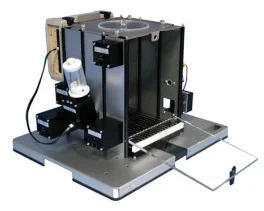
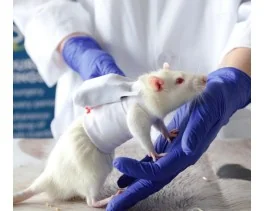
SMALGO: SMall animal ALGOmeter - Wireless (BIO-SMALGO-WRS),Static Weight Bearing Touch: Incapacitance Test (BIO-SWB-TOUCH-M)
Source :