
 Activité, Système Moteur & Coordination
 Douleur - Allodynie/Hyperalgésie Thermique
 Douleur - Spontanée - Déficit de Posture
 Douleur - Allodynie/Hyperalgésie Mécanique
 Anxiété & Dépression
 Apprentissage/Mémoire - Attention - Addiction
 Physiologie & Recherche Respiratoire
 Métabolisme & Nutrition
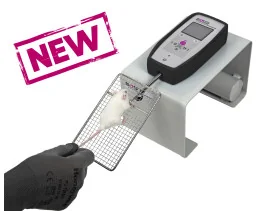
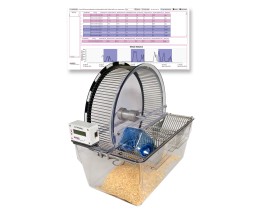
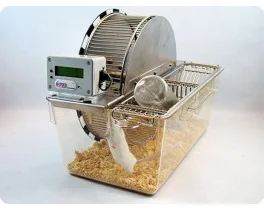


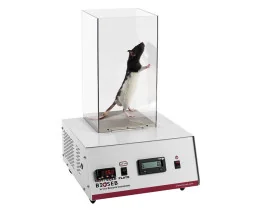
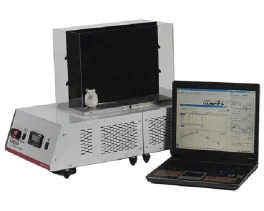



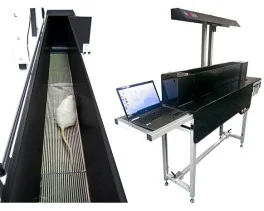
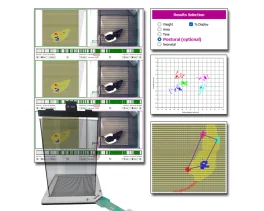


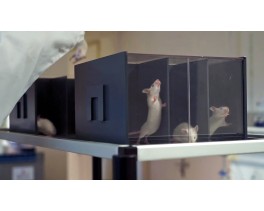













 Douleur
 Système Nerveux Central (SNC)
  Neurodégénérescence
 Système sensoriel
 Système moteur
 Troubles de l'humeur
 Autres pathologies
 Système musculaire
 Articulations
 Métabolisme
 Thématiques transversales
 Congrès & Meetings 2026
 Authors
Enrique Gaband-Rodrguez, Gonzalo Soto-Heredero, Elisa Carrasco, Carlos Anerillas, Jos Ignacio Escrig-Larena, Sandra Delgado-Pulido, Isaac Francos-Quijorna, Manuel M. Gmez de las Heras, lvaro Fernndez-Almeida, Eva Mara Blanco, Elia Winand-Osete, Virginia Zorita, Jorge Martnez-Cano, Amanda Garrido, Rafael de Cabo, Santos Maes, Myriam Gorospe, Mara Mittelbrunn
Lab
Journal
bioRxiv
Abstract
Abstract
Neutrophils are the most abundant leukocytes in the blood, with numbers further increasing with age. Despite their essential role as a primary line of defense, neutrophils can contribute to tissue damage and age-related diseases 1 and a high neutrophil-to-lymphocyte ratio predicts all causes of mortality in the elderly 2-5. However, the precise mechanisms driving enhanced neutrophil generation during ageing remain poorly understood. Here, we show that a subset of CD4+ T cells with a cytotoxic phenotype (CD4+ CTLs) producing the chemokine CCL5 and harbouring dysfunctional mitochondria, infiltrate the bone marrow and induce granulopoiesis in aged mice. During ageing, hematopoietic stem cells upregulate CCR5, the primary receptor for CCL5, and its deficiency limits the T cell-mediated induction of granulopoiesis and neutrophil output. Treatment with the FDA-approved CCR5 inhibitor Maraviroc decreases granulopoiesis and lowers the levels of circulatory and tissue-infiltrating neutrophils, ameliorating multiple ageing biomarkers and improving functional outcomes in aged mice. These findings suggest that age-associated alterations in T cells reduce health outcomes by remodelling the bone marrow niche and enhancing neutrophil generation. Consequently, interventions to disrupt the interplay between T cells and hematopoietic stem cells hold substantial therapeutic potential to ameliorate age-associated diseases.
Keywords/Topics
cytotoxic;cells;marrow;compromise;healthy;ageing;enhancing;granulopoiesis;
BIOSEB Instruments Used:
Grip strength test (BIO-GS4)
Source :
https://www.biorxiv.org/content/10.1101/2024.01.26.577360.abstract
