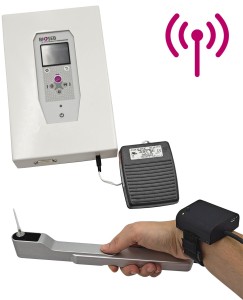
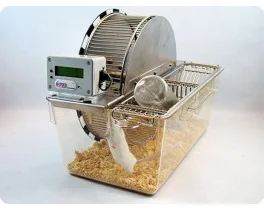
 Activité, Système Moteur & Coordination
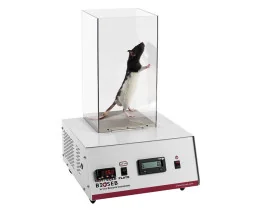
 Douleur - Allodynie/Hyperalgésie Thermique
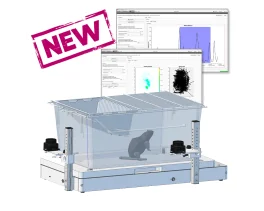
 Douleur - Spontanée - Déficit de Posture
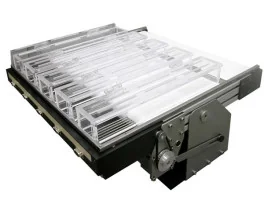
 Douleur - Allodynie/Hyperalgésie Mécanique
 Anxiété & Dépression
 Apprentissage/Mémoire - Attention - Addiction
 Physiologie & Recherche Respiratoire
 Métabolisme & Nutrition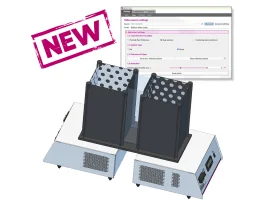
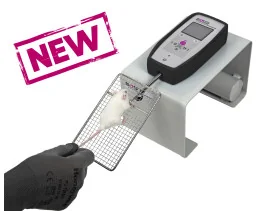
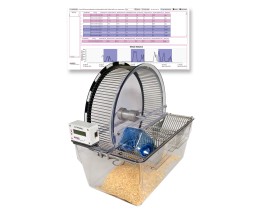



 Douleur
 Système Nerveux Central (SNC)
  Neurodégénérescence
 Système sensoriel
 Système moteur
 Troubles de l'humeur
 Autres pathologies
 Système musculaire
 Articulations
 Métabolisme
 Thématiques transversales
 Congrès & Meetings 2026
 Authors
Bruno Rodrguez-Meana, Jaume del Valle, Dami Viana, Steven T. Walston, Nicola Ria, Eduard Masvidal-Codina, Jose A. Garrido, Xavier Navarro
Lab
Journal
Advanced Science
Abstract
In neuroprosthetic applications an electrical coupling is commonly used to interconnect the nervous system with the prosthetic devices. Currently, most nerve interfaces are based on metal, such as platinum, gold or iridium, microelectrodes fabricated onto flexible substrates.[2]However, inherent limitations such as stiffness, low biocompatibility, limited charge injection when reduced to a micrometric scale or limited stability to stimulate safely over extended periods, have motivated the exploration of non-metallic alternatives. Non-metal electrodes have emerged as promising candidates, offering advantages in terms of flexibility, reduced tissue injury, and enhanced signal resolution. Such electrodes are based on material substrates with either an organic composition or a modified metallic structure.[4]Conductive polymers such as polyacetylene, polypyrrol or poli(3,4-etilendioxitiofeno) (PEDOT), achieve high conductivities via doping. These conjugated polymers have shown capability for neural stimulation, good biocompatibility, and integration with nerve cells.[5-7]Carbon-based electrodes are another promising alternative to serve as effective recording and stimulation devices. In some cases, carbon nanomaterials have been introduced as dopants or coatings to improve the conductivity of silk fibers or conducting polymer electrodes.[8]However, coating materials may compromise the long-term stability of the electrodes and restrict available sterilization methods due to compatibility issues.[9]In other developments, carbon nanotube thin filaments were used to record neural activity from neuronal ensembles,[10]and highly flexible carbon nanotube yarns produced reliable and stable chronic recordings in the peripheral nerves, outperforming current metal-based electrodes in recording quality, stability, and selectivity.[11]However, in carbon fiber electrodes, the number of contacts is limited to one per electrode, in contrast with state-of-the-art intraneural electrodes, such as tfLIFE and TIME,[12,13]that allow to place multiple active contacts per device. A new generation of neural interfaces based on carbon nanotubes and graphene are increasingly used for micro-scale electrode fabrication, due to their superior electrical properties.[14]However, limited electrochemical performance of single-layer graphene microelectrodes restricts the scope for downsizing.[15]Multilayer porous electrodes have been explored to improve performance.[16]In a recent work, a reduced-graphene oxide material, named Engineered Graphene for Neural Interface (EGNITE), was used for the micromachining fabrication process of flexible microelectrode arrays on polyimide (PI) as substrate for high spatial resolution of neural recording and stimulation in the central and peripheral nervous system, overcoming the challenges associated with microelectronic processing of high charge injection thin-films.[17]
Keywords/Topics
engineered;graphene;material;improves;performance;intraneural;peripheral;nerve;electrodes;neuroprosthetic
BIOSEB Instruments Used:
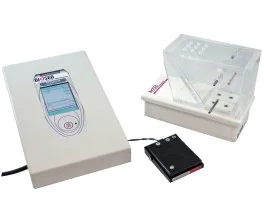
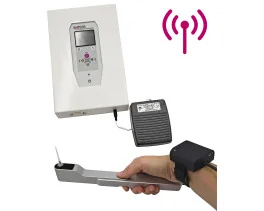
Electronic Von Frey - Wireless (BIO-EVF-WRS)
Source :
https://advanced.onlinelibrary.wiley.com/doi/abs/10.1002/advs.202308689