 Activité, Système Moteur & Coordination
 Douleur - Allodynie/Hyperalgésie Thermique
 Douleur - Spontanée - Déficit de Posture
 Douleur - Allodynie/Hyperalgésie Mécanique
 Anxiété & Dépression
 Apprentissage/Mémoire - Attention - Addiction
 Physiologie & Recherche Respiratoire
 Métabolisme & Nutrition












 Douleur
 Système Nerveux Central (SNC)
  Neurodégénérescence
 Système sensoriel
 Système moteur
 Troubles de l'humeur
 Autres pathologies
 Système musculaire
 Articulations
 Métabolisme
 Thématiques transversales
 Congrès & Meetings 2026
 Authors
Wei Huang, Rhiannon Bates, Xunchang Zou, Nicholas J. Queen, Xiaokui Mo, W. David Arnold, Alissa Ray, Gregory Owendoff, Lei Cao
Lab
Journal
Advanced Biology
Abstract
Researchers have developed several laboratory models to understand how we might slow the onset of aging-related processes. In one such model, environmental enrichment (EE), rodents are placed in larger-than-standard cages and are supplemented with running wheels, toys, shelter, and shelter.[8,9]EE components are often rotated and varied to promote cognitive stimulation and complex social interactions as mice locate sources of food and activity. In contrast, standard environments (SE) incorporate limited bedding and a nestlet inside a much smaller shoebox-sized cage. In sum, EE combines complex physical, social, cognitive, motor, and somatosensory stimuli to elicit improvements in systemic metabolism, immunity, and behavior.[8,9]Our previous work indicates that EE confers diverse health benefits in young (one-month-old), middle-age (ten-month-old), and aged mice (18-month-old) across various murine models.[10-12]Regarding aging, we observed that long-term EE (of a 12-month duration) initiated at middle age (ten-month) promoted healthy aging in female C57BL/6 mice. Metabolic improvements were observed after a short-term EE exposure (i.e., 8weeks) such as reduced adiposity, improved glucose tolerance, and decreased circulating leptin levels. Moreover, EE enhanced motor activity, prevented age-related decline of brown adipose tissue (BAT), induced remodeling of white adipose tissue (WAT), and reduced anxiety-like behavior in female C57BL/6 mice.[12]EE also decreased age-related liver steatosis, reduced hepatic glucose production, and increased glucose uptake in the liver and adipose tissue, thus contributing to improved glycemic control.[12]Interestingly, EE initiated at 18-months of age induced similar metabolic improvements and led to a trending improvement (P=0.081) in mean lifespan.[12]Our recent study demonstrates that EE initiated in middle age mitigates aging-related metabolic decline and tumor growth.[13]We also observed that EE modulated the morphology and gene expression of microglial cells in the hypothalamus whose dysfunction has been implicated in systemic aging[14,15]Together, these data suggest that EE is a valid intervention model to study environmental and/or lifestyle influences on aging-related outcomes.
Keywords/Topics
environmental;enrichment;improves;motor;function;muscle;transcriptome;researchers;developed;several
BIOSEB Instruments Used:
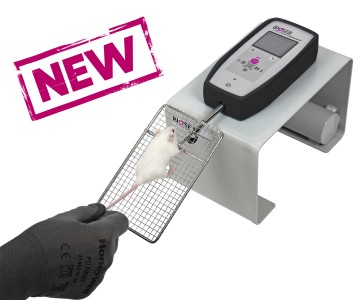
Grip strength test (BIO-GS4)
Source :
https://onlinelibrary.wiley.com/doi/full/10.1002/adbi.202300148