
 Activité, Système Moteur & Coordination
 Douleur - Allodynie/Hyperalgésie Thermique
 Douleur - Spontanée - Déficit de Posture
 Douleur - Allodynie/Hyperalgésie Mécanique
 Anxiété & Dépression
 Apprentissage/Mémoire - Attention - Addiction
 Physiologie & Recherche Respiratoire
 Métabolisme & Nutrition




















 Douleur
 Système Nerveux Central (SNC)
  Neurodégénérescence
 Système sensoriel
 Système moteur
 Troubles de l'humeur
 Autres pathologies
 Système musculaire
 Articulations
 Métabolisme
 Thématiques transversales
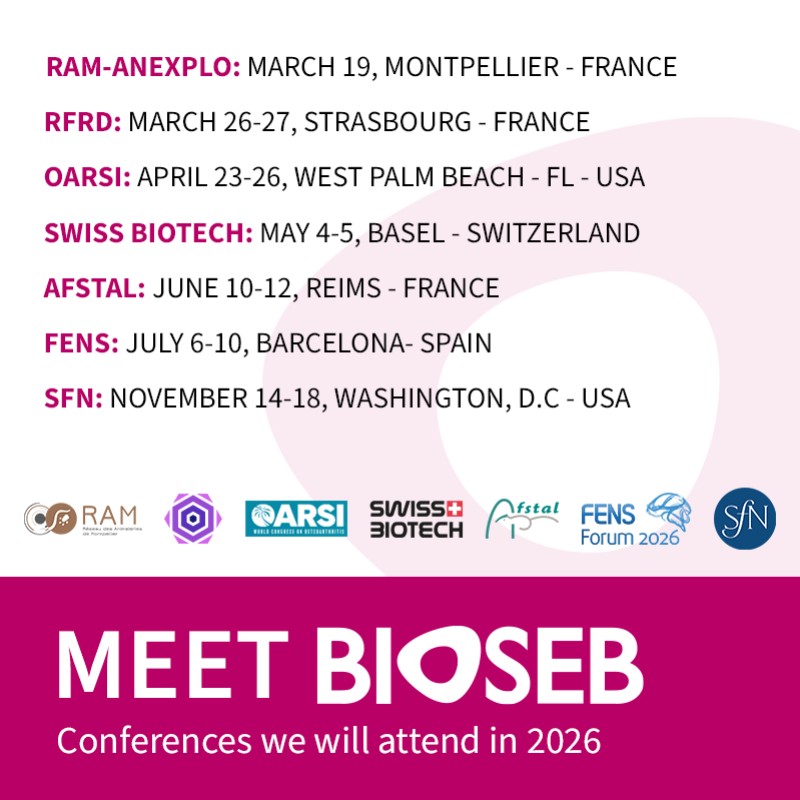 Congrès & Meetings 2026
 Authors
Hongyan Ma, Huiyang Jia, Wenzheng Zou, Fen Ji, Wenwen Wang, Jinyue Zhao, Chenqi Yuan, Jianwei Jiao
Lab
Journal
Advanced Science
Abstract
We examined the localization relationship between Aifm3 and mitochondria, while mitochondrial expression of Aifm3 was significantly decreased after GSDMD knockout (Figure4J,K). To further investigate the role of Aifm3 in neurogenesis under high replication stress, we infected NPCs withAifm3-shRNA lentivirus and stimulated them with bFGF treatment. Protein blotting showed that cleaved-caspase-1, was not affected byAifm3knockdown, but there was a significant downregulation of cleaved-caspase3; under bFGF stimulation,Aifm3knockdown affected neural progenitor cell apoptosis (FigureS7G,H, Supporting Information), which also explains the fact that apoptosis, another mode of regulatory cell death, was not increased when pyroptosis was inhibited in the previous work. These data suggest that both regulatory cell death pathways are present and necessary under high replication stress. Interestingly, the apoptosis-inducing mechanism of Aifm3, which is based on cytochrome c release and caspase3 activation is consistent with our RNA sequencing analysis. Therefore, we suggest that the apoptosis-inducing function of GSDMD is achieved by regulatingAifm3expression. Of note, literature has mentioned that GSDMD-N and AMPK exist in a reciprocal regulatory relationship, DNA damage accumulation inhibition of AMPK signaling leads to a decrease in the expression of apoptosis-inducing factors.[23]Its downstream factor SirT1 responds to the stimulation of DNA damage through degradation and ubiquitination and it reduces apoptosis through the PGC-1Alpha mitochondrial pathway.[24,25]Therefore, we examined cortical NPCs after GSDMD deletion and found that the protein levels of AMPK, SirT1, and PGC-1Alpha were significantly reduced after GSDMD deletion (Figure4L,M). To investigate how GSDMD knockdown inhibits the AMPK pathway, we performed a literature review and experiments and found that the pore formed by GSDMD mediates inward calcium flux, which upon encounter with a signaling stimulus triggers the endosomal sorting complex required for transport (ESCRT)-dependent membrane repair and induces phosphatidylserine exposure.[26,27]Furthermore, the processing and release ofAifm3from the mitochondrial membrane requires the activation of CAMKII by calcium ions[27]and the absence of GSDMD leads to perturbations in the intracellular environment with reduced calcium ion efflux and activation of calpain (Figure4N,O), thus reducing the formation of complexes with its substrate CAMKII, which in turn reduces the formation of complexes with its substrate AMPK, and regulates intracellular and energy metabolism homeostasis, among others. To further confirm that GSDMD deletion affects mitochondrial protein synthesis through AMPK/SirT/PGC-1Alpha pathway, and to exclude the involvement of other mitochondrial-related proteins, We analyzed the RNA sequencing data and found that AIFM3 was not the only mitochondrial protein that was downregulated, and other mitochondria-related proteins had relatively insignificant changes (FigureS7I, Supporting Information). we constructed a PGC-1Alpha knockdown plasmid, packaged the lentivirus and then infected the NPCs, and extracted the RNA for RT-PCR to detect, and found that only the expression of Aifm3 was significantly decreased by detecting the genes screened out from the sequencing data (FigureS7J, Supporting Information). Accordingly, we determined whether PGC-1Alpha binds to the promoter regions of Aifm3 using a chromatin immunoprecipitation assay. For the enrichment analysis, we designed 4 pairs of primers targeting different regions of Aifm3. Our results showed that PGC-1Alpha was significantly enriched in the Aifm3 promoter region located 2kb from the transcriptional start site (Figure4R). Taken together, our data suggest that GSDMD regulates the expression of the mitochondrial protein Aifm3 through the AMPK/SirT1/PGC-1Alpha pathway, thereby influencing the onset of apoptosis. we added rescue experiments by culturing WT and cKO neural stem cells in vitro and infecting them with GSDMD overexpression lentivirus, and found that transfection with GSDMD overexpression could rescue the expression of AIFM3 as well as AMPK to some extent by western blot (Figure4P,Q).
Keywords/Topics
gasdermin;mediated;mitochondrial;metabolism;orchestrate;neurogenesis;through;during;embryonic;development
BIOSEB Instruments Used:
Grip strength test (BIO-GS4)
Source :
https://advanced.onlinelibrary.wiley.com/doi/abs/10.1002/advs.202402285