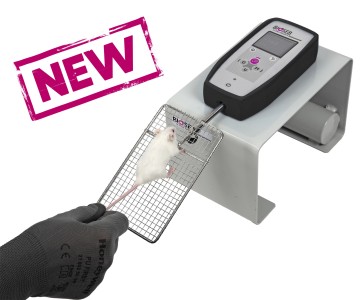
 Activité, Système Moteur & Coordination
 Douleur - Allodynie/Hyperalgésie Thermique
 Douleur - Spontanée - Déficit de Posture
 Douleur - Allodynie/Hyperalgésie Mécanique
 Anxiété & Dépression
 Apprentissage/Mémoire - Attention - Addiction
 Physiologie & Recherche Respiratoire
 Métabolisme & Nutrition
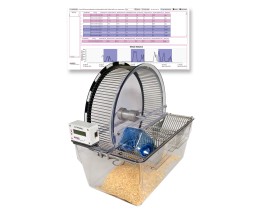













 Douleur
 Système Nerveux Central (SNC)
  Neurodégénérescence
 Système sensoriel
 Système moteur
 Troubles de l'humeur
 Autres pathologies
 Système musculaire
 Articulations
 Métabolisme
 Thématiques transversales
 Congrès & Meetings 2026
 Authors
Dijkhuizen, S., Van Ginneken, L. M. C., IJpelaar, A. H. C., Koekkoek, S. K. E., De Zeeuw, C. I., Boele, H. J.
Lab
Journal
Scientific Reports
Abstract
Neuroscience heavily relies on animal welfare in laboratory rodents as it can significantly affect brain development, cognitive function and memory formation. Unfortunately, laboratory animals are often raised in artificial environments devoid of physical and social stimuli, potentially leading to biased outcomes in behavioural assays. To assess this effect, we examined the impact of social and physical cage enrichment on various forms of motor coordination. Our findings indicate that while enriched-housed animals did not exhibit faster learning in eyeblink conditioning, the peak timing of their conditioned responses was slightly, but significantly, improved. Additionally, enriched-housed animals outperformed animals that were housed in standard conditions in the accelerating LE8305 and ErasmusLadder test. In contrast, we found no significant effect of enrichment on the balance beam and BIO-GS3. Overall, our data suggest that an enriched environment can improve motor performance and motor learning under challenging and/or novel circumstances, possibly reflecting an altered state of anxiety.
Keywords/Topics
Physical enrichment; Social enrichment; Cage enrichment; Delay eyeblink conditioning ;LE8305; Erasmus;Ladder ;Mice
BIOSEB Instruments Used:
Grip strength test (BIO-GS4)
Source :