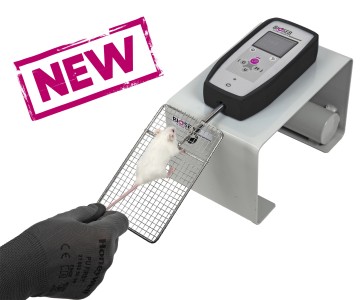
 Activité, Système Moteur & Coordination
 Douleur - Allodynie/Hyperalgésie Thermique
 Douleur - Spontanée - Déficit de Posture
 Douleur - Allodynie/Hyperalgésie Mécanique
 Anxiété & Dépression
 Apprentissage/Mémoire - Attention - Addiction
 Physiologie & Recherche Respiratoire
 Métabolisme & Nutrition






 Douleur
 Système Nerveux Central (SNC)
  Neurodégénérescence
 Système sensoriel
 Système moteur
 Troubles de l'humeur
 Autres pathologies
 Système musculaire
 Articulations
 Métabolisme
 Thématiques transversales
 Congrès & Meetings 2026
 Authors
Disha M. Soni, Peter Bor-Chian Lin, Audrey Lee-Gosselin, Christopher D. Lloyd, Emily Mason, Cynthia M. Ingraham, Abigail Perkins, Miguel Moutinho, Bruce T. Lamb, Shaoyou Chu, Adrian L. Oblak
Lab
Journal
Alzheimer's & Dementia
Abstract
Recently, our group and others have reported the impact of deficiency ofInpp5din the mouse model of Alzheimer's disease that substantially exhibits amyloid pathology.6,12,14These studies demonstrate that deficiency ofInpp5dfacilitates microglia response toward ABeta plaques, mitigates amyloid pathology, and alleviates behavior impairments. In a parallel manner to what has been observed in these studies, our findings in the context of tau pathology demonstrate thatInpp5dhaplodeficiency indicates a significant reduction in total tau accumulation and phosphorylation (Figure4) as well as improved motor functions (Figure2A,B) in the PS19 mouse model at 9 months of age. This study and a study by Lin etal.6suggest thatInpp5dexerts a beneficial effect on the two primary hallmarks of AD pathology. Importantly, we did not observe any changes in the overall cell populations in PS19:Inpp5d+/tomice compared to PS19Inpp5d+/+mice, suggesting that haplodeficiency ofInpp5din PS19 mice may be tailored toward tau-related pathogenesis or it may modulate cellular processes and microglia morphological features and complexity related to tau pathology without specifically affecting the overall cellular context. Elevated levels of proinflammatory cytokines such as IFN-Gamma, IL-1Beta, IL-6, IL-18, and TNF-Alpha have been shown to induce tau hyperphosphorylation and neuronal loss in AD and other neurodegenerative diseases.24-26In PS19:Inpp5d+/tomice, we observed a reduction in IFN-Gamma, IL-1Beta, and TNF-Alpha cytokine levels (Figure5), which are suggestive of a dampening neuroinflammatory response, potentially in response to reduced tau burden. Intriguingly, this reduction in the cytokine levels was pronounced in the male PS19:Inpp5d+/tomice compared to females. This sex-specific difference may be attributed to the fact that female PS19:Inpp5d+/tomice do not exhibit an increase in the proinflammatory cytokine levels analyzed compared toInpp5d+/+(WT) females. Thus, given the absence of robust proinflammatory phenotypes in PS19:Inpp5d+/+female mice, it is not surprising thatInpp5dhaplodeficiency does not induce any observable effect. However, in experiments in which both female and male PS19:Inpp5d+/+mice exhibited significant pathological phenotypes, we observed thatInpp5dhaplodeficiency leads to similar changes regardless of sex. These observations support the idea that the effects ofInpp5dhaplodeficiency are only apparent in the presence of robust pathological phenotypes, which may be sex-specific in PS19 mice, such as the level of inflammatory cytokines. In any case, it is notable that, when we combined male and female proinflammatory cytokine data, we observed a consistent trend of reduced proinflammatory cytokine levels in PS19:Inpp5d+/tomice. Altogether, this reduction also aligns with the overall improvement of motor deficits.
Keywords/Topics
Alzheimer ;Dementia
BIOSEB Instruments Used:
Grip strength test (BIO-GS4)
Source :
https://alz-journals.onlinelibrary.wiley.com/doi/abs/10.1002/alz.14078