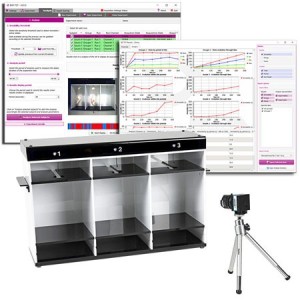
 Activité, Système Moteur & Coordination
 Douleur - Allodynie/Hyperalgésie Thermique
 Douleur - Spontanée - Déficit de Posture
 Douleur - Allodynie/Hyperalgésie Mécanique
 Anxiété & Dépression
 Apprentissage/Mémoire - Attention - Addiction
 Physiologie & Recherche Respiratoire
 Métabolisme & Nutrition
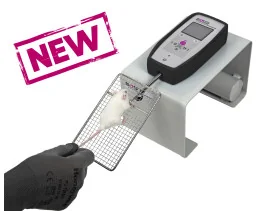
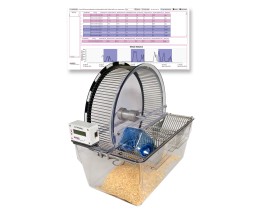
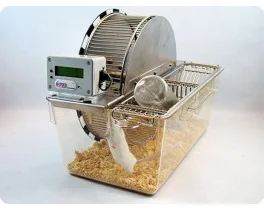
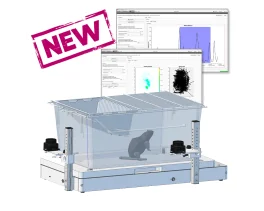

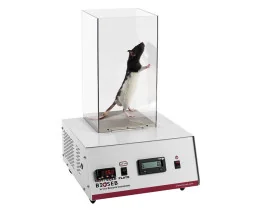
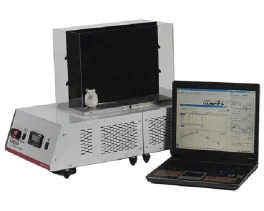

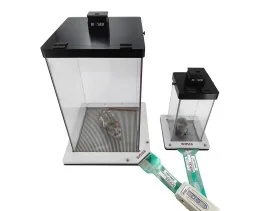



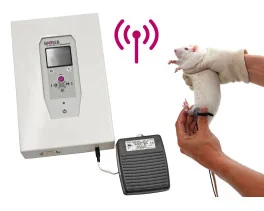
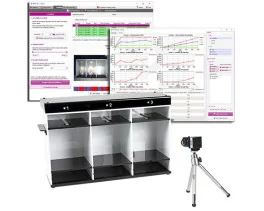







 Douleur
 Système Nerveux Central (SNC)
  Neurodégénérescence
 Système sensoriel
 Système moteur
 Troubles de l'humeur
 Autres pathologies
 Système musculaire
 Articulations
 Métabolisme
 Thématiques transversales
 Congrès & Meetings 2026
 Authors
Zhang, Liansheng, Kong, Xiangrui, Ma, Qi, Hu, Xinde, Cai, Shicheng, Wang, Bo, Zou, Weijuan, Bai, Tao, Zhang, Meimei, Fan, Liu, Tan, Runlin, Dai, Ziji, Jia, Zhiheng, Li, Tianwen, Liu, Xingyu, Xu, Huatai, Wu, Jianrong, Zheng, Yuanyi, Xu, Zhengzheng, Zhou, Haibo
Lab
University of Chinese Academy of Sciences; Beijing; China; Ltd.; Shanghai; China
Journal
Nature Genetics
Abstract
Major depressive disorder (MDD) is a complex disorder with numerous risk genes identified through genome-wide association studies, but their in vivo functions remain unclear. Here we built an in vivo adeno-associated virus (AAV)-Perturb-seq system to perform parallel loss-of-function screening of MDD risk genes in the mouse brain and to define their transcriptional effects and functional relationships. By comparing perturbation profiles with transcriptomic data from patients with MDD, we identified a cluster of risk genes whose loss led to neuronal downregulation of oxytocin signaling, a feature shared with patients with MDD. Mechanistic studies using Dennd1a as an example revealed that its neuron-specific downregulation impaired the oxytocin receptor–extracellular signal-regulated kinase pathway and induced depressive-like behaviors in mice. Pharmacological enhancement of this pathway alleviated depressive-like phenotypes in Dennd1a-deficient mice and restored oxytocin signaling in DENND1A-deficient human neurons, highlighting the importance of patient stratification for targeted treatment in complex diseases such as psychiatric disorders. The authors optimize and apply in vivo AAV-Perturb-seq to systematically profile GWAS-linked major depressive disorder risk genes and their corresponding transcriptomic features in the mouse brain.
Keywords/Topics
Depression; Genome-wide association studies; High-throughput screening; Transcriptomics
Source :