 Activité, Système Moteur & Coordination
 Douleur - Allodynie/Hyperalgésie Thermique
 Douleur - Spontanée - Déficit de Posture
 Douleur - Allodynie/Hyperalgésie Mécanique
 Anxiété & Dépression
 Apprentissage/Mémoire - Attention - Addiction
 Physiologie & Recherche Respiratoire
 Métabolisme & Nutrition



 Douleur
 Système Nerveux Central (SNC)
  Neurodégénérescence
 Système sensoriel
 Système moteur
 Troubles de l'humeur
 Autres pathologies
 Système musculaire
 Articulations
 Métabolisme
 Thématiques transversales
 Congrès & Meetings 2026
 Authors
Lin Yang, Chengxi Liu, Jin Xiao, Yu Song, Huan Chen, Dan Li, Cong Zou, Tao Hong, Yinglan Liu, Dake Qi, Nathachit Limjunyawong, Wenjie Liu, Lintao Qu
Lab
; 3 Department of Anesthesiology; ; 1; 2; 1; 2; 3; 1; 2; 1; 2; 4; 1; 2; 1; 2; 5; 5; 6; 7; 1; 2; 3 and; 2
Journal
JCI Insight
Abstract
Bidirectional neuroimmune interactions are critical to the development of chronic pain and inflammation. Increasing evidence suggests that peripheral sensory neurons are of importance for the regulation of immunity through their release of neuropeptides (i.e., SP, VIP, CGRP) (56,57). SP, a key neuropeptide, has been implicated in inflammation and chronic pain via regulation of immune cells (58). Recent studies have demonstrated that Mrgprb2/MRGPRX2 in skin MCs is required for SP-induced neurogenic inflammation, indicating that Mrgprb2/MRGPRX2 likely functions as a critical bridge between the nervous and immune systems (15). Our present study extends previous findings by introducing a neuroimmune mechanism for GA pain whereby SP acts as an endogenous agonist of Mrgprb2/MRGPRX2 that directly activates synovial MCs to promote GA pain. First, the mRNA and protein expression levels of SP were elevated in the synovium in the GA model. By contrast, no changes in SP protein expression were observed in the serum. Considering that SP+sensory fibers are innervated in the synovium (59), we assume that SP release from sensitized joint sensory fibers might account for the elevated SP level in the synovium of GA mice. Second, neutralization of SP at the periphery, achieved with local injection of anti-SP antibody, significantly alleviated mechanical and thermal hyperalgesia and reduced joint swelling in the GA model. Joint IHC staining further confirmed that neutralization of SP reduced immune cell infiltration in the inflamed joints. These results indicate that SP directly promotes the development of inflammatory pain under GA conditions. Third, in naive mice, exogenous SP triggered nocifensive behaviors and joint swelling, whereas the pronociceptive effects of SP were diminished in mice lackingMrgprb2. In vitro Ca2+imaging and degranulation assay revealed that SP is able to activate MCs via Mrgprb2/MRGPRX2, consistent with previous reports (12,15,24). These findings suggest that SP directly modulates synovial MCs’ activity via Mrgprb2/MRGPRX2 to drive joint pain and inflammation. In addition to sensory neurons, SP can be secreted by a variety of immune cells (e.g., macrophages) (60). Thus, additional mechanisms besides neuroimmune interactions may contribute to SP–Mrgprb2/MRGPRX2–induced synovial MC activation. Such mechanisms will be studied in the future. Lastly, considering that species differences in the potency of SP for mouse Mrgprb2 and human MRGPRX2 may affect the translation of mouse studies to humans (12,24), our studies used newly generated humanized mice that specifically express MRGPRX2 in MCs (18). We have demonstrated that local injection of exogenous SP is sufficient to evoke joint pain hypersensitivity and joint swelling via the regulation of primary MC degranulation through MRGPRX2 in vivo.
Keywords/Topics
gout pain; chronic pain; inflammation and chronic pain; ga pain; ga mice; mechanical and thermal hyperalgesia; inflammatory pain; naive mice; nocifensive behaviors; mice
BIOSEB Instruments Used:
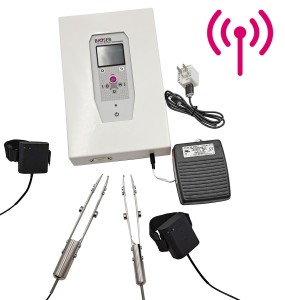
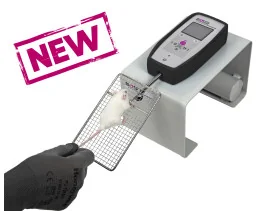
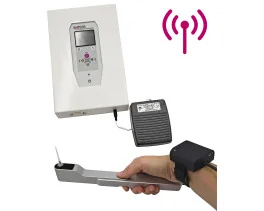
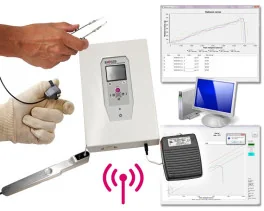
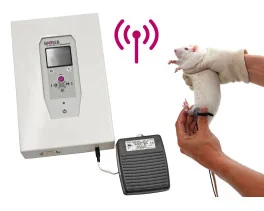
Rodent pincher - Analgesia meter - Wireless (BIO-RP-WRS)
Source :