 Activité, Système Moteur & Coordination
 Douleur - Allodynie/Hyperalgésie Thermique
 Douleur - Spontanée - Déficit de Posture
 Douleur - Allodynie/Hyperalgésie Mécanique
 Anxiété & Dépression
 Apprentissage/Mémoire - Attention - Addiction
 Physiologie & Recherche Respiratoire
 Métabolisme & Nutrition




 Douleur
 Système Nerveux Central (SNC)
  Neurodégénérescence
 Système sensoriel
 Système moteur
 Troubles de l'humeur
 Autres pathologies
 Système musculaire
 Articulations
 Métabolisme
 Thématiques transversales
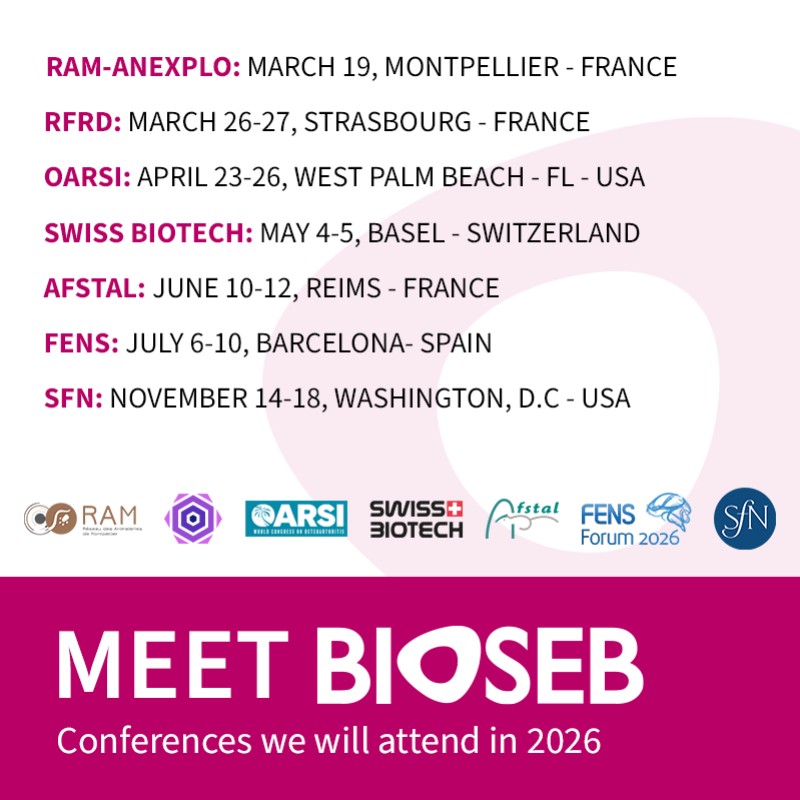 Congrès & Meetings 2026
 Authors
Nakai, Ritsuko, Varnum, Stella, Field, Rachael L., Shi, Henyun, Giwa, Rocky, Jia, Wentong, Krysa, Samantha J., Cohen, Eva F., Borcherding, Nicholas, Saneto, Russell P., Tsai, Rick C., Suganuma, Masashi, Ohta, Hisashi, Yokota, Takafumi, Brestoff, Jonathan R.
Lab
Journal
Nature Metabolism
Abstract
Mitochondria transfer is a recently described phenomenon in which donor cells deliver mitochondria to acceptor cells1-3. One possible consequence of mitochondria transfer is energetic support of neighbouring cells; for example, exogenous healthy mitochondria can rescue cell-intrinsic defects in mitochondrial metabolism in cultured Ï0 cells or Ndufs4to/to peritoneal macrophages4-7. Exposing haematopoietic stem cells to purified mitochondria before autologous haematopoietic stem cell transplantation allowed for treatment of anaemia in patients with large-scale mitochondrial DNA mutations8,9, and mitochondria transplantation was shown to minimize ischaemic damage to the heart10-12, brain13-15 and limbs16. However, the therapeutic potential of using mitochondria transfer-based therapies to treat inherited mitochondrial diseases is unclear. Here we demonstrate improved morbidity and mortality of the Ndufs4to/to mouse model of Leigh syndrome (LS) in multiple treatment paradigms associated with mitochondria transfer. Transplantation of bone marrow from wild-type mice, which is associated with release of haematopoietic cell-derived extracellular mitochondria into circulation and transfer of mitochondria to host cells in multiple organs, ameliorates LS in mice. Furthermore, administering isolated mitochondria from wild-type mice extends lifespan, improves neurological function and increases energy expenditure of Ndufs4to/to mice, whereas mitochondria from Ndufs4to/to mice did not improve neurological function. Finally, we demonstrate that cross-species administration of human mitochondria to Ndufs4to/to mice also improves LS. These data suggest that mitochondria transfer-related approaches can be harnessed to treat mitochondrial diseases, such as LS. Administration of exogenous mitochondria from mice or humans, or stimulation of mitochondria transfer from haematopoietic cells through bone marrow transplant from wild-type mice, is shown to improve morbidity and mortality in a mouse model of the mitochondrial disease Leigh syndrome.
Keywords/Topics
mitochondria;transfer-based;therapies;reduce;morbidity;mortality;leigh;syndrome;transfer;recently
BIOSEB Instruments Used:
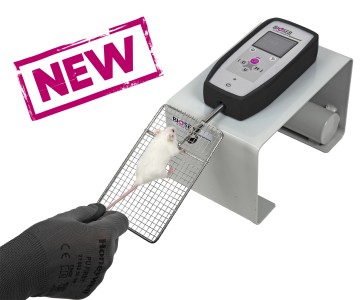
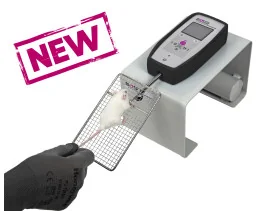
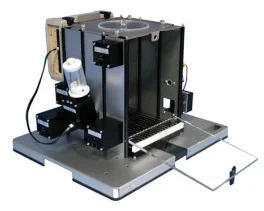
Bioseb CIS Software (BIO-CIS2),Grip strength test (BIO-GS4)
Source :