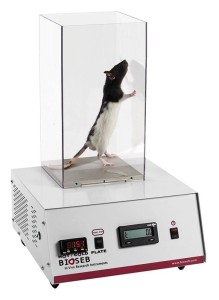
 Activité, Système Moteur & Coordination
 Douleur - Allodynie/Hyperalgésie Thermique
 Douleur - Spontanée - Déficit de Posture
 Douleur - Allodynie/Hyperalgésie Mécanique
 Anxiété & Dépression
 Apprentissage/Mémoire - Attention - Addiction
 Physiologie & Recherche Respiratoire
 Métabolisme & Nutrition






 Douleur
 Système Nerveux Central (SNC)
  Neurodégénérescence
 Système sensoriel
 Système moteur
 Troubles de l'humeur
 Autres pathologies
 Système musculaire
 Articulations
 Métabolisme
 Thématiques transversales
 Congrès & Meetings 2026
 Authors
Yan Jiang, Wanru Huang, Hailong Yao, Yan Chen, Cheng Bi, Tianyuan Ye, Shangkun Wang, Hongda Yin, Bailong Xiao
Lab
Allen Institute for Cell Science; Arc Institute; Babraham Institute; Brown University; California Institute of Technology; Carnegie Mellon University; Case Western Reserve University; Donders Institute for Brain; Cognition and Behaviour; Ernst Strüngmann Institute (ESI) for Neuroscience; Francis Crick Institute; Fred Hutchinson Cancer Center; Georgia Institute of Technology; The Howard Hughes Medical Institute (HHMI); Institute of Science and Technology Austria; Iowa State University; Johns Hopkins University; Michigan State University; Morgridge Institute; National Taiwan University; North Carolina State University; Northeastern University; Oregon Health & Sciences University; RNA Therapeutics Institute at UMass Chan Med School; Rutgers University; Stowers Institute for Medical Research; Stockholm University; Tel Aviv University; The Rockefeller University; The Sainsbury Laboratory; The Whitehead Institute; University of Connecticut Health Center; University of California; Berkeley; University of California; San Diego; University of California; San Francisco; University of Chicago; University of Geneva; University of Guelph; University of Hong Kong; University of Illinois Chicago; University of Iowa; University of Kansas; University of Massachusetts Chan Medical School; University of New South Wales; University of Ottawa; University of Sydney; Washington University in St. Louis; Weizmann Institute of Science; Yale University
Journal
bioRxiv
Abstract
Abstract
Somatosensation enables the perception of touch, temperature, pain, and itch. These sensory modalities are mediated by primary sensory neurons in the dorsal root ganglion (DRG), which convert physical and chemical stimuli into electrical signals using specialized molecular sensors, including the touch sensor PIEZO2 (Ref1,2) and temperature sensors such as TRPV1 (Ref3,4), coupled with downstream voltage-gated sodium channels (Nav) like Nav1.7 (Ref5,6). However, the full repertoire of molecular components involved in somatosensory processing remains incompletely identified. Here, we developed an efficient postnatal CRISPR-Cas9 knockout platform to screen DRG-expressed genes via AAV9-sgRNA delivery. Combining this approach with behavioral assays of somatosensory responses, we validated the roles of PIEZO2 and TRPV1 in sensing gentle touch and noxious heat, respectively, and the broad involvement of Nav1.7 in distinct somatosensory modalities. Remarkably, a targeted screen of 20 DRG-expressed genes identified the Cysteine-rich with EGF-like domains 1 (Creld1) as a master regulator of somatosensation. Either sgRNA-mediated postnatal knockout or tamoxifen-induced Cre-mediated deletion of Creld1 in DRG neurons resulted in profound behavioral deficits in touch, temperature, pain, and itch perception, while its overexpression enhanced touch and thermal responses. Mechanistically, Creld1 functions as a novel auxiliary regulator of Nav for controlling the excitability of DRG neurons. The biochemical interaction and functional modulation of Nav by mouse Creld1 are mediated via its C-terminal transmembrane region. Notably, this domain is conserved in mouse Creld1 and some isoforms of human CRELD1, resulting in an isoform-dependent regulation of Nav1.7. Together, this work establishes a robust postnatal screening platform for somatosensory genomics and identifies Creld1 as a master regulator of somatosensory function, and provides novel therapeutic strategy for pain and itch treatment.
Keywords/Topics
mouse behavioral genomics; temperature; pain; temperature sensors; behavioral assays; profound behavioral deficits; touch and thermal responses; mouse creld1; mouse; novel therapeutic strategy
Source :
https://www.biorxiv.org/content/10.64898/2026.03.30.715210.abstract