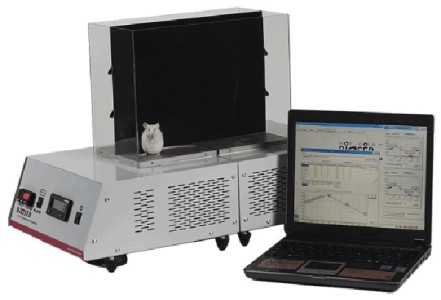
 Activité, Système Moteur & Coordination
 Douleur - Allodynie/Hyperalgésie Thermique
 Douleur - Spontanée - Déficit de Posture
 Douleur - Allodynie/Hyperalgésie Mécanique
 Anxiété & Dépression
 Apprentissage/Mémoire - Attention - Addiction
 Physiologie & Recherche Respiratoire
 Métabolisme & Nutrition
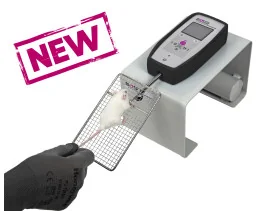







 Douleur
 Système Nerveux Central (SNC)
  Neurodégénérescence
 Système sensoriel
 Système moteur
 Troubles de l'humeur
 Autres pathologies
 Système musculaire
 Articulations
 Métabolisme
 Thématiques transversales
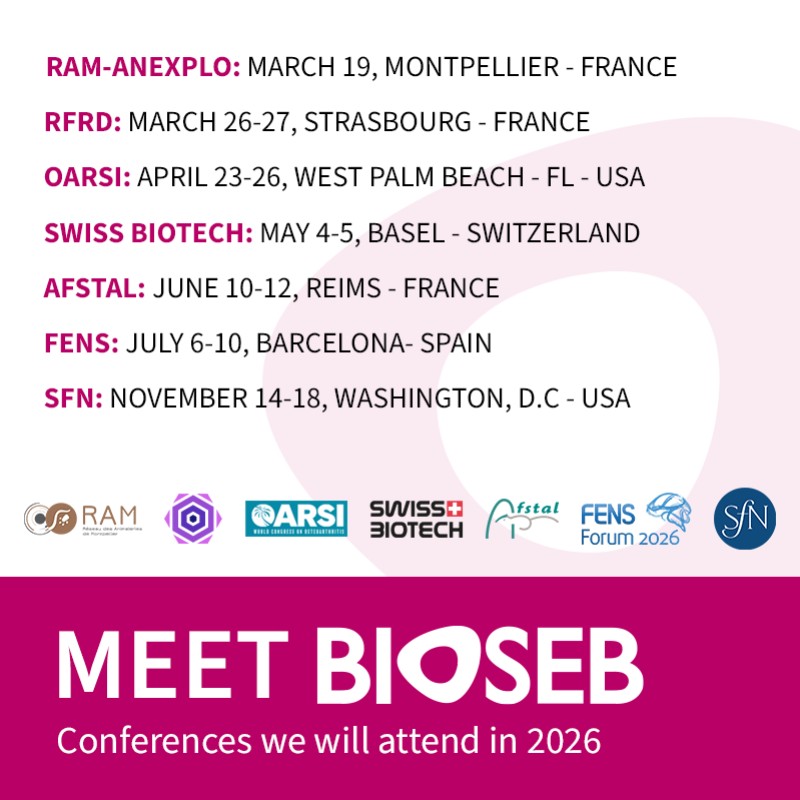 Congrès & Meetings 2026
 Authors
Melissa Daeschner, Emilio Román Mustafa, Andi Morgan, Quiana Tyss Mosley, Eduardo Javier López Soto
Lab
Journal
bioRxiv
Abstract
Abstract
How broadly expressed presynaptic proteins acquire the cell-type specificity needed to couple to CaV2 channels in defined neurons, and whether this specialization contributes to behavior, remains poorly understood. We show that alternative splicing of Cadps, encoding the vesicle-priming factor CAPS1, generates nociceptor-selective CaV2.2 regulation and underlies inflammatory pain hypersensitivity. Although Cadps is comparably expressed across dorsal root ganglion neurons, exon-resolution analysis identified exon 16a, a conserved 23-amino-acid cassette, as selectively enriched in nociceptors. The e16a-containing CAPS1 isoform, but not CAPS1 lacking e16a, enhanced recombinant CaV2.2 currents, whereas disruption of the e16a-encoded sequence blocked this effect and reduced endogenous CaV2.2 currents in nociceptors. Conditional Cadps deletion in Trpv1-lineage nociceptors similarly reduced CaV2.2 currents and attenuated capsaicin-evoked inflammatory hypersensitivity while sparing baseline sensitivity, an effect replicated by intrathecal delivery of an exon 16a-derived peptide. Alternative splicing of a presynaptic partner protein thus confers cell-type-specific CaV2.2 coupling and underlies inflammatory pain hypersensitivity.
Keywords/Topics
inflammatory pain hypersensitivity abstract; behavior; intrathecal delivery; nociceptor-enriched caps1 isoform couples; presynaptic proteins; defined neurons; alternative splicing; cadps; caps1; nociceptor-selective
Source :
https://www.biorxiv.org/content/10.64898/2026.05.23.727326.abstract