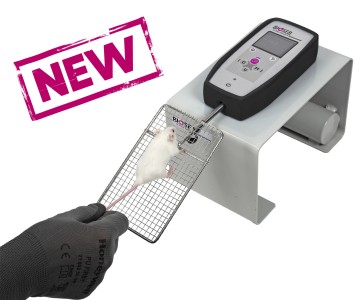
 Activité, Système Moteur & Coordination
 Douleur - Allodynie/Hyperalgésie Thermique
 Douleur - Spontanée - Déficit de Posture
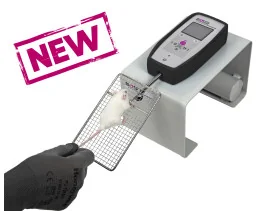
 Douleur - Allodynie/Hyperalgésie Mécanique
 Anxiété & Dépression
 Apprentissage/Mémoire - Attention - Addiction
 Physiologie & Recherche Respiratoire
 Métabolisme & Nutrition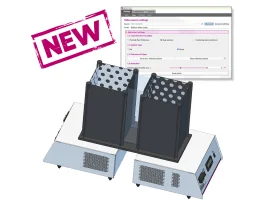
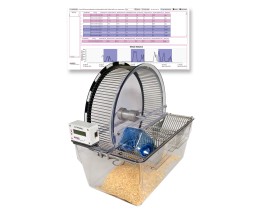
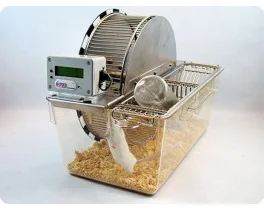

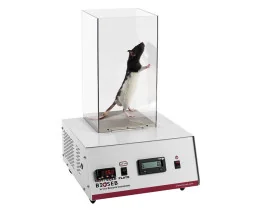
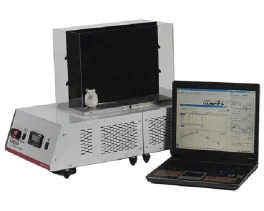



 Douleur
 Système Nerveux Central (SNC)
  Neurodégénérescence
 Système sensoriel
 Système moteur
 Troubles de l'humeur
 Autres pathologies
 Système musculaire
 Articulations
 Métabolisme
 Thématiques transversales
 Congrès & Meetings 2026
 Authors
J. E. Hunt, C. Lund, B. Chen, A. R. Diaz, O. Dmytriyeva, J. Marcotorchino, K. Löbner, K. Mörl, N. R. Andersen, Z. K. J. Ogueboule, E. Frank, J. Stöhr, D. Meseguer, V. Panajotova, J. Roux, C. Clemmensen, L. Sylow, M. Schneeberger, A. G. Beck-Sickinger, S. L. Pedersen, K. Fosgerau
Lab
Journal
Journal of Cachexia, Sarcopenia and Muscle
Abstract
To unbiasedly comprehend which neural correlates are responsible for PEP-064's mode of action on food intake, we performed a whole-brain screen of the expression of the immediate early gene Fos. PEP-064's c-Fos immunoreactivity could be mapped to hypothalamic regions where the highest density of ghrelin receptors in the brain is located [30]. Our results are in line with other studies in rodents utilizing native ghrelin [3] and synthetic ghrelin agonists; however, less activation was quantified in the brainstem in our study compared to other groups [31-33]. Interestingly, the highest fold change in activity was found in an understudied hypothalamic region, the TN. Although knowledge about the TN remains scarce, it has been previously reported to play a role in energy homeostasis and appetite, involving a distinct neuronal subtype, the somatostatin-positive neurons (TNSST neurons) [34]. Relevant to our work,TNSST neurons express GHSR; furthermore, ghrelin treatment increased c-Fos immunoreactivity and increased the baseline firing ofTNSST neurons in situ. Additionally, activation ofTNSST neurons increased food intake, whereas inhibition decreased feeding time and frequency through ascending projections to the PVN and bed nucleus of the stria terminalis. Given the demonstrated potential of ghrelin to increase food intake via TN activation, it could be hypothesized that the PEP-064 stimulatory effect on feeding could be driven by TN neuronal activation; however, future studies are required to resolve the precise circuitry responsible for such a response. In addition to its role in the homeostatic regulation of energy balance, ghrelin also contributes to the hedonic component of appetite by activating opioid and dopamine receptors [35]. This interaction amplifies the rewarding and motivational reactions to food cues, which could be another unique mechanistic way of combating cachexia-associated anorexia and the decreased QoL surrounding decreased appetite in patients with cancer cachexia. Indeed, PEP-064 increased VTA activation, a canonical centre in the dopaminergic reward circuitry. Other regions of interest with marked increases in activity were located in the amygdala complex, in particular the CeA, which plays a role in assessing the valence and salience of learned food cues. In summary, our findings align with published literature and argue for PEP-064's ability to target both homeostatic and hedonic appetitive responses, ultimately leading to an increase in food intake.
Keywords/Topics
C26 colon carcinoma; cancer cachexia; ghrelin; Lewis lung carcinoma; peptide
Source :