 Activité, Système Moteur & Coordination
 Douleur - Allodynie/Hyperalgésie Thermique
 Douleur - Spontanée - Déficit de Posture
 Douleur - Allodynie/Hyperalgésie Mécanique
 Anxiété & Dépression
 Apprentissage/Mémoire - Attention - Addiction
 Physiologie & Recherche Respiratoire
 Métabolisme & Nutrition









 Douleur
 Système Nerveux Central (SNC)
  Neurodégénérescence
 Système sensoriel
 Système moteur
 Troubles de l'humeur
 Autres pathologies
 Système musculaire
 Articulations
 Métabolisme
 Thématiques transversales
 Congrès & Meetings 2026
 Authors
Keaton J. Solo, Yuxun Zhang, Sivakama S. Bharathi, Bob B. Zhang, Adam C. Richert, Alexandra V. Schmidt, Shakuntala Basu, Clinton Van’t Land, Olivia D’Annibale, Timothy C. Wood, Jerry Vockley, Eric S. Goetzman
Lab
Journal
bioRxiv
Abstract
ABSTRACT
Long-chain fatty acid oxidation disorders (LC-FAODs) cause energy deficits in heart and skeletal muscle that is only partially corrected by current medium-chain lipid therapies such as triheptanoin. We find that heart and muscle lack medium-chain acyl-CoA synthetases, limiting the capacity for β-oxidation of medium-chain fatty acids. Instead, heart and muscle mitochondria robustly respire on medium-chain acylcarnitines. The mitochondrial matrix enzyme carnitine acetyltransferase (CrAT) efficiently converts orally delivered octanoylcarnitine (C8-carnitine) to octanoyl-CoA for energy generation. C8-carnitine exhibits twice the oral bioavailability of triheptanoin and distributes to muscle and heart. A single oral dose markedly enhances grip strength, basal locomotion, and LE8700TS endurance while attenuating lactate and creatine kinase elevations in multiple mouse models of LC-FAODs. Thus, medium-chain acylcarnitines overcome a previously unrecognized metabolic bottleneck in LC-FAOD muscle and may represent an alternative to triglyceride-based therapies for bioenergetic disorders.
Keywords/Topics
exercise
BIOSEB Instruments Used:
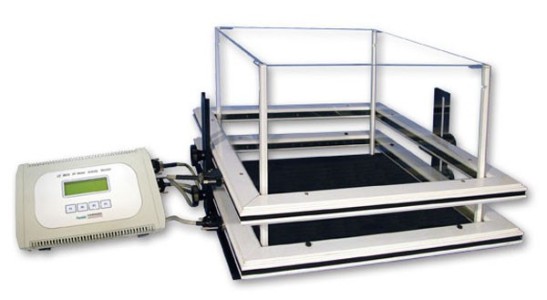
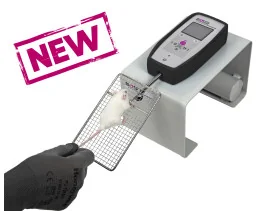
Grip strength test (BIO-GS4),Infrared Actimeter (LE8815)
Source :
https://www.biorxiv.org/content/10.1101/2025.06.24.661304.abstract