 Activité, Système Moteur & Coordination
 Douleur - Allodynie/Hyperalgésie Thermique
 Douleur - Spontanée - Déficit de Posture
 Douleur - Allodynie/Hyperalgésie Mécanique
 Anxiété & Dépression
 Apprentissage/Mémoire - Attention - Addiction
 Physiologie & Recherche Respiratoire
 Métabolisme & Nutrition
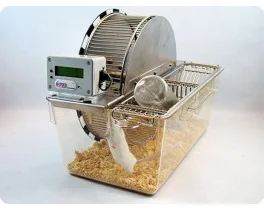
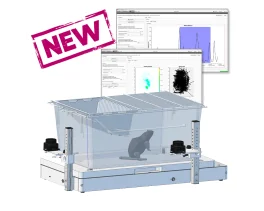

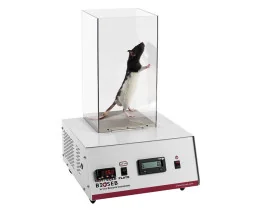
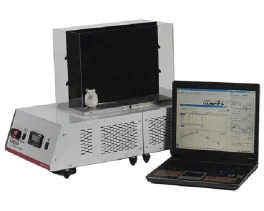



 Douleur
 Système Nerveux Central (SNC)
  Neurodégénérescence
 Système sensoriel
 Système moteur
 Troubles de l'humeur
 Autres pathologies
 Système musculaire
 Articulations
 Métabolisme
 Thématiques transversales
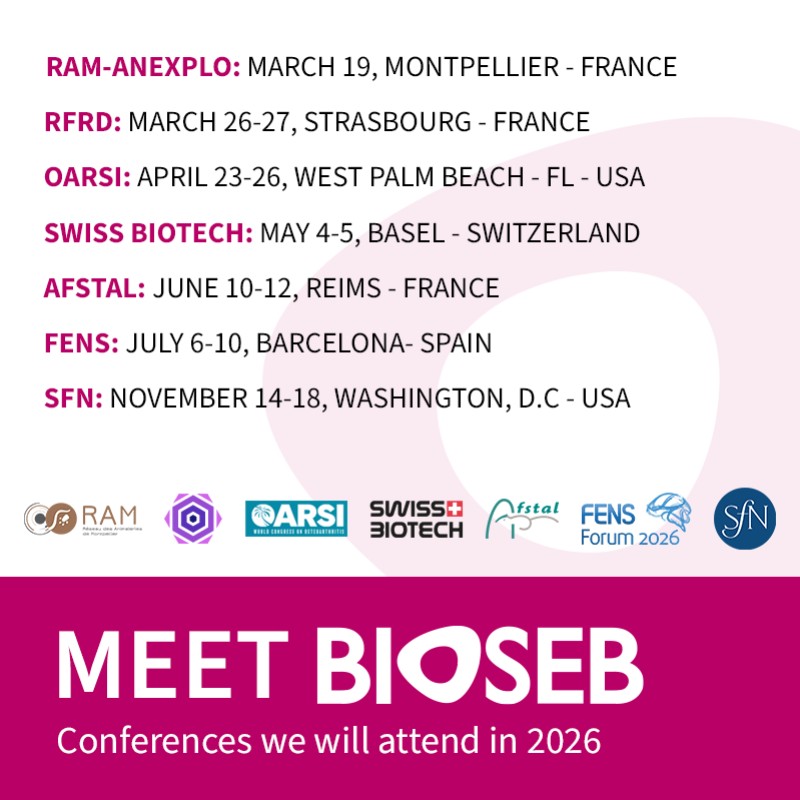 Congrès & Meetings 2026
 Authors
Mara Prez-Mato, Antonio Dopico-Lpez, Yunus Akkoc, Sonia Lpez-Amoedo, Clara Correa-Paz, Mara Candamo-Lourido, Ramn Iglesias-Rey, Esteban Lpez-Arias, Ana Bugallo-Casal, Andrs da Silva-Candal, Susana B. Bravo, Mara del Pilar Chantada-Vzquez, Susana Arias, Mara Santamara-Cadavid, Ana Estany-Gestal, Ahlem Zaghmi, Marc A. Gauthier, Mara Gutirrez-Fernndez, Abraham Martin, Jordi Llop, Cristina Rodrguez, ngeles Almeida, Martina Migliavacca, Ester Polo, Beatriz Pelaz, Devrim Gozuacik, Naouale El Yamani, Tanima SenGupta, Elise Rundn-Pran, Jos Vivancos, Mar Castellanos, Exuperio Dez-Tejedor, Toms Sobrino, Aharon Rabinkov, David Mirelman, Jos Castillo, Francisco Campos
Lab
Journal
iScience
Abstract
Summary
The blood enzyme glutamate-oxaloacetate transaminase (GOT) has been postulated as an effective therapeutic to protect the brain during stroke. To demonstrate its potential clinical utility, a new human recombinant form of GOT (rGOT) was produced for medical use.
We tested the pharmacokinetics and evaluated the protective efficacy of rGOT in rodent and non-human primate models that reflected clinical stroke conditions.
We found that continuous intravenous administration of rGOT within the first 8h after ischemic onset significantly reduced the infarct size in both severe (30%) and mild lesions (48%). Cerebrospinal fluid and proteomics analysis, in combination with positron emission tomography imaging, indicated that rGOT can reach the brain and induce cytoprotective autophagy and induce local protection by alleviating neuronal apoptosis.
Our results suggest that rGOT can be safely used immediately in patients suspected of having a stroke. This study requires further validation in clinical stroke populations.
Keywords/Topics
preclinical;validation;human;recombinant;glutamate-oxaloacetate;transaminase;treatment;acute;ischemic;stroke
BIOSEB Instruments Used:
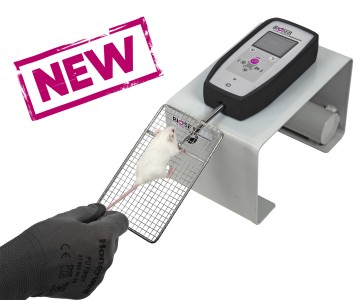
Grip strength test (BIO-GS4)
Source :
https://www.cell.com/iscience/fulltext/S2589-0042(24)02333-2