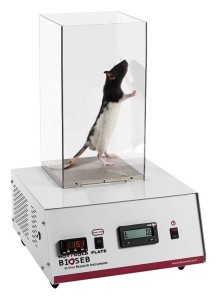
 Activité, Système Moteur & Coordination
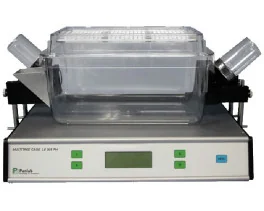
 Douleur - Allodynie/Hyperalgésie Thermique
 Douleur - Spontanée - Déficit de Posture
 Douleur - Allodynie/Hyperalgésie Mécanique
 Anxiété & Dépression
 Apprentissage/Mémoire - Attention - Addiction
 Physiologie & Recherche Respiratoire
 Métabolisme & Nutrition

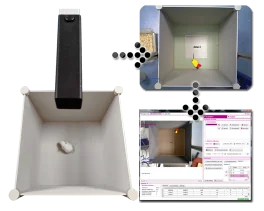


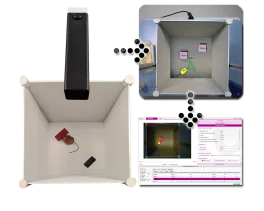
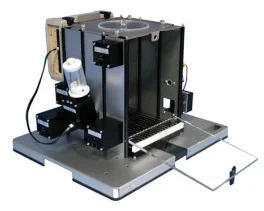
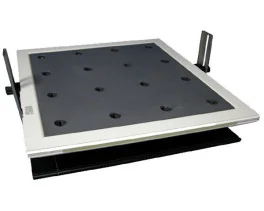
 Douleur
 Système Nerveux Central (SNC)
  Neurodégénérescence
 Système sensoriel
 Système moteur
 Troubles de l'humeur
 Autres pathologies
 Système musculaire
 Articulations
 Métabolisme
 Thématiques transversales
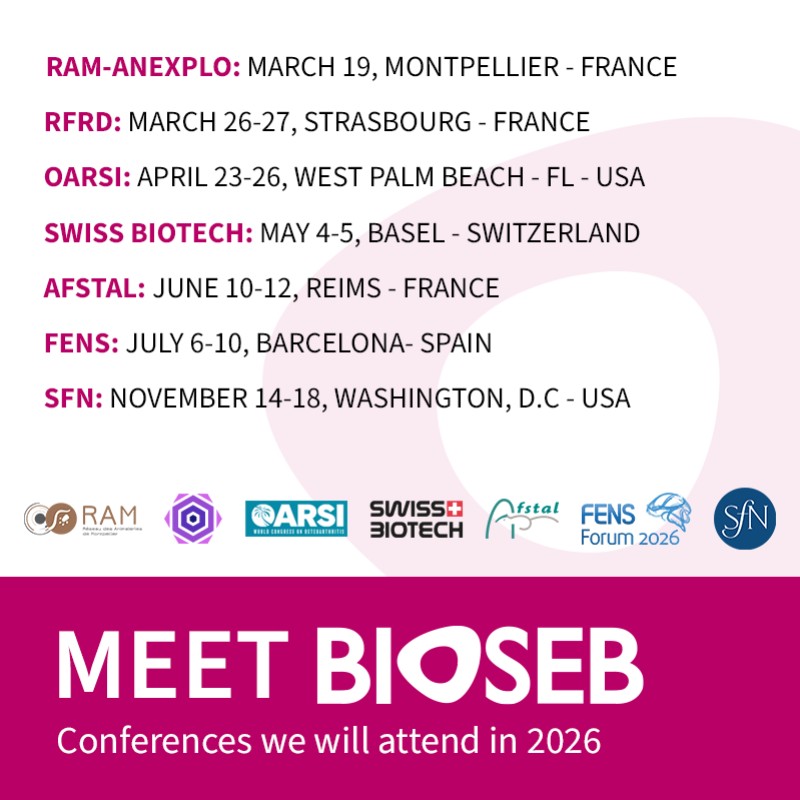 Congrès & Meetings 2026
 Authors
Can Zhang, Chenghua Yuan, Jun Bai, Shengyu Cui, Jinze Li, Sumei Liu, Nanding Li, Kang Li, Fan Yuan, Xiaoli Sun, Honglei Liu, Jian Guan, Fengzeng Jian
Lab
Help Center
Journal
Abstract
A modified rat model of syringomyelia was created using polystyrene microspheres to obstruct the SAS. Syrinx volume was assessed by 7.0T MRI, alongside behavioral, electrophysiological, and immunofluorescence analyses comparing subarachnoid–subarachnoid (S-S) bypass with decompression. CSF tracer studies evaluated postoperative dynamics, and confocal imaging quantified tight junction proteins (ZO-1, Claudin-5) and ciliary markers (Arl13b, γ-Tubulin). CSF proteomics explored underlying mechanisms. Clinically, seventeen patients with syringomyelia secondary to arachnoid adhesions underwent S-S bypass as a preliminary feasibility and safety evaluation, with MRI and neurological evaluation pre- and postoperatively.
Keywords/Topics
rat models; postoperative dynamics; thermal sensation; indirect drainage; perivascular spaces; ependymal repair; evidence; clinical application; syringomyelia; polystyrene microspheres
Source :