 Activité, Système Moteur & Coordination
 Douleur - Allodynie/Hyperalgésie Thermique
 Douleur - Spontanée - Déficit de Posture
 Douleur - Allodynie/Hyperalgésie Mécanique
 Anxiété & Dépression
 Apprentissage/Mémoire - Attention - Addiction
 Physiologie & Recherche Respiratoire
 Métabolisme & Nutrition








 Douleur
 Système Nerveux Central (SNC)
  Neurodégénérescence
 Système sensoriel
 Système moteur
 Troubles de l'humeur
 Autres pathologies
 Système musculaire
 Articulations
 Métabolisme
 Thématiques transversales
 Congrès & Meetings 2026
 Authors
MakaylaS. Lancaster, Paul Hafen, AndrewS. Law, Catalina Matias, Timothy Meyer, Kathryn Fischer, Marcus Miller, Chunhai Hao, Patrick Gillespie, David McKinzie, JeffreyJ. Brault, BrettH. Graham
Lab
Journal
Journal of Cachexia, Sarcopenia and Muscle
Abstract
Differences between the EDL and SOL muscles in theSucla2model were again observed at the cellular and molecular level, with increased markers of mitochondrial mass observed more prevalently in the mutant SOL. First, a 1.4-fold (p<0.001) increase in mitochondrial DNA (mtDNA) copy number was observed within the mutant SOL (Figure6a). This was surprising, as SCS symptoms have been historically associated with mtDNA depletion. The traditional pathogenic mechanism positions SCS as a crucial player in maintaining the mitochondrial nucleotide pool via its physical interaction with mitochondrial nucleoside diphosphate kinase (NDPK-M) [8]. However, there were no observed alterations in the gene encoding for NDPK-M, and no differences were observed in whole-cell concentrations of adenine or guanine nucleotides (FigureS7). Evidence for mitochondrial proliferation was further supported by an increase in the protein and activity level of TCA cycle enzyme citrate synthase in SUCLA2-deficient SOL, with no differences observed between genotypes in the EDL (Figure6b-c). Transmission electron microscopy (TEM) images were taken (Figure6d), and although there were trends towards increased lipid (p=0.37) and mitochondrial (p=0.08) content within the mutant EDL, significantly (p<0.001) greater lipid droplet (fourfold) and mitochondrial content (threefold) were observed within the SUCLA2-deficient SOL compared with controls (Figure6eand TableS6). Evidence for increased mitochondrial and lipid content within the SUCLA2-deficient SOL is further demonstrated histochemically by markedly increased staining for respiratory enzymes COX and SDH, as well as increased lipid staining by ORO in the SOL with modestly observable increases in the EDL (Figure7).
Keywords/Topics
knock-out;skeletal;muscle;yields;mouse;model;mitochondrial;myopathy;specific;phenotypes
BIOSEB Instruments Used:
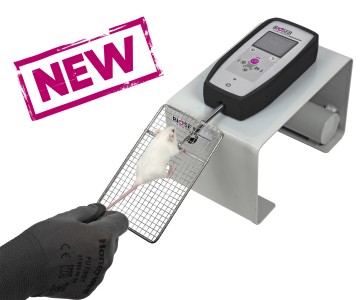
Grip strength test (BIO-GS4)
Source :