 Activité, Système Moteur & Coordination
 Douleur - Allodynie/Hyperalgésie Thermique
 Douleur - Spontanée - Déficit de Posture
 Douleur - Allodynie/Hyperalgésie Mécanique
 Anxiété & Dépression
 Apprentissage/Mémoire - Attention - Addiction
 Physiologie & Recherche Respiratoire
 Métabolisme & Nutrition
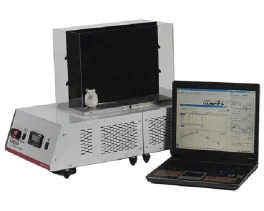

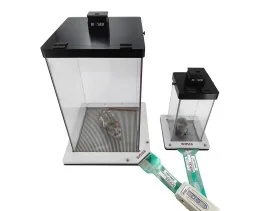
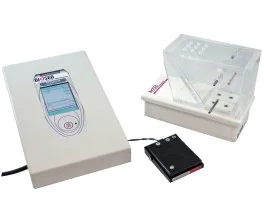
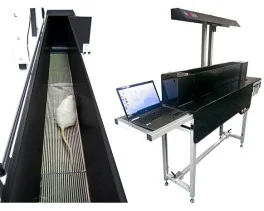
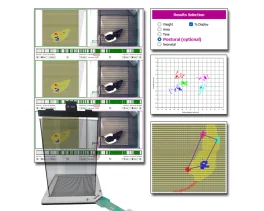


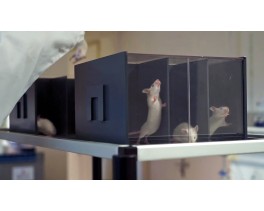

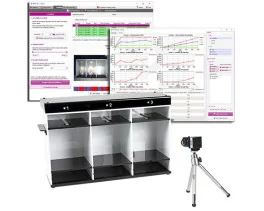



 Douleur
 Système Nerveux Central (SNC)
  Neurodégénérescence
 Système sensoriel
 Système moteur
 Troubles de l'humeur
 Autres pathologies
 Système musculaire
 Articulations
 Métabolisme
 Thématiques transversales
 Congrès & Meetings 2026
 Authors
Jorge Ruas, Igor Cervenka, Aurel Leuchtmann, Paulo Jannig, Serge Ducommun, Elie Naddaf, Elieen Kokesh, Jorge Correia, Marta Murgia, Tadas Sereiva, Bo Li, Feikun Yang, Baptiste Jude, Anastasia Rumyantseva, Michelle Azzolini, Margareta Porsmyr-Palmertz, Wenli Yang, Matthias Mann, Christoph Freyer, Anna Wredenberg, Johanna Lanner, Andreas Hahn, Ana Töpf, Volker Straub
Lab
Journal
Abstract
Sarcomeres are the fundamental functional units of skeletal muscle, essential for both force generation and metabolic homeostasis. While sarcomere degradation has been extensively studied, the mechanisms that preserve its integrity remain poorly defined. Here, we identify HECTD1 as an E3 ubiquitin ligase required for sarcomere maintenance and mitochondrial integrity. We show that HECTD1 ubiquitylates and stabilizes the chaperones KLHL40/41, which protect thin-filament components from misfolding and degradation. Consequently, reducingHectd1expression in myotubes coordinately decreases the levels of multiple sarcomere proteins. Skeletal muscle–specificHectd1knockout mice (Hectd1mKO) show severe sarcomere and mitochondrial disorganization and dysfunction, progressive muscle weakness, exercise and glucose intolerance, and unresolved tissue remodeling. Importantly, human iPSC-derived myotubes carrying a patient-associated HECTD1 mutation, recapitulate key molecular features of theHectd1mKO. These findings establish HECTD1 as a central regulator linking sarcomere proteostasis to mitochondrial function and identify its dysfunction as a cause of myopathy with mitochondriopathy.
Keywords/Topics
both force generation; specifichectd1knockout mice; unresolved tissue remodeling; female hectd1 mko mice; basal grip strength; mice aged cohort; skeletal muscle sarcomere; mitochondrial integrity; sarcomeres; metabolic homeostasis
BIOSEB Instruments Used:
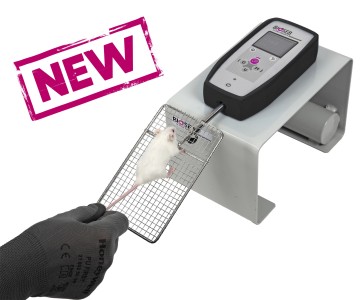
Grip strength test (BIO-GS4)
Source :