 Activité, Système Moteur & Coordination
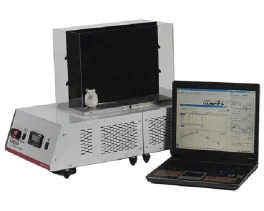
 Douleur - Allodynie/Hyperalgésie Thermique
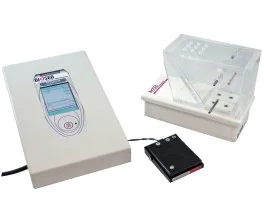
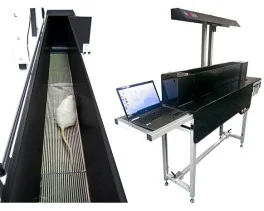
 Douleur - Spontanée - Déficit de Posture
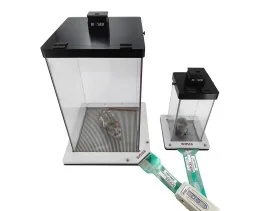
 Douleur - Allodynie/Hyperalgésie Mécanique
 Anxiété & Dépression
 Apprentissage/Mémoire - Attention - Addiction
 Physiologie & Recherche Respiratoire
 Métabolisme & Nutrition

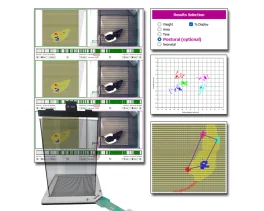
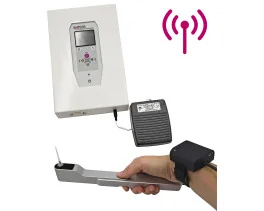
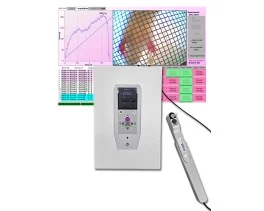
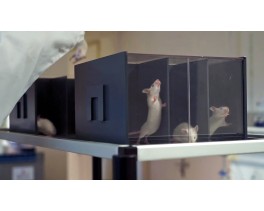
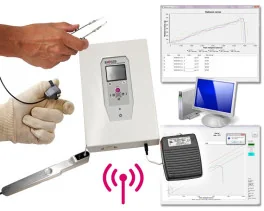
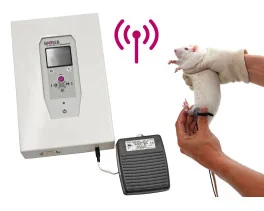
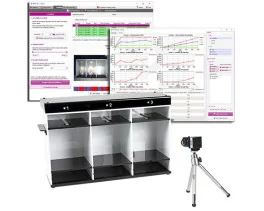
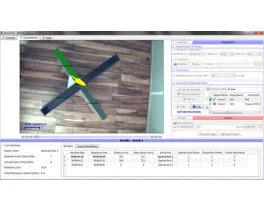



 Douleur
 Système Nerveux Central (SNC)
  Neurodégénérescence
 Système sensoriel
 Système moteur
 Troubles de l'humeur
 Autres pathologies
 Système musculaire
 Articulations
 Métabolisme
 Thématiques transversales
 Congrès & Meetings 2026
 Authors
Mausset-Bonnefont, Anne-Laure, Toupet, Karine, Jorgensen, Christian, Noël, Danièle
Lab
Journal
Arthritis Research & Therapy
Abstract
The aim of this study was to provide an in-depth longitudinal locomotor and structural characterisation of the collagenase-induced osteoarthritis (CIOA) mouse model, using the most relevant and up-to-date non-invasive locomotor phenotyping and imaging methods. The ultimate goal of this study was to predict histological scores, the gold standard parameter in osteoarthritis (OA), based on locomotor or structural deficits. The CIOA model was induced in C57BL/6 male mice, which were then maintained in their home cage with or without a running wheel for 6 weeks. Both global and fine locomotor effects were measured using the open field and Catwalk™ tests. Imaging of bone and cartilage was performed using either µCT, contrast-enhanced µCT or confocal laser scanning microscopy (CLSM) at different time points. Correlations between functional or structural changes and histological scores were sought in order to provide tools for predicting histological degradation. Locomotor deficits were observed at early time points (days 3 to 9) but did not persist to the end of the experiment. Signs of inflammation appeared as early as day 9. They worsened on day 28 as the disease progressed and meniscal calcifications were observed by µCT. The early functional and structural changes correlated with the histological scores measured post mortem and some specific locomotor or structural parameters were identified as predictors of histological changes. Free exercise (voluntary running wheel activity) did not seem to influence the severity of the observed changes. Open-field quantification of kinetic parameters is a simple and timely relevant test to detect early locomotor changes and predict histological changes. Meniscal calcifications and osteophyte formation, which can be observed by µCT at early time points, are also highly predictive of OA severity. These two non-invasive techniques are very useful for longitudinal monitoring of mice and OA score prediction.
Keywords/Topics
Osteoarthritis; CIOA mouse model; μCT; Cartilage imaging; Locomotor evaluation
BIOSEB Instruments Used:
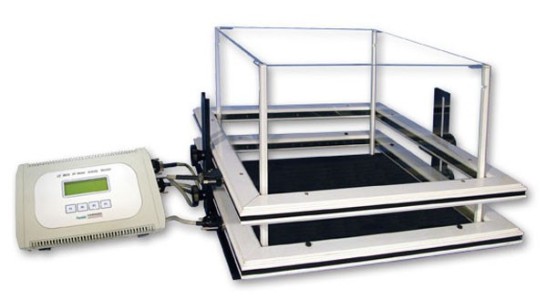
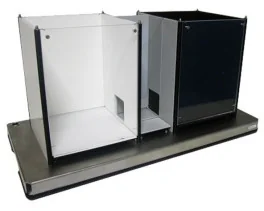
Infrared Actimeter (LE8815)
Source :
https://link.springer.com/article/10.1186/s13075-025-03507-w