 Activité, Système Moteur & Coordination
 Douleur - Allodynie/Hyperalgésie Thermique
 Douleur - Spontanée - Déficit de Posture
 Douleur - Allodynie/Hyperalgésie Mécanique
 Anxiété & Dépression
 Apprentissage/Mémoire - Attention - Addiction
 Physiologie & Recherche Respiratoire
 Métabolisme & Nutrition



 Douleur
 Système Nerveux Central (SNC)
  Neurodégénérescence
 Système sensoriel
 Système moteur
 Troubles de l'humeur
 Autres pathologies
 Système musculaire
 Articulations
 Métabolisme
 Thématiques transversales
 Congrès & Meetings 2026
 Authors
Guangjuan Yin, Kaifang Duan, Dong Dong, Feng Du, Chao Guo, Changyi Zhang, Xi Liu, Yuanjie Sun, Tianwen Huang, Guangfu Cui, Longzhen Cheng
Lab
Journal
Neuron
Abstract
Summary
Repetitive use of morphine (MF) and other opioids can trigger two major pain-related side effects: opioid-induced hypersensitivity (OIH) and analgesic tolerance, which can be subclassified as mechanical and thermal. The central mechanisms underlying mechanical OIH/tolerance remain unresolved. Here, we report that a brain-to-spinal opioid pathway, starting from -opioid receptor (MOR)-expressing neuron in the lateralparabrachial nucleus (lPBNMOR+) via dynorphin (Dyn) neuron in the paraventricular hypothalamic nucleus (PVHDyn+) to k-opioid receptor (KOR)-expressing GABAergic neuron in the spinal dorsal horn (SDHKOR-GABA), controls repeated systemic administration of MF-induced mechanical OIH and tolerance in mice. The above effect is likely mediated by disruption of dorsal horn gate control for MF-resistant mechanical pain via silencing of the Dyn-positive GABAergic neurons in the SDH (lPBNMOR+ PVHDyn+ to SDHKOR-GABA to SDHDyn-GABA). Repetitive binding of MF to MORs during repeated MF administration disrupted the above circuits. Targeting the above brain-to-spinal opioid pathways rescued repetitive MF-induced mechanical OIH and tolerance.
Keywords/Topics
opioid; morphine; OIH; analgesic tolerance ;mechanical MOR ;Dyn KOR ;parabrachial nucleus; hpothalamus
BIOSEB Instruments Used:
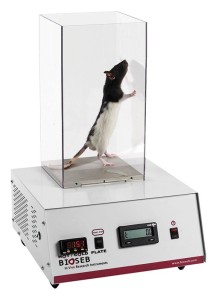
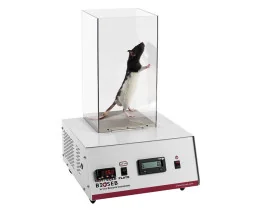
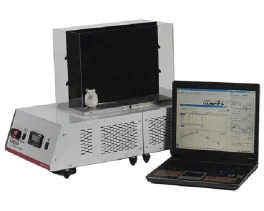
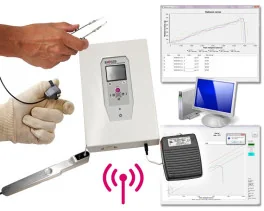
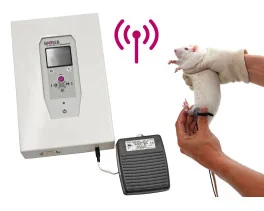
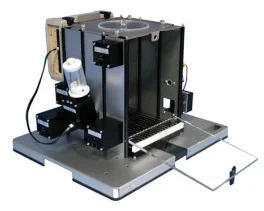
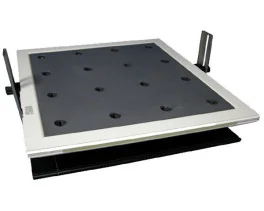
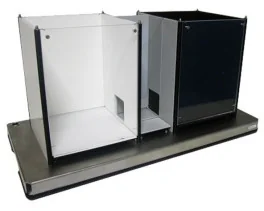
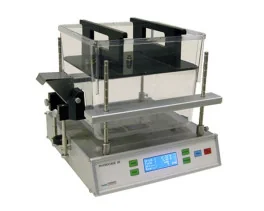
Cold Hot Plate Test (BIO-CHP)
Source :