 Activité, Système Moteur & Coordination
 Douleur - Allodynie/Hyperalgésie Thermique
 Douleur - Spontanée - Déficit de Posture
 Douleur - Allodynie/Hyperalgésie Mécanique
 Anxiété & Dépression
 Apprentissage/Mémoire - Attention - Addiction
 Physiologie & Recherche Respiratoire
 Métabolisme & Nutrition




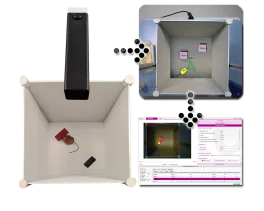


 Douleur
 Système Nerveux Central (SNC)
  Neurodégénérescence
 Système sensoriel
 Système moteur
 Troubles de l'humeur
 Autres pathologies
 Système musculaire
 Articulations
 Métabolisme
 Thématiques transversales
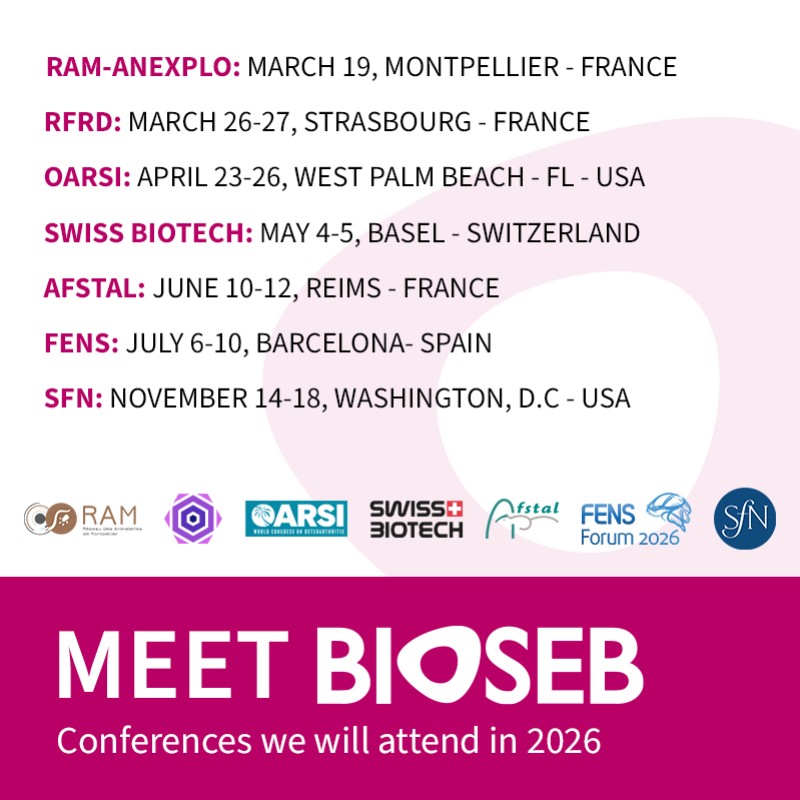 Congrès & Meetings 2026
 Authors
Georgia Price, Graciana de Azambuja, Chloe Williams, David Thompson, Charlotte Tibbit, Zeinab Ali, Adele Austin, Mhoriam Ahmed, Andrew Tosolini, Anny Devoy, Gemma F Codner, Lydia Teboul, Linda Greensmith, Giampietro Schiavo, Sandrine da Cruz, Elizabeth MC Fisher, Thomas J Cunningham
Lab
Help Center
Journal
Abstract
Amyotrophic lateral sclerosis (ALS) is a fatal neurodegenerative disorder, with mutations in the Fused in Sarcoma (FUS) gene accounting for some of the most aggressive forms of the disease. AlthoughFUSmutations are rare, accounting for only around 5% of all familial ALS cases, they are an important paradigm for study because FUS is an RNA binding protein and disruption to RNA metabolism is prominent across ALS subtypes. Here we present two novel, genomically humanised gene-targetedFUSmouse models expressing ALS patient mutations P525L or Q519Ifs. These humanised models express only human FUS protein under physiological control of the endogenous mouse promoter. Humanised knock-inhFUSP525Lmice developed a mid-life onset reduction in motor performance with neuromuscular denervation, motor neuron loss, and unilateral limb muscle weakness. Pre-symptomatic transcriptomic changes suggested metabolic impairments as an early phenotype in skeletal muscle. We also directly compared phenotypes betweenhFUSP525LandhFUSQ519Ifsexpressing mice.hFUSQ519Ifsexpressing mice were more severely affected, including a pronounced developmental phenotype which varied in severity on different genetic backgrounds. The phenotypes of these new FUS-ALS models highlight the potential of fully humanised knock-in mice to aid in unravelling early disease mechanisms, and ultimately to assist in the development of therapies targeted towards the humanFUSgene and protein in ALS.
Keywords/Topics
motor neuron degeneration; humanised knock-inhfusp525lmice; mice hfusq519ifsexpressing mice; fully humanised knock-in mice; grip strength; mice; early mitochondrial gene dysregulation; amyotrophic lateral sclerosis; mutations; sarcoma fus gene
BIOSEB Instruments Used:
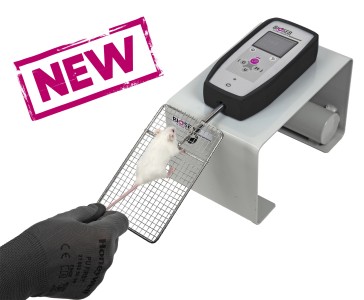
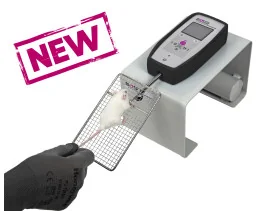
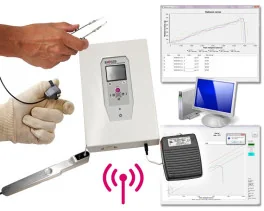
Grip strength test (BIO-GS4)
Source :