 Activité, Système Moteur & Coordination
 Douleur - Allodynie/Hyperalgésie Thermique
 Douleur - Spontanée - Déficit de Posture
 Douleur - Allodynie/Hyperalgésie Mécanique
 Anxiété & Dépression
 Apprentissage/Mémoire - Attention - Addiction
 Physiologie & Recherche Respiratoire
 Métabolisme & Nutrition
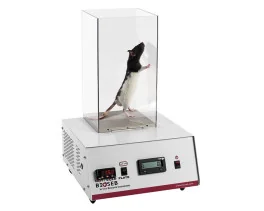
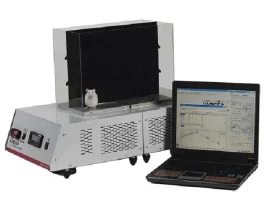

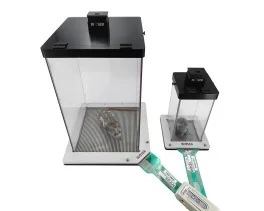
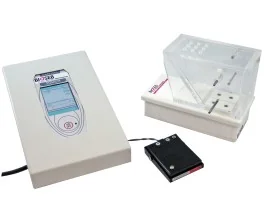




 Douleur
 Système Nerveux Central (SNC)
 Neurodégénérescence
 Système sensoriel
 Système moteur
 Troubles de l'humeur
 Autres pathologies
 Système musculaire
 Articulations
 Métabolisme
 Thématiques transversales
 Congrès & Meetings 2026
Authors
Tiange Xiao, Xi Cheng, Jingliang Zhang, Yueyi Chen, Zhefu Que, Xiaoling Chen, Danielle McAuliffe, Alyssa Boisvert, Yang Yang, Alexander Chubykin, Adam Kimbrough
Lab
Purdue Institute for Integrative Neuroscience; Purdue Autism Research Center; Purdue University; Weldon School of Biomedical Engineering; 4 Purdue Institute for Integrative Neuroscience; 6 Purdue Autism Research Center; 5 Purdue University; Weldon School of Biomedical Engineering; Allen Institute for Cell Science; Arc Institute; Babraham Institute; Brown University; California Institute of Technology; Carnegie Mellon University; Case Western Reserve University; Centre for Microbiology and Environmental Systems Science; Columbia University; Donders Institute for Brain; Cognition and Behaviour; Ernst Strüngmann Institute (ESI) for Neuroscience; European Molecular Biology Laboratory (EMBL); Francis Crick Institute; Fred Hutchinson Cancer Center; Georgia Institute of Technology; The Howard Hughes Medical Institute (HHMI); Institute of Science and Technology Austria; Iowa State University; Johns Hopkins University; Michigan State University; Morgridge Institute; National Taiwan University; North Carolina State University; Northeastern University; Oregon Health & Sciences University; RNA Therapeutics Institute at UMass Chan Med School; Rutgers University; Stowers Institute for Medical Research; Stockholm University; Tel Aviv University; The Rockefeller University; The Sainsbury Laboratory; The Whitehead Institute; University of Connecticut Health Center; University of California; Berkeley; University of California; San Diego; University of California; San Francisco; University of Chicago; University of Geneva; University of Guelph; University of Hong Kong; University of Illinois Chicago; University of Iowa; University of Kansas; University of Massachusetts Chan Medical School; University of New South Wales; University of Ottawa; University of Sydney; Vanderbilt University; Vienna BioCenter; Washington University in St. Louis; Weizmann Institute of Science; Yale University
Journal
bioRxiv
Abstract
Abstract
Background
Alcohol use disorder is a chronic relapsing condition characterized by excessive drinking and withdrawal symptoms. Alcohol dependence disrupts function across multiple brain regions, and recent evidence implicates the cortical amygdala (CoA) as a critical node in alcohol-related circuits. However, how CoA activity influences alcohol intake and brain-wide network function during withdrawal remains unclear.
Methods
Alcohol dependence was induced using chronic intermittent ethanol vapor (CIE). In one cohort, electrophysiological activity of CoA neurons was assessed during withdrawal. In a second cohort, mice underwent CIE paired with two-bottle choice drinking, and inhibitory DREADDs (hM4Di) were used to suppress CoA activity during drinking and withdrawal while behavioral outcomes were measured. Brains were then collected for Fos immunolabeling and iDISCO+ based whole-brain activity mapping to determine how CoA inhibition during withdrawal altered network organization.
Results
Repeated CIE increased alcohol sensitivity in CoA neurons during withdrawal. Chemogenetic inhibition of the CoA reduced alcohol intake in dependent mice without affecting withdrawal-related behaviors. Whole-brain Fos mapping showed that CoA inhibition reduced activity within the CoA while enhancing functional connectivity across multiple brain regions, particularly in the isocortex, thalamus, and anterior hypothalamic nucleus. During withdrawal without CoA inhibition, thalamic regions exhibited negative connectivity, consistent with disrupted network function; CoA inhibition reversed this pattern, producing strongly positive thalamic and medial prefrontal cortex connectivity.
Conclusions
These findings demonstrate that alcohol dependence alters CoA sensitivity, alcohol dependence-induced drinking and brain-wide network organization during withdrawal. The CoA appears to selectively regulate withdrawal-associated alcohol drinking, and its inhibition may reduce intake by restoring thalamic and cortical connectivity.
Highlights
This study identifies the cortical amygdala as a previously underexplored brain region involved in alcohol-related behaviors.
By integrating chemogenetic inhibition with brain-wide network analysis, the study reveals candidate circuit connections through which the CoA may regulate alcohol dependence-related brain activity.
This study establishes the CoA as a potential driver of excessive alcohol drinking and alcohol-related network dysfunction.
Keywords/Topics
coa activity; electrophysiological activity; mice underwent; behavioral outcomes; whole-brain activity mapping; dependent mice; withdrawal-related behaviors; alcohol-related behaviors; alcohol dependence-related brain activity; mechanical sensitivity
Source :
https://www.biorxiv.org/content/10.64898/2026.05.07.723549.abstract