 Activité, Système Moteur & Coordination
 Douleur - Allodynie/Hyperalgésie Thermique
 Douleur - Spontanée - Déficit de Posture
 Douleur - Allodynie/Hyperalgésie Mécanique
 Anxiété & Dépression
 Apprentissage/Mémoire - Attention - Addiction
 Physiologie & Recherche Respiratoire
 Métabolisme & Nutrition




 Douleur
 Système Nerveux Central (SNC)
  Neurodégénérescence
 Système sensoriel
 Système moteur
 Troubles de l'humeur
 Autres pathologies
 Système musculaire
 Articulations
 Métabolisme
 Thématiques transversales
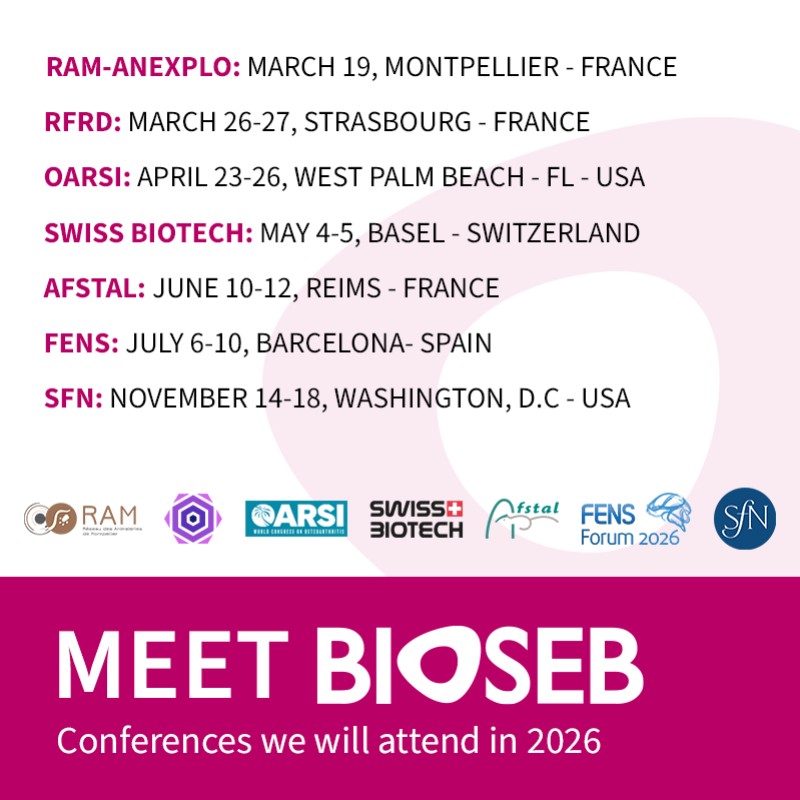 Congrès & Meetings 2026
 Authors
Nasim Kajabadi, Ashok Narasimhan, Gang Chen, Lin Yi, Cristina Rodríguez-Rodríguez, Ian F. Coccimiglio, Tiffany Huang, Mariana Rendeiro, Keitaro Yamanouchi, Urs O. Häfeli, Paul Kostenuik, Robert N. Young, Fabio M.V. Rossi
Lab
UBC; 2 UBC; Berkeley
Journal
bioRxiv
Abstract
Abstract
Duchenne muscular dystrophy (DMD) presents a critical therapeutic gap in adolescent patients, where extensive fibro-fatty muscle replacement and depletion of the regenerative niche render existing interventions insufficient. Prostaglandin E2 signaling through the EP4 receptor stimulates bone and muscle regeneration and repair, but systemic off-target effects have limited the clinical translation of EP4 agonism in diseases such as DMD. We therefore evaluated irodanoprost (IROD), a bone-targeted prodrug of an EP4-selective agonist, in a DMD rat model, comparing early- and late-intervention cohorts. In adolescent rats, 8 weeks of treatment reduced body weight deficit by 41.4% and restored hindlimb muscle mass and maximum tetanic force to wild-type levels. IROD dose-dependently inhibited fibro-adipogenic progenitor differentiation into α-SMA⁺ myofibroblasts, facilitating active resolution of established fibrosis below pre-treatment baseline. This was accompanied by re-activation of a synchronized regenerative program marked by clustered eMHC⁺ fibers, restoring the total myofiber pool to wild-type levels. A strong linear correlation between intramuscular fat reduction and fibrosis resolution suggests that MRI-based fat imaging may serve as a non-invasive surrogate for monitoring anti-fibrotic efficacy. The efficacy of IROD is likely aided by the fact that while it selectively distributes to bone in healthy animals, we observed markedly enhanced accumulation of the drug in dystrophic muscle. These findings establish IROD as a pathology-targeted approach capable of resolving the fibro-fatty niche and restoring regenerative capacity in advanced DMD.
Summary
Pathology-targeted EP4 agonism resolves established fibrosis and restores myofiber regeneration in a rat model of adolescent Duchenne dystrophy.
Graphic abstract
Keywords/Topics
regeneration; bone and muscle regeneration; adolescent rats; regenerative capacity; myofiber regeneration; four-limb grip strength testing; pathology-targeted ep4 agonism; fibrosis; adolescent duchenne muscular dystrophy; adolescent patients
Source :
https://www.biorxiv.org/content/10.64898/2026.05.29.728674.abstract