 Activité, Système Moteur & Coordination
 Douleur - Allodynie/Hyperalgésie Thermique
 Douleur - Spontanée - Déficit de Posture
 Douleur - Allodynie/Hyperalgésie Mécanique
 Anxiété & Dépression
 Apprentissage/Mémoire - Attention - Addiction
 Physiologie & Recherche Respiratoire
 Métabolisme & Nutrition




















 Douleur
 Système Nerveux Central (SNC)
  Neurodégénérescence
 Système sensoriel
 Système moteur
 Troubles de l'humeur
 Autres pathologies
 Système musculaire
 Articulations
 Métabolisme
 Thématiques transversales
 Congrès & Meetings 2026
 Authors
Mohammad Ali Gharaat, Hamid Reza Choobdari, Mohsen Sheykhlouvand
Lab
Journal
ARYA Atherosclerosis
Abstract
In accordance with studies by Kwak et al. (2006), Peterson et al. (2008), and Cheng et al. (2013), the current endurance training regimen led to a significant decrease in Caspase-9 and P53. However, the activation of Catalase did not differ significantly between trained and untrained diabetic groups following the training protocol44. While French et al. (2008) reported insignificant changes in Catalase in the left ventricle after endurance training, aligning with our findings9, this contrasts with reports by Kanter et al. (2017) and Naderi et al. (2015), who observed increases in the activity of antioxidant enzymes such as Catalase and reductions in oxidative stress in the hearts of streptozotocin-induced diabetic rats following endurance training1,11. The discrepancy may be due to differences in training protocols (voluntary low-intensity aerobic training vs. incremental forced aerobic training), suggesting that aerobic training plays a crucial role in stimulating antioxidant defense through the activation of anti-apoptotic antioxidants. Analogous to these protective changes, and in line with reports from Peterson et al (2009), present study revealed decreases in rate of cardiomyocytes apoptosis following endurance training by decreasing Caspase-940. Instead, Ho et al (2012) reported apoptotic effects of endurance exercise evidenced by increased Caspase-943. The differences in training protocol and the age of participants might be the reason of this controversy. It seems that aging is a potential cause of apoptosis which may negatively triggers apoptotic factors following endurance exercise.
Keywords/Topics
cardioprotective;aerobic;training;diabetic;reducing;cardiac;apoptotic;indices;oxidative;stress
BIOSEB Instruments Used:
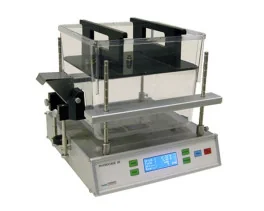
Passive avoidance (LE870),Treadmill (BX-TM)
Source :