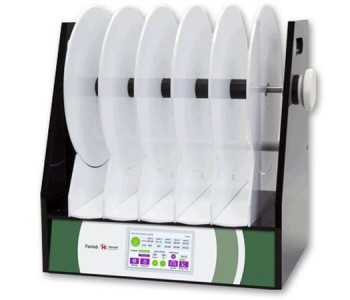
 Activité, Système Moteur & Coordination
 Douleur - Allodynie/Hyperalgésie Thermique
 Douleur - Spontanée - Déficit de Posture
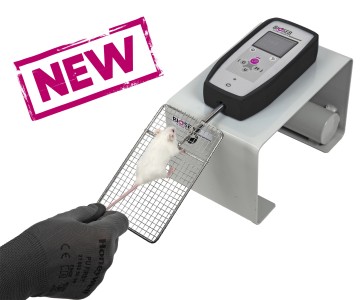
 Douleur - Allodynie/Hyperalgésie Mécanique
 Anxiété & Dépression
 Apprentissage/Mémoire - Attention - Addiction
 Physiologie & Recherche Respiratoire
 Métabolisme & Nutrition







 Douleur
 Système Nerveux Central (SNC)
  Neurodégénérescence
 Système sensoriel
 Système moteur
 Troubles de l'humeur
 Autres pathologies
 Système musculaire
 Articulations
 Métabolisme
 Thématiques transversales
 Congrès & Meetings 2026
 Authors
Sophie Longueville, Ruiyi Yuan, Claire Naon, Emmanuel Valjent, Assunta Pelosi, Emmanuel Roze, Louise-Laure Mariani, Jean-Antoine Girault, Denis Herve
Lab
Journal
bioRxiv
Abstract
Abstract
Isolated dystonia can be caused by loss-of-function mutations in the GNAL gene (DYT-GNAL). This gene encodes the αolf heterotrimeric G protein subunit, which, together with β2γ7 subunits, mediates the stimulatory coupling of dopamine D1 and adenosine A2A receptors to adenylyl-cyclase. These receptors are expressed in distinct striatal projection neurons (SPNs) with complementary functions on motor behavior. To dissect the specific roles of Gαolf in each subpopulation of SPNs, we generated and characterized mouse models in which Gnal was conditionally deleted in neurons expressing either D1 receptors (D1-SPNs) or A2A receptors (A2A-SPNs). Our results confirmed the critical role of Gαolf in regulating adenylyl-cyclase 5 and its coupling with D1 and A2A receptors. Mice with a selective loss of Gαolf in D1-SPNs showed nocturnal hyperactivity, deficits in motor performances, but no overt abnormal movements or generalized motor disability. Our experiments also revealed that Gαolf in D1-SPNs is not systematically required for locomotor responses induced by D1 agonists or psychostimulants. Selective loss of Gαolf in A2A-SPNs did not affect motor abilities nor learning. However, this loss strikingly increased spontaneous locomotor activity that was not further enhanced by psychostimulant drugs (cocaine, D-amphetamine, methylphenidate) or a selective A2 agonist, KW6002, and was paradoxically reduced by caffeine Our study identified specific roles of Gαolf downstream of D1 and A2A receptors in the control of motor behavior and drug responses, highlighting their respective individual contribution in diseases associated with dysfunctional striatal signaling, including dystonia.
Keywords/Topics
GNAL; Gαolf; Dystonia; Striatum; dopamine; adenosine; D1 receptor; A2A receptor; adenylylcyclase; motor control; psychostimulant.
BIOSEB Instruments Used:
Grip strength test (BIO-GS4),Rotarod for rats and mice (BX-ROD)
Source :
https://www.biorxiv.org/content/10.1101/2025.07.02.662743.abstract