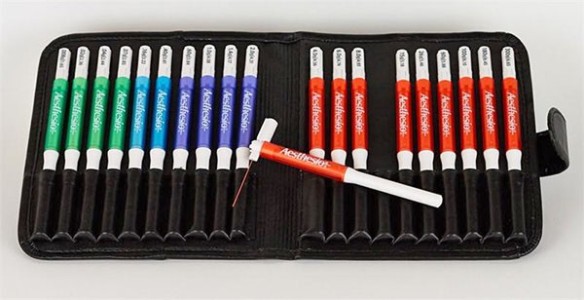
 Activité, Système Moteur & Coordination
 Douleur - Allodynie/Hyperalgésie Thermique
 Douleur - Spontanée - Déficit de Posture
 Douleur - Allodynie/Hyperalgésie Mécanique
 Anxiété & Dépression
 Apprentissage/Mémoire - Attention - Addiction
 Physiologie & Recherche Respiratoire
 Métabolisme & Nutrition







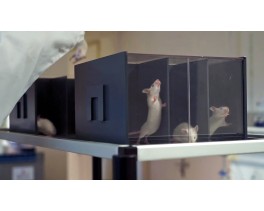

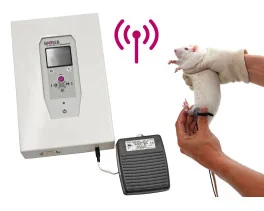

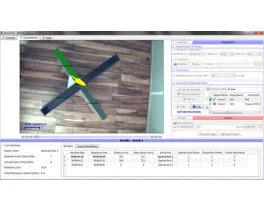
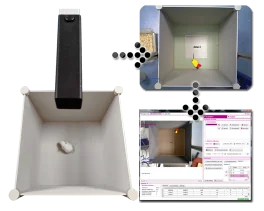














 Douleur
 Système Nerveux Central (SNC)
  Neurodégénérescence
 Système sensoriel
 Système moteur
 Troubles de l'humeur
 Autres pathologies
 Système musculaire
 Articulations
 Métabolisme
 Thématiques transversales
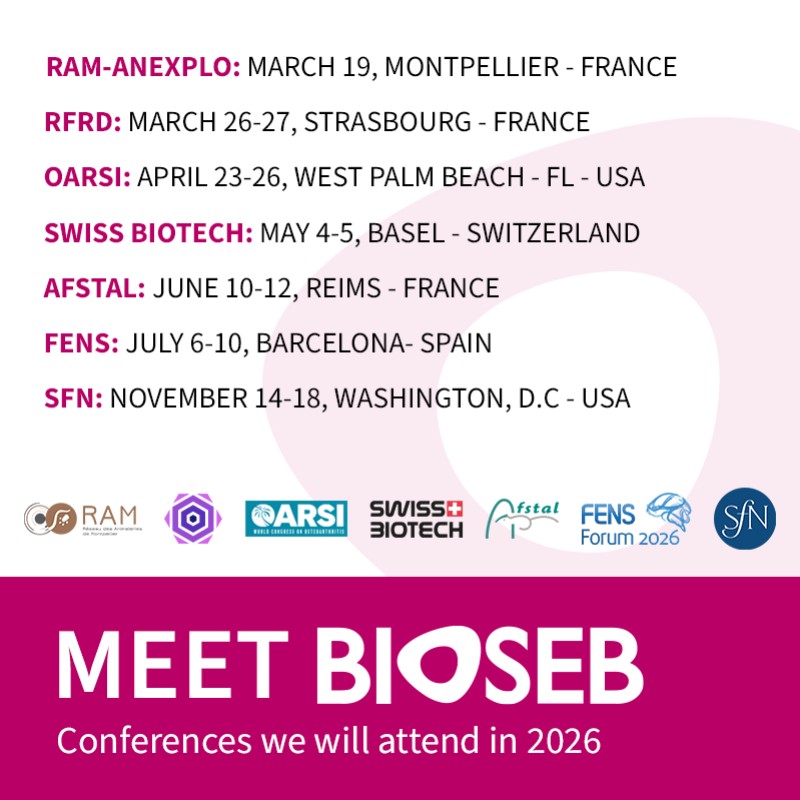 Congrès & Meetings 2026
 Authors
Bied, Marion, Landra-Willm, Arnaud, Chassot, Anne Amandine, Mendez-Otalvaro, Edward Francisco, Sueur, Benjamin, Roßmann, Kilian, de la Peña, Elvira, Fossat, Pascal, Tucker, Stephen J., Noël, Jacques, Kopec, Wojciech, Viana, Felix, Broichhagen, Johannes, Boué-Grabot, Eric, Sandoz, Guillaume
Lab
CNRS; INSERM; iBV; Nice; CNRS; INSERM; IPMC
Journal
Nature Communications
Abstract
Pain management in animal experimentation is crucial for both ethical and scientific reasons, as unmanaged pain can distort physiological responses compromising data reliability. Current strategies are often invasive and pharmacology-based, introducing variability and confounding effects. Here, we present Light-Induced Analgesia, a drug-free, non-invasive method for pain relief in animals. We show that 365 nm illumination activates the pain-inhibitory TRAAK two-pore domain potassium (K2P) channel. This activation is driven by the oxidation of a native methionine at TRAAK’s regulatory fenestration site, triggering a conformational switch from its inactive (down) to active (up) state. We further demonstrate that this mechanism can be transferred to other related K2Ps via a single-point mutation, rendering them light-sensitive. In rodents, gentle skin exposure to 365 nm is sufficient to activate endogenous TRAAK, silence nociceptors, and produce potent, long-lasting analgesia that outperforms standard treatments. Light-Induced Analgesia thus offers an effective, drug-free alternative that can enhance animal welfare and experimental reliability in preclinical research. Membrane ion channels can be responsive to a variety of stimuli such as pressure, temperature, or pH. Here, the authors show that simply shining 365 nm light activates a native potassium channel in rodent pain-sensing neurons, delivering powerful analgesia without drugs or genetic manipulations.
Keywords/Topics
Ion channels in the nervous system; Sensory processing
Source :