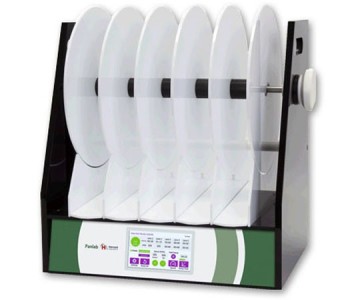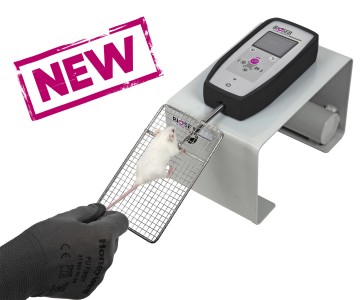
 Activité, Système Moteur & Coordination
 Douleur - Allodynie/Hyperalgésie Thermique
 Douleur - Spontanée - Déficit de Posture
 Douleur - Allodynie/Hyperalgésie Mécanique
 Anxiété & Dépression
 Apprentissage/Mémoire - Attention - Addiction
 Physiologie & Recherche Respiratoire
 Métabolisme & Nutrition




 Douleur
 Système Nerveux Central (SNC)
  Neurodégénérescence
 Système sensoriel
 Système moteur
 Troubles de l'humeur
 Autres pathologies
 Système musculaire
 Articulations
 Métabolisme
 Thématiques transversales
 Congrès & Meetings 2026
 Authors
Aqib Iqbal Dar, Zhi Zhang, Shamila Gopalakrishnan, Rishi Sharma, Anunay James Pulukuri, Anu Rani, Anubhav Dhull, Joan Castaneda Gonzalez, Tia Atoui, Yara Mashal, Zahrah Naseer, Julia Calmi, Anjali Sharma
Lab
Centers for Disease Control and Prevention; National Center for Health Statistics; Department of Chemistry; Washington State University; © 2026 American Institute of Chemical Engineers
Journal
Bioengineering & Translational Medicine
Abstract
Because 2DG-D-Rosi exhibits neuron-targeting properties, we isolated primary neurons from the injured brain regions (or the matching areas in the sham) to evaluate the efficacy of Rosi and 2DG-D-Rosi on neuroinflammatory responses and cell death in neurons. We first compared the mRNA expression of pro-inflammatory markers (TNF-α, IL-1β, TLR4, and NLRP3) at 1 day post-treatments. Upon two-way ANOVA analysis (sex [male, female], treatment [sham, TBI + vehicle, TBI + Rosi, TBI + 2DG-D-Rosi]), there were significant differences in the TNF-α expression based on treatment (F(3,40)= 33.71,p< 0.0001) and the interaction (treatment × sex) (F(3,40)= 3.55,p= 0.0227). In males, TNF-α expression significantly increased in TBI + vehicle (p< 0.001) and TBI + Rosi (p< 0.05) groups, compared with the sham group. TNF-α expression significantly increased in the TBI + vehicle group, compared with the TBI + Rosi (p< 0.05) and TBI + 2DG-D-Rosi (p< 0.001) groups. Moreover, TNF-α expression significantly increased in the TBI + Rosi group, compared with the TBI + 2DG-D-Rosi group (p< 0.001). In females, TNF-α expression significantly increased in TBI + vehicle (p< 0.001), TBI + Rosi (p< 0.001) and TBI + 2DG-D-Rosi (p< 0.01) groups, compared with the sham group. Moreover, TNF-α expression significantly increased in the TBI + vehicle (p< 0.05) and TBI + Rosi (p< 0.05) groups, compared with the TBI + 2DG-D-Rosi group (Figure8a). There were significant differences in the IL-1β expression based on treatment (F(3,40)= 11.66,p< 0.0001), sex (F(1,40)=5.01,p= 0.0308), and the interaction (treatment × sex) (F(3,40)= 5.52,p= 0.0029). In males, IL-1β expression significantly increased in the TBI + vehicle group, compared with sham (p< 0.0001), TBI + Rosi (p< 0.001), and TBI + 2DG-D-Rosi (p< 0.0001) groups. Moreover, IL-1β expression significantly increased in the TBI + Rosi group, compared with the TBI + 2DG-D-Rosi group (p< 0.05). In females, IL-1β expression significantly increased in the TBI + vehicle (p< 0.01) and TBI + Rosi (p< 0.001) groups, compared with the sham group. Moreover, IL-1β expression significantly increased in the TBI + vehicle (p< 0.01) and TBI + Rosi (p< 0.001) groups, compared with the TBI + 2DG-D-Rosi group (Figure8b). There were significant differences in the TLR4 expression based on treatment (F(3,40)= 16.33,p< 0.0001), sex (F(1,40)= 8.61,p= 0.0055) and the interaction (treatment × sex) (F(3,40)= 4.66,p= 0.0069). Specifically, TLR4 expression significantly increased in the male TBI + vehicle (p< 0.001) and TBI + Rosi (p< 0.05) groups, compared with the male sham group. Moreover, TLR4 expression significantly increased in the male TBI + vehicle (p< 0.0001) and TBI + Rosi (p< 0.001) groups, compared with the TBI + 2DG-D-Rosi group (Figure8c). There were significant differences in the NLRP3 expression based on treatment (F(3,40)= 66.63,p< 0.0001) and the interaction (treatment × sex) (F(3,40)= 12.77,p< 0.0001). In males, NLRP3 expression significantly increased in the TBI + vehicle group, compared with the male sham (p< 0.0001), TBI + Rosi (p< 0.0001), and TBI + 2DG-D-Rosi (p< 0.0001) groups. Moreover, NLRP3 expression significantly increased in the TBI + Rosi (p< 0.05) group, compared with the TBI + 2DG-D-Rosi group. In females, NLRP3 expression significantly increased in the TBI + vehicle (p< 0.0001) and TBI + Rosi (p< 0.001) groups, compared with the sham group. Moreover, NLRP3 expression significantly increased in the TBI + vehicle (p< 0.001) and TBI + Rosi (p< 0.01) groups, compared with the TBI + 2DG-D-Rosi group (Figure8d).
Keywords/Topics
glyco-dendrimer; neuroinflammation; neuron targeting; rosiglitazone; targeted drug delivery; traumatic brain injury
BIOSEB Instruments Used:
Grip strength test (BIO-GS4),Rotarod for rats and mice (BX-ROD)
Source :
https://aiche.onlinelibrary.wiley.com/doi/abs/10.1002/btm2.70053