 Activité, Système Moteur & Coordination
 Douleur - Allodynie/Hyperalgésie Thermique
 Douleur - Spontanée - Déficit de Posture
 Douleur - Allodynie/Hyperalgésie Mécanique
 Anxiété & Dépression
 Apprentissage/Mémoire - Attention - Addiction
 Physiologie & Recherche Respiratoire
 Métabolisme & Nutrition




 Douleur
 Système Nerveux Central (SNC)
  Neurodégénérescence
 Système sensoriel
 Système moteur
 Troubles de l'humeur
 Autres pathologies
 Système musculaire
 Articulations
 Métabolisme
 Thématiques transversales
 Congrès & Meetings 2026
 Authors
Simon Frachet, Aurore Danigo, Mathilde Latil, Pierre J. Dilda, Flavien Bessaguet, Laurence Richard, Franck Sturtz, Laurent Magy, Claire Demiot
Lab
Journal
Journal of the Peripheral Nervous System
Abstract
Under our experimental conditions, vincristine induced a sensory small fiber neuropathy characterized by pronounced mechanical allodynia, along with impairment of small nerve fiber endings and axons, consistent with the early stages of VIPN in humans. This condition typically leads to chemotherapy cessation before irreversible large fiber involvement and, in some cases, long-term neuropathic pain. However, VIPN is not exclusively a small fiber neuropathy. Large fibers, which were not specifically assessed behaviorally or neurophysiologically in this experimental context, were not affected at the axonal level, as determined by sciatic nerve biopsies. To enhance the translational relevance of the observed neuroprotective effect of BIO101, future research may need to explore higher dosing and extended exposure durations to also assess large fiber protection in VIPN. BIO101 was administered just prior to chemotherapy to prevent vincristine-induced neuropathic pain and sensory nerve fiber injury. This preventive measure is particularly relevant for CIPN, as chemotherapy treatments are typically planned and administered in a hospital setting. According to ASCO and ESMO guidelines, there is currently no recommended strategy for preventing CIPN in patients receiving chemotherapy [22,23]. Duloxetine is the sole drug recommended for managing CIPN, specifically for pain relief in affected patients. Drug repositioning strategies are significant for CIPN prevention due to the failures of many drug candidates in clinical trials.
Keywords/Topics
20-hydroxyecdysone; chemotherapy-induced peripheral neuropathy; drug repositioning; neuropathic pain; neuroprotection
BIOSEB Instruments Used:
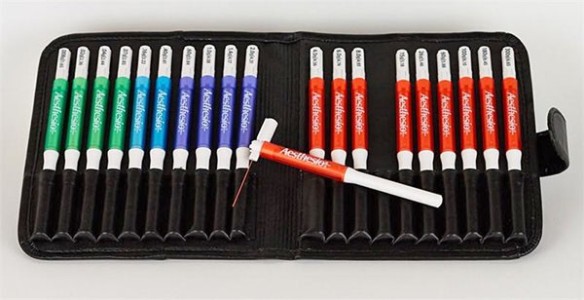
Von Frey Filaments (BIO-VF-M)
Source :