
 Activité, Système Moteur & Coordination
 Douleur - Allodynie/Hyperalgésie Thermique
 Douleur - Spontanée - Déficit de Posture
 Douleur - Allodynie/Hyperalgésie Mécanique
 Anxiété & Dépression
 Apprentissage/Mémoire - Attention - Addiction
 Physiologie & Recherche Respiratoire
 Métabolisme & Nutrition




 Douleur
 Système Nerveux Central (SNC)
  Neurodégénérescence
 Système sensoriel
 Système moteur
 Troubles de l'humeur
 Autres pathologies
 Système musculaire
 Articulations
 Métabolisme
 Thématiques transversales
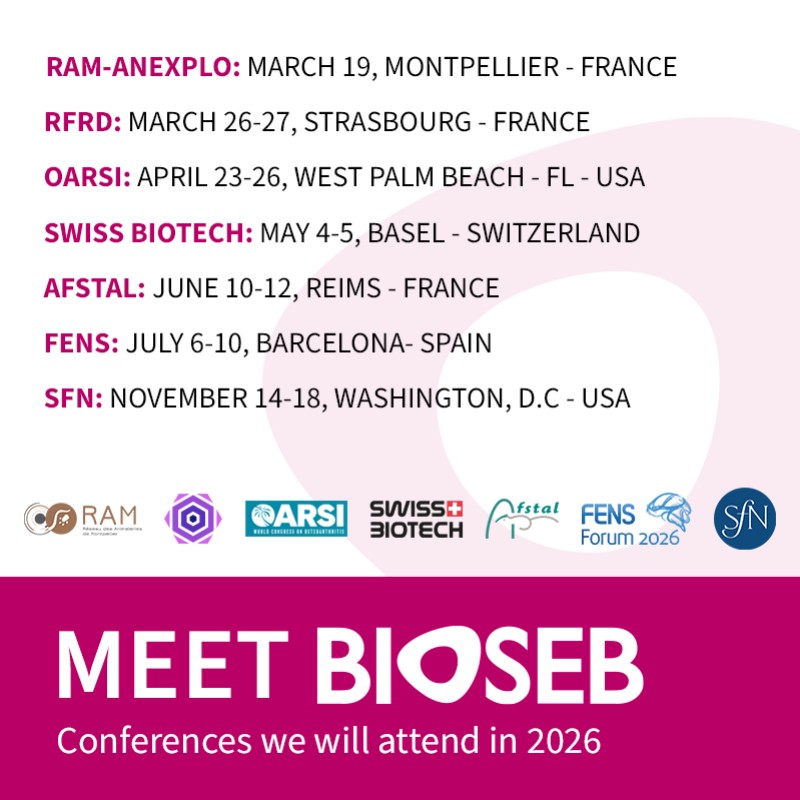 Congrès & Meetings 2026
 Authors
Jimenez-Armijo, Alexandra, Morkmued, Supawich, Ahumada, Jos Tomas, Kharouf, Naji, de Feraudy, Yvan, Gogl, Gergo, Riet, Fabrice, Niederreither, Karen, Laporte, Jocelyn, Birling, Marie Christine, Selloum, Mohammed, Herault, Yann, Hernandez, Magali, Bloch-Zupan, Agns
Lab
Journal
Scientific Reports
Abstract
Kohlschtter-Tnz syndrome (KTS) is a rare autosomal recessive disorder characterized by severe intellectual disability, early-onset epileptic seizures, and amelogenesis imperfecta. Here, we present a novel Rogdi mutant mouse deleting exons 611a mutation found in KTS patients disabling ROGDI function. This Rogdi/ mutant model recapitulates most KTS symptoms. Mutants displayed pentylenetetrazol-induced seizures, confirming epilepsy susceptibility. Spontaneous locomotion and circadian activity tests demonstrate Rogdi mutant hyperactivity mirroring patient spasticity. Object recognition impairment indicates memory deficits. Rogdi/ mutant enamel was markedly less mature. Scanning electron microscopy confirmed its hypomineralized/hypomature crystallization, as well as its low mineral content. Transcriptomic RNA sequencing of postnatal day 5 lower incisors showed downregulated enamel matrix proteins Enam, Amelx, and Ambn. Enamel crystallization appears highly pH-dependent, cycling between an acidic and neutral pH during enamel maturation. Rogdi/ teeth exhibit no signs of cyclic dental acidification. Additionally, expression changes in Wdr72, Slc9a3r2, and Atp6v0c were identified as potential contributors to these tooth acidification abnormalities. These proteins interact through the acidifying V-ATPase complex. Here, we present the Rogdi/ mutant as a novel model to partially decipher KTS pathophysiology. Rogdi/ mutant defects in acidification might explain the unusual combination of enamel and rare neurological disease symptoms.
Keywords/Topics
rogdi;knockout;mouse;model;syndrome;autosomal;recessive;disorder;characterized;severe
BIOSEB Instruments Used:
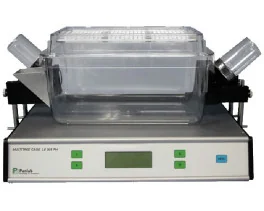
Aron Test or Four Plates Test (LE830),Rotarod for rats and mice (BX-ROD)
Source :
