 Activité, Système Moteur & Coordination
 Douleur - Allodynie/Hyperalgésie Thermique
 Douleur - Spontanée - Déficit de Posture
 Douleur - Allodynie/Hyperalgésie Mécanique
 Anxiété & Dépression
 Apprentissage/Mémoire - Attention - Addiction
 Physiologie & Recherche Respiratoire
 Métabolisme & Nutrition







 Douleur
 Système Nerveux Central (SNC)
  Neurodégénérescence
 Système sensoriel
 Système moteur
 Troubles de l'humeur
 Autres pathologies
 Système musculaire
 Articulations
 Métabolisme
 Thématiques transversales
 Congrès & Meetings 2026
 Authors
For authors, Instructions for authors, Editorial policies, BMJ Author Hub
Lab
Journal
RMD Open
Abstract
Introduction Inflammatory myopathies (IM) are a group of severe autoimmune diseases, sharing some similarities, whose cause is unknown and treatment is empirical.While C-protein-induced myositis (CIM), the most currently used mouse model of IM, has removed some roadblocks to understand and improve the treatment of IM, it has only been partially characterised and its generation limited by poor reproducibility. This study aimed at optimising the generation and the characterisation of CIM.Methods In silico analysis was run to identify the top three specific and immunogenic regions of C-protein. The cognate polypeptides were synthesised and used to immunise C57BL/6N mice. Grip strength, walking ability, serum creatine kinase levels and muscle pathology (histological and electron microscopic features) were assessed. Immune cell proportions and interferon signature in muscles were also determined. Autoantibodies targeting C-protein were quantified in serum and muscle.Results Among the three C-protein polypeptides with the highest immunogenic score, immunisation with the amino acids 965–991 induced the most severe phenotype (experimental myositis (EM)) characterised by 37% decrease in strength, 36% increase in hind base width, 45% increase in serum creatine-kinase level and 80% increase in histological inflammatory score. Autoantibodies targeting C-protein were detected in serum and muscle of EM mice. Optical and electron microscopy revealed mononuclear cell infiltrate, myofibre necrosis, atrophy, major histocompatibility complex-I expression as well as sarcolemmal, sarcomeric and mitochondrial abnormalities. Proinflammatory T-lymphocytes, macrophages, and type I and II interferon-stimulated transcripts were detected within the muscle of EM mice.Conclusion EM recapitulates the common hallmarks of IM. This costless, high throughput, reproducible and robust model, generated in the most commonly used background for genetically engineered mice, may foster preclinical research in IM.
Keywords/Topics
myositis
BIOSEB Instruments Used:
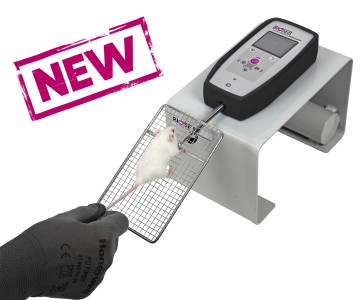
Grip strength test (BIO-GS4)
Source :