 Activité, Système Moteur & Coordination
 Douleur - Allodynie/Hyperalgésie Thermique
 Douleur - Spontanée - Déficit de Posture
 Douleur - Allodynie/Hyperalgésie Mécanique
 Anxiété & Dépression
 Apprentissage/Mémoire - Attention - Addiction
 Physiologie & Recherche Respiratoire
 Métabolisme & Nutrition







 Douleur
 Système Nerveux Central (SNC)
  Neurodégénérescence
 Système sensoriel
 Système moteur
 Troubles de l'humeur
 Autres pathologies
 Système musculaire
 Articulations
 Métabolisme
 Thématiques transversales
 Congrès & Meetings 2026
 Authors
Yusuf Z. Tufail, Carlos Guijas, David A. Kummer, Cassandra L. Henry, Jeanne V. Moody, Taylor Andalis, Bryan Boyd, Jacob Gil, Jacquelyn Ha, Dylan M. Herbst, Rachel A. Herbst-Graham, Clayton Hutton, Ellen M. Kozina, Micah J. Niphakis, Nhi Ngo, Gary P. O’Neill, Holly T. Reardon, Michael Shaghafi, Olesya A. Ulanovskaya, Nicholas Raffaele, Andreu Viader, Olivia D. Weber, Todd K. Jones, Cheryl A. Grice, John J.M. Wiener, Klaus B. Simonsen, Jacqueline L. Blankman, Jason R. Clapper
Lab
Journal
Cell Chemical Biology
Abstract
Summary
Diacylglycerol lipase (DAGL) produces 2-arachidonoylglycerol (2-AG) and other proinflammatory lipids. Inactivation of DAGLs reduces the production of 2-AG, arachidonic acid (AA) and eicosanoids and elicits antinociceptive and anti-(neuro)inflammatory effects in rodents. However, inhibitors that enter the brain can cause significant central nervous system (CNS) side effects. Using activity-based protein profiling (ABPP), we report the discovery of A1480LS, a potent, in vivo active, small molecule dual inhibitor of DAGLα/β that is functionally biased to the periphery. We demonstrate that A1480LS reduces pain behaviors and nociceptor activity in animal models. Moreover, A1480LS accomplishes this by reducing 2-AG and other lipids in peripheral tissues without causing adverse CNS effects. Overall, we show that inhibiting DAG metabolism in the periphery elicits antinociceptive effects that can be functionally dissected from adverse central effects and provide preclinical validation for a non-narcotic strategy to treat pain.
Keywords/Topics
diacylglycerol lipase; 2-arachidonoylglycerol; arachidonic acid; eicosanoid; prostaglandin; inhibitor; neuropathic pain; activity-based protein profiling; analgesia; peripheral
BIOSEB Instruments Used:
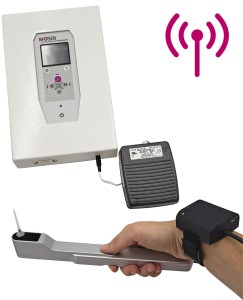
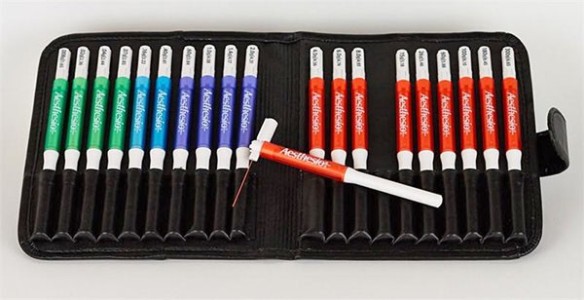
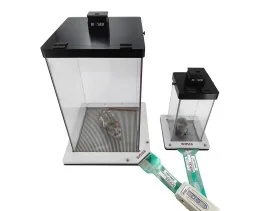
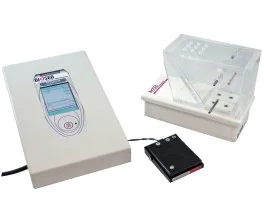
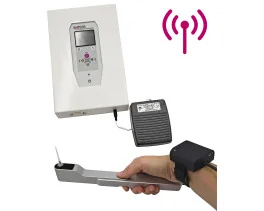
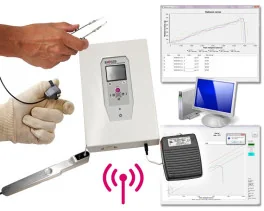
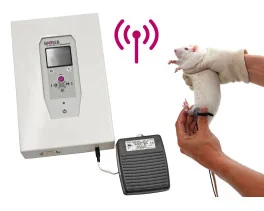
Electronic Von Frey - Wireless (BIO-EVF-WRS),Von Frey Filaments (BIO-VF-M)
Source :
https://www.cell.com/cell-chemical-biology/fulltext/S2451-9456(25)00424-6