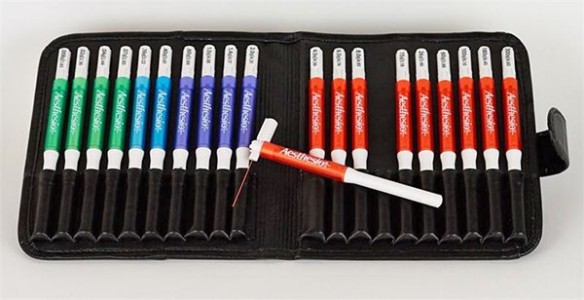
 Activité, Système Moteur & Coordination
 Douleur - Allodynie/Hyperalgésie Thermique
 Douleur - Spontanée - Déficit de Posture
 Douleur - Allodynie/Hyperalgésie Mécanique
 Anxiété & Dépression
 Apprentissage/Mémoire - Attention - Addiction
 Physiologie & Recherche Respiratoire
 Métabolisme & Nutrition
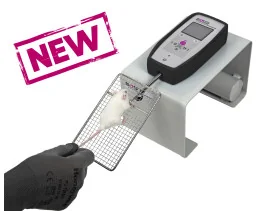
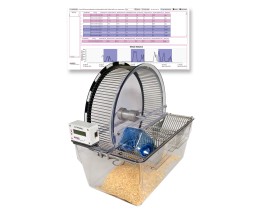



 Douleur
 Système Nerveux Central (SNC)
  Neurodégénérescence
 Système sensoriel
 Système moteur
 Troubles de l'humeur
 Autres pathologies
 Système musculaire
 Articulations
 Métabolisme
 Thématiques transversales
 Congrès & Meetings 2026
 Authors
Sabrina de Souza, Hannah Hua, Sophie Laumet, Jaewon Sim, Charlotte Vanacker, Alexis Bavencoffe, Geoffroy Laumet
Lab
Journal
Pain
Abstract
Neurons of small to medium soma sizes (less than 30 μm in diameter, 70% of these neurons respond to capsaicin)71were sampled for whole-cell patch-clamp recordings at room temperature (~ 21°C) using an EPC10 amplifier (HEKA Elektronik, Lambrecht, Germany) 18 to 30 hours after dissociation. Patch pipettes crafted from borosilicate glass capillaries with a P-97 puller (Sutter Instruments, Novato, California) were fire-polished with an MF-830 microforge (Narishige, Setagaya-ku, Tokyo, Japan) to achieve a final pipette resistance of 3 to 8 MV when filled with an intracellular recording solution composed of (in mM) 134 KCl, 1.6 MgCl2, 13.2 NaCl, 3 EGTA, 9 HEPES, 4 Mg-ATP, and 0.3 Na-GTP (pH 7.2 adjusted with KOH, 300 mOsM, adjusted with sucrose). The external bath recording solution contained (in mM) 140 NaCl, 3 KCl, 1.8 CaCl2, 2 MgCl2, 10 HEPES, and 10 glucose (pH 7.4 adjusted with NaOH, 320 mOsM). After achieving a tight seal (>3 GΩ) under voltage clamp at −60 mV, whole-cell configuration was established, and the membrane capacitance determined. Ongoing activity (OA) at rest, also referred to as spontaneous activity (SA), was assessed in current clamp mode, with activity defined as the occurrence of at least one spike within a minute of recording without current injection (I = 0). Resting membrane potential (RMP) was measured during that initial recording. Additional measures of membrane excitability were then performed included (in order): assessing OA at −45 mV (with neurons artificially clamped by current injection at −45 mV for at least 30 seconds), action potential voltage thresholds from 2-second step protocols of positive current injection starting from −60 mV with 5 to 20 pA injection increments. Rheobase was obtained from the 2-second step protocols. Finally, input resistance was determined on 500-millisecond steps of negative current injection starting from −60 mV with −5 pA increments. Ongoing activity at −45 mV was defined as any discharge occurring during a 30-second current clamp recording. Previous studies have identified 2 categories of nociceptors based on the instance of one or more discharges occurring on 2-second depolarizing steps of current injection up to 2 times rheobase.9,54Neurons always exhibiting a single action potential, usually at the beginning of the step injection, were identified as rapid accommodating (RA). Neurons capable of exhibiting more than one action potential were identified as nonaccommodating (NA).54Rapid accommodating neurons usually represent a minority of the sampled neurons (in this study 2.4%).9,40,54For lacking the capacity to exhibit OA, RA neurons were excluded from further analysis. The remaining NA neurons included in this study exhibit electrophysiological properties of primary nociceptors (highly enriched in capsaicin-sensitive cells) as previously reported in rodents.9,40,54Finally, the liquid junction potential was calculated to be ~4.3 mV and was not corrected, meaning the actual membrane potentials were up to ~4.3 mV more negative than indicated in the recordings and reported membrane potentials. For CCL12 treatments, isolated neurons were incubated in bath recording solution for 3 minutes with 100-nM mouse recombinant CCL12 (rec-CCL12, PeproTech, Cranbury, New Jersey) before recording. This dose was chosen based on the ability of other CCL family chemokines to impact neuronal excitability.61
Keywords/Topics
room temperature; ongoing activity; spontaneous activity; activity; 100-nm mouse recombinant ccl12; c c motif; chemokine ligand; ccl12; diameter; whole-cell patch-clamp recordings
Source :