 Activité, Système Moteur & Coordination
 Douleur - Allodynie/Hyperalgésie Thermique
 Douleur - Spontanée - Déficit de Posture
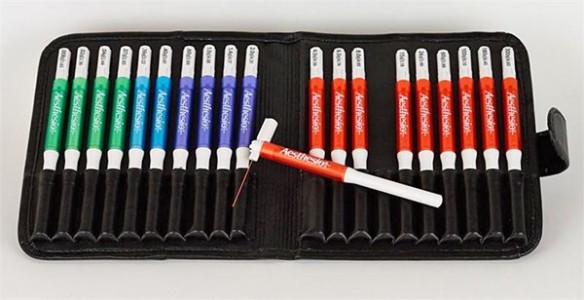
 Douleur - Allodynie/Hyperalgésie Mécanique
 Anxiété & Dépression
 Apprentissage/Mémoire - Attention - Addiction
 Physiologie & Recherche Respiratoire
 Métabolisme & Nutrition


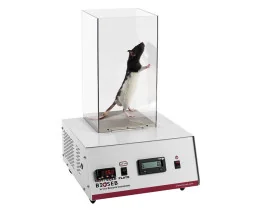
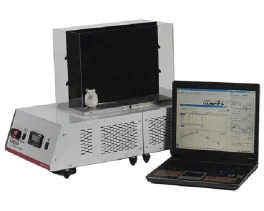

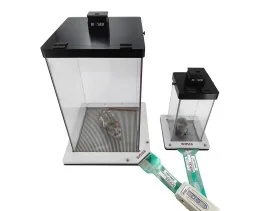
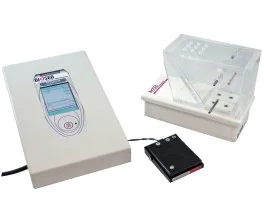
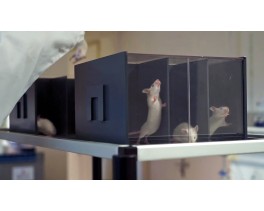
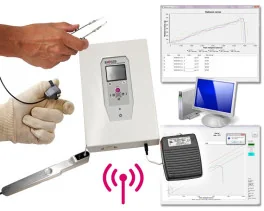
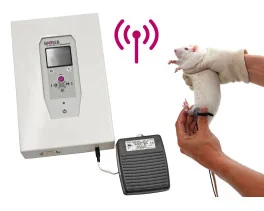
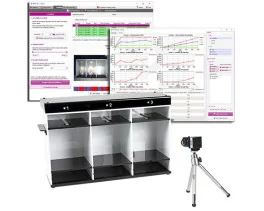


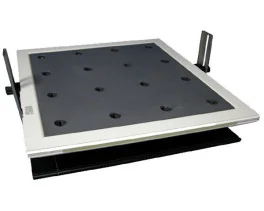

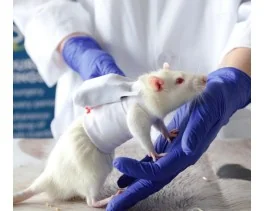





 Douleur
 Système Nerveux Central (SNC)
  Neurodégénérescence
 Système sensoriel
 Système moteur
 Troubles de l'humeur
 Autres pathologies
 Système musculaire
 Articulations
 Métabolisme
 Thématiques transversales
 Congrès & Meetings 2026
 Authors
Solange Sarkis, Luna Dumon, Mélissa Girard, Chantal Cazvieille, Marina Schverer, Vincent Daien, Bianca Johansen, Cécile Delettre, Chloé Chamard, Frederic Michon
Lab
Laboratoires Théa; 2 Laboratoires Théa; Brown University; Donders Institute for Brain; Iowa State University; Johns Hopkins University; National Taiwan University; Northeastern University; Rutgers University; Tel Aviv University; The Sainsbury Laboratory; The Whitehead Institute; Berkeley; San Diego; University of Geneva; University of Guelph; University of Hong Kong; University of Iowa; University of Kansas; University of New South Wales; University of Ottawa; University of Sydney; Vanderbilt University; Washington University in St. Louis; Yale University
Journal
bioRxiv
Abstract
Abstract
Purpose
Pitx2-associated developmental glaucoma is characterized by anterior segment dysgenesis, ocular hypertension, and optic neuropathy. Its consequences for corneal sensory innervation remain poorly understood. We investigated whether this disease alters corneal nerve structure and sensory function in a sex-dependent manner.
Methods
Male and female Pitx2egl1/egl1 and Pitx2+/+ mice were examined at 1 and 3 months. Ocular phenotyping included intraocular pressure, fundus imaging, visual evoked potentials, and optic nerve ultrastructure. RNA sequencing of corneas and trigeminal ganglia was performed at 3 months. Corneal innervation was assessed by βIII-tubulin immunofluorescence and volumetric quantification of nerve fibers. Corneal sensitivity was measured using Von Frey filaments.
Results
Pitx2egl1/egl1 mice developed progressive ocular hypertension, fundus abnormalities, reduced visual evoked potential amplitudes, and optic nerve degeneration, supporting the model as early-onset glaucoma. Baseline sex-related transcriptional differences were limited in both cornea and trigeminal ganglia. In contrast, Pitx2 mutation induced sex-dependent molecular responses. Female corneas showed broader transcriptional changes enriched in inflammatory, stress-response, and tissue-remodeling pathways, whereas male corneas showed a more restricted response involving metabolic and homeostatic processes. Similar sex divergence was observed in trigeminal ganglia. Corneal nerve fiber volume was reduced in both sexes at 3 months but not at 1 month, whereas reduced sensitivity was detected only in mutant males.
Conclusions
This study identifies sexual dimorphism as a component of Pitx2-associated developmental glaucoma. Furthermore, our findings suggest that glaucoma affects the corneal sensory system beyond optic nerve pathology, highlighting a potentially overlooked dimension of disease relevant to ocular surface monitoring and patient management.
Highlights
Disruption of the cornea–trigeminal ganglion axis with coordinated molecular and functional alterations in Pitx2-associated early-onset glaucoma
Sex-dependent modifications in both cornea and trigeminal ganglion responses to early-onset glaucoma
Progressive corneal neurodegeneration in early-onset glaucoma
Keywords/Topics
pitx2 mice; von frey filaments; testing; mice; pitx2-associated early-onset glaucoma; corneal innervation; sensory function; anterior segment dysgenesis; ocular hypertension; its consequences
Source :
https://www.biorxiv.org/content/10.64898/2026.04.28.721459.abstract