BACKGROUND AND PURPOSE: Alterations in transcriptional and translational mechanisms occur during skeletal muscle aging and such changes may...
Array
(
[id_prestablog_news] => 898
[id_shop] => 1
[date] => 2017-07-22 00:00:00
[date_modification] => 2024-02-09 14:15:12
[langues] => ["1","2"]
[actif] => 1
[slide] => 0
[url_redirect] =>
[average_rating] =>
[number_rating] =>
[author_id] => 1
[featured] => 0
[ishero] => 0
[prim_key] => 1760
[id_lang] => 2
[title] => Antinociceptive- antiallodynic and antihyperalgesic effects of the 5-HT1A recept
[paragraph] => Antinociceptive, antiallodynic and antihyperalgesic effects of the 5-HT1A receptor selective agonist, NLX-112 in mouse models of pain
[content] => Authors
K. Salat, M. Kolaczkowski, A. Furgala, A. Rojek, J. Sniecikowska, M. Varney, A. Newman-Tancredi
Lab
Jagiellonian University, Medical College, Krakow, Poland
Journal
Neuropharmacology
Abstract
BACKGROUND AND PURPOSE:
Alterations in transcriptional and translational mechanisms occur during skeletal muscle aging and such changes may contribute to age-related atrophy. Herein, we examined markers related to global transcriptional output (i.e., myonuclear number, total mRNA and RNA pol II levels), translational efficiency [i.e., eukaryotic initiation and elongation factor levels and muscle protein synthesis (MPS) levels] and translational capacity (ribosome density) in the slow-twitch soleus and fast-twitch plantaris muscles of male Fischer 344 rats aged 3, 6, 12, 18, and 24 months (n = 9-10 per group). We also examined alterations in markers of proteolysis and oxidative stress in these muscles (i.e., 20S proteasome activity, poly-ubiquinated protein levels and 4-HNE levels). Notable plantaris muscle observations included: (a) fiber cross sectional area (CSA) was 59% (p < 0.05) and 48% (p < 0.05) greater in 12 month vs. 3 month and 24 month rats, respectively, suggesting a peak lifetime value near 12 months and age-related atrophy by 24 months, (b) MPS levels were greatest in 18 month rats (p < 0.05) despite the onset of atrophy, (c) while regulators of ribosome biogenesis [c-Myc and upstream binding factor (UBF) protein levels] generally increased with age, ribosome density linearly decreased from 3 months of age and RNA polymerase (Pol) I protein levels were lowest in 24 month rats, and d) 20S proteasome activity was robustly up-regulated in 6 and 24 month rats (p < 0.05). Notable soleus muscle observations included: (a) fiber CSA was greatest in 6 month rats and was maintained in older age groups, and (b) 20S proteasome activity was modestly but significantly greater in 24 month vs. 3/12/18 month rats (p < 0.05), and (c) total mRNA levels (suggestive of transcriptional output) trended downward in older rats despite non-significant between-group differences in myonuclear number and/or RNA Pol II protein levels. Collectively, these findings suggest that plantaris, not soleus, atrophy occurs following 12 months of age in male Fisher rats and this may be due to translational deficits (i.e., changes in MPS and ribosome density) and/or increases in proteolysis rather than increased oxidative stress and/or alterations in global transcriptional mechanisms.
Glutamatergic dysfunctions are observed in the pathophysiology of depression. The glutamatergic synapse as well as the AMPA receptor's (AMPAR) activation may represent new potential targets for therapeutic intervention in the context of major depressive disorders. S 47445 is a novel AMPARs positive allosteric modulator (AMPA-PAM) possessing procognitive, neurotrophic properties and enhancing synaptic plasticity. Here, we investigated the antidepressant/anxiolytic-like effects of S47445 in a mouse model of anxiety/depression based on chronic corticosterone administration (CORT) and in the Chronic Mild Stress (CMS) model in rats. Four doses of S 47445 (0.3 to 10 mg/kg, oral route, 4 and 5 weeks, respectively) were assessed in both models. In mouse, behavioral effects were tested in various anxiety-and depression-related behaviors : the elevated plus maze (EPM), open field (OF), splash test (ST), forced swim test (FST), tail suspension test (TST), fur coat state and novelty suppressed feeding (NSF) as well as on hippocampal neurogenesis and dendritic arborization in comparison to chronic fluoxetine treatment (18 mg/kg, p.o.). In rats, behavioral effectsof S 47445 were monitored using sucrose consumption and compared to those of imipramine or venlafaxine (10 mg/kg, i.p.) during the whole treatment period and after withdrawal of treatments. In a mouse model of genetic ablation of hippocampal neurogenesis (GFAP-Tk model), neurogenesisdependent/independent effects of chronic S 47445 treatment were tested, as well as BDNF hippocampal expression. S 47445 reversed CORT-induced depressive-like state by increasing grooming duration and reversing coat state's deterioration. S 47445 also decreased the immobility duration
BIOSEB Instruments Used
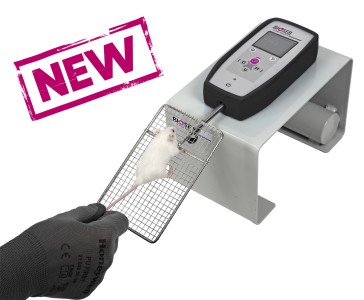
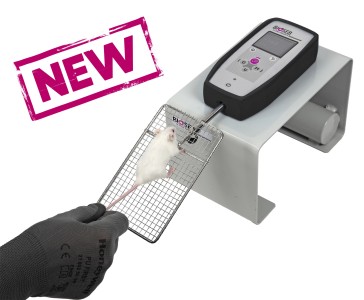
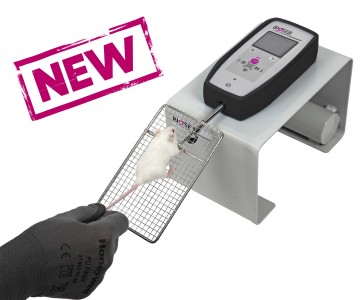
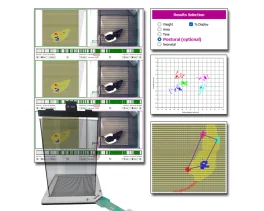
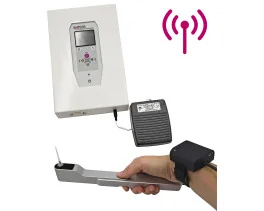
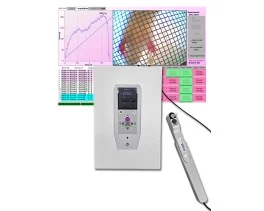
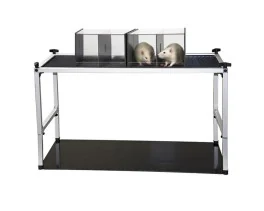
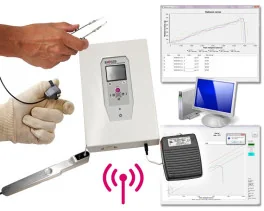
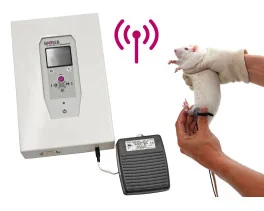
Electronic Von Frey 4 (BIO-EVF4),Electronic Von Frey 5 with embedded camera (BIO-EVF5)
Keywords/Topics
Douleurs neuropathiques; Douleurs chroniques; Allodynie mécanique & Hyperalgésie; Maladie de Parkinson; Cancer; Neurodégénérescence; Thématiques transversales; Douleur
[meta_description] =>
[meta_keywords] => http://www.sciencedirect.com/science/article/pii/S0028390817303532
[meta_title] =>
[link_rewrite] => antinociceptive--antiallodynic-and-antihyperalgesic-effects-of-the-5-ht1a-receptor-selective-agonist--nlx-112-in-mouse-models-of-pain
[actif_langue] => 1
[read] => 954
[count_comments] => 0
[id] => 898
[categories] => Array
(
[36] => Array
(
[id_prestablog_categorie] => 36
[title] => Allodynie mécanique & Hyperalgésie
[link_rewrite] => Allodynie-mecanique-Hyperalgesie
)
[90] => Array
(
[id_prestablog_categorie] => 90
[title] => Cancer
[link_rewrite] => Cancer
)
[10] => Array
(
[id_prestablog_categorie] => 10
[title] => Douleur
[link_rewrite] => Douleur
)
[30] => Array
(
[id_prestablog_categorie] => 30
[title] => Douleurs chroniques
[link_rewrite] => Douleurs-chroniques
)
[29] => Array
(
[id_prestablog_categorie] => 29
[title] => Douleurs neuropathiques
[link_rewrite] => Douleurs-neuropathiques
)
[45] => Array
(
[id_prestablog_categorie] => 45
[title] => Maladie de Parkinson
[link_rewrite] => Maladie-de-Parkinson
)
[12] => Array
(
[id_prestablog_categorie] => 12
[title] => Neurodégénérescence
[link_rewrite] => Neurodegenerescence
)
[2] => Array
(
[id_prestablog_categorie] => 2
[title] => Publications
[link_rewrite] => publications
)
[24] => Array
(
[id_prestablog_categorie] => 24
[title] => Thématiques transversales
[link_rewrite] => Thematiques-transversales
)
)
[authors] =>
[paragraph_crop] => Antinociceptive, antiallodynic and antihyperalgesic effects of the 5-HT1A receptor selective [...]
[link_for_unique] => 1
[products_liaison] => Array
(
[1859] => Array
(
[name] => Von Frey Électronique - Sans Fil
[description_short] =>
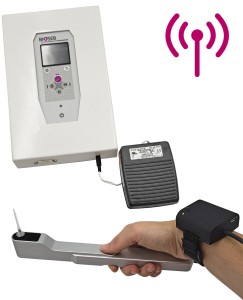
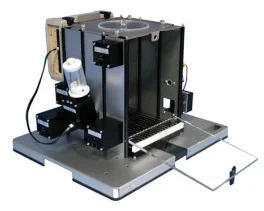
Une solution rapide pour déterminer le seuil de sensibilité à la douleur mécanique chez les rongeurs (rats et souris). Maintenant en version sans-fil, pour être libéré des câbles!
Cet instrument électronique précis et simple d'utilisation est le test de référence pour vos recherches en analgésie, nociception, neuropathies et douleurs post-opératoires


[thumb] => 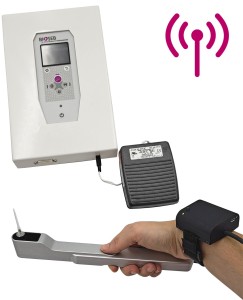 [img_empty] => /var/www/vhosts/de3310.ispfr.net/bioseb2024/modules/prestablog/views/img/product_link_white.jpg
[image_presente] => 1
[link] => https://bioseb.com/fr/douleur-allodyniehyperalgesie-mecanique/1859-electronic-von-frey-4.html
)
[1860] => Array
(
[name] => Von Frey Électronique 5 avec caméra intégrée
[description_short] =>
[img_empty] => /var/www/vhosts/de3310.ispfr.net/bioseb2024/modules/prestablog/views/img/product_link_white.jpg
[image_presente] => 1
[link] => https://bioseb.com/fr/douleur-allodyniehyperalgesie-mecanique/1859-electronic-von-frey-4.html
)
[1860] => Array
(
[name] => Von Frey Électronique 5 avec caméra intégrée
[description_short] =>
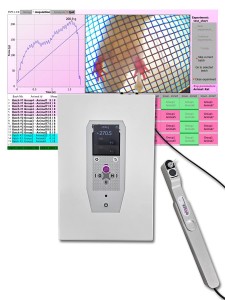
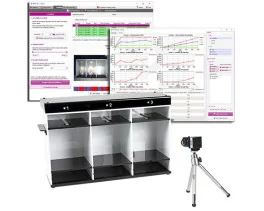
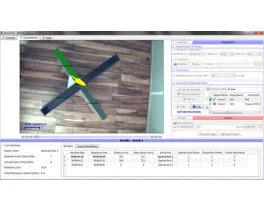
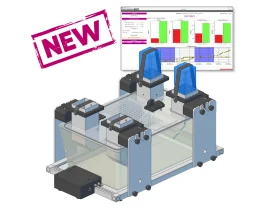
En tant que version électronique du classique esthésiomètre à filaments de Von Frey, la dernière évolution de l’instrument électronique Von Frey de Bioseb, conçu pour déterminer le seuil de sensibilité mécanique chez les rongeurs (rats et souris) par stimulation sous la patte, est un outil indispensable pour vos recherches sur l’hyperalgésie et l’allodynie. En mesurant et en enregistrant la force à laquelle l’animal présente un réflexe de retrait de la patte, il est possible d’étudier les pathologies liées à la réponse sensorielle ainsi qu’à l’hyper- ou l’hypoesthésie.
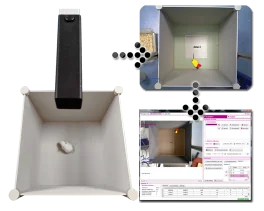
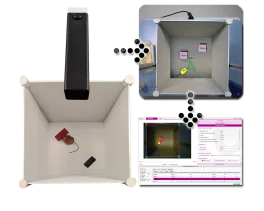
L'EVF5 intègre une caméra embarquée au niveau de la zone de stimulation et fonctionne avec un nouveau logiciel dédié révolutionnaire
[thumb] => 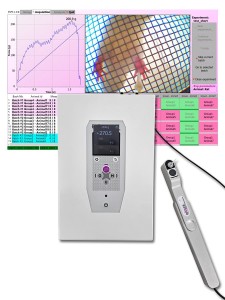 [img_empty] => /var/www/vhosts/de3310.ispfr.net/bioseb2024/modules/prestablog/views/img/product_link_white.jpg
[image_presente] => 1
[link] => https://bioseb.com/fr/douleur-allodyniehyperalgesie-mecanique/1860-electronic-von-frey-5-with-embedded-camera.html
)
)
)
1
[img_empty] => /var/www/vhosts/de3310.ispfr.net/bioseb2024/modules/prestablog/views/img/product_link_white.jpg
[image_presente] => 1
[link] => https://bioseb.com/fr/douleur-allodyniehyperalgesie-mecanique/1860-electronic-von-frey-5-with-embedded-camera.html
)
)
)
1 En lire plus  Activité, Système Moteur & Coordination
 Douleur - Allodynie/Hyperalgésie Thermique
 Douleur - Spontanée - Déficit de Posture
 Douleur - Allodynie/Hyperalgésie Mécanique
 Anxiété & Dépression
 Apprentissage/Mémoire - Attention - Addiction
 Physiologie & Recherche Respiratoire
 Métabolisme & Nutrition




 Dernière publication 22/07/2017
 Douleur
 Système Nerveux Central (SNC)
  Système sensoriel
 Système moteur
 Troubles de l'humeur
 Autres pathologies
 Système musculaire
 Articulations
 Métabolisme
 Thématiques transversales
 Congrès & Meetings 2026