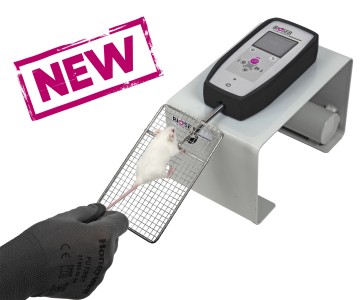
 Activity, Motor Control & Coordination
 Pain - Thermal Allodynia / Hyperalgesia
 Pain - Spontaneous Pain - Postural Deficit
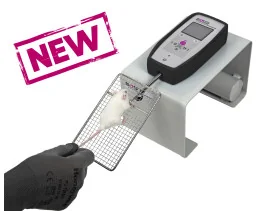
 Pain - Mechanical Allodynia / Hyperalgesia
 Anxiety & Depression Disorder
 Learning/Memory - Attention - Addiction
 Physiology & Respiratory Research
 Metabolism & Nutrition
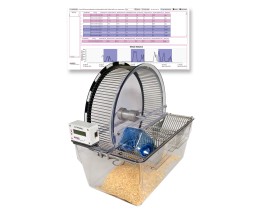
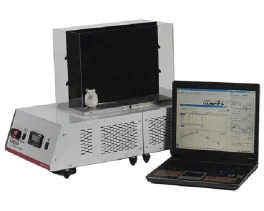
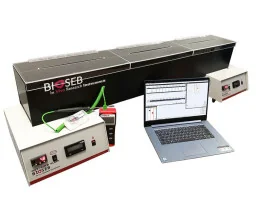
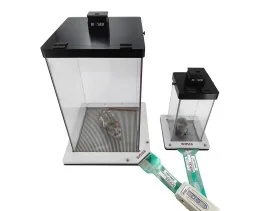
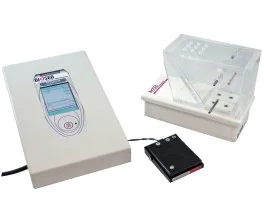
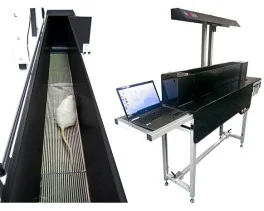
![Dynamic Weight Bearing 2.0 – Postural Module [Add-on]](https://bioseb.com/733-home_default/dynamic-weight-bearing-20-add-on-postural-module.jpg)



 Pain
Pain Central Nervous System (CNS)
 Neurodegeneration
 Sensory system
 Motor control
 Mood Disorders
 Other disorders
 Muscular system
 Joints
 Metabolism
 Cross-disciplinary subjects
 CONFERENCES & MEETINGS 2026
 Authors
Judit Alhama-Riba, Caroline G. M. de Theije, Valentina Salvi, Dominique Viveen, Sebastiaan W. T. Corstjens, Marijke. E. J. Achterberg, Yohan van de Looij, Freek E. Hoebeek, Cora H. A. Nijboer
Lab
Journal
The Journal of Physiology
Abstract
Social play behaviour, an important early measure of social function in juvenile mammals, was assessed as previously described (Achterberg et al.,2014). For a review on social play behaviour, see Achterberg & Vanderschuren (2023). In this study, social play was assessed between P33 and P35, following the protocols described in previous research (Achterberg et al.,2014; Brandt et al.,2024; Trezza et al.,2011; van Tilborg, Achterberg et al.,2018). Two days prior to testing, rats from the same home cage were habituated for 10 min to a custom-made Plexiglas play arena (60 × 40 × 40 cm [H × W × D]) filled with approximately 2 cm of bedding, under red light (18–20 lux) conditions. Separate arenas were used for males and females. On the test day, prior to testing, rats were socially isolated for 2.5 h in different cages containing bedding, paper tissues, a plastic shelter, a chewing block, and food and water ad libitum, under normal light conditions. This isolation period has been shown to increase the amount of social play behaviour to half maximum to see potential decreases and increases in play (Achterberg et al.,2014). After social isolation, unfamiliar rats were simultaneously placed in the play arena and allowed to play undisturbed for 15 min under red light conditions. Pairs were formed between unfamiliar animals from the same sex and experimental group (sham or RUPP), with an average body weight difference of less than 5% and an age difference of maximal 1 day. Behaviour was videotaped and the recordings were analysed. Behaviour was assessed per pair using The Observer XT software (XT16, Noldus, Wageningen, The Netherlands). Several behavioural elements of social play were scored (Panksepp et al.,1984; Trezza et al.,2010; Vanderschuren et al.,1997), namely (1) frequency of and latency to pouncing: one animal attempts to nose/rub the nape of the neck of the partner, which is an index of play solicitation; and (2) frequency of and latency to pinning: one animal laying with its dorsal surface on the floor with the other animal standing over it. Pinning and pouncing are considered the most characteristic parameters of social play behaviour in rats (Panksepp & Beatty,1980; Vanderschuren et al.,1997). Other measures were (3) time spent on social exploration: one animal sniffing or grooming any part of the partner's body, a measure of general social interest; and (4) time spent on non-social exploration: animals exploring the cage, not engaging in social behaviour. Results show the frequency of pinning and pouncing per pair.
Keywords/Topics
brain injury; fetal growth restriction; myelination; neurodevelopmental outcome; placental insufficiency; rat model
BIOSEB Instruments Used:
Grip strength test (BIO-GS4)
Source :
https://physoc.onlinelibrary.wiley.com/doi/abs/10.1113/JP290257