 Activity, Motor Control & Coordination
 Pain - Thermal Allodynia / Hyperalgesia
 Pain - Spontaneous Pain - Postural Deficit
 Pain - Mechanical Allodynia / Hyperalgesia
 Anxiety & Depression Disorder
 Learning/Memory - Attention - Addiction
 Physiology & Respiratory Research
 Metabolism & Nutrition
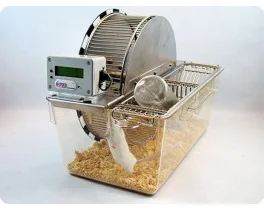
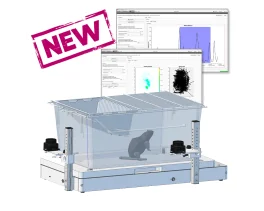

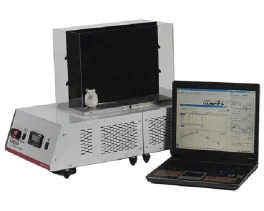
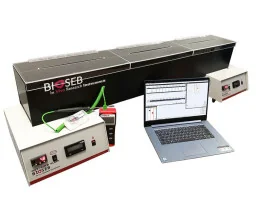
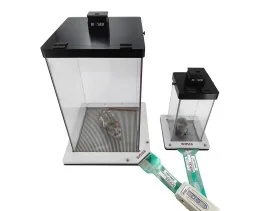
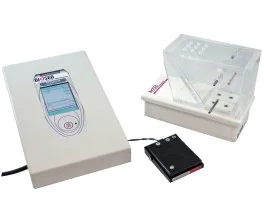
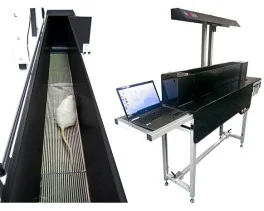
![Dynamic Weight Bearing 2.0 – Postural Module [Add-on]](https://bioseb.com/733-home_default/dynamic-weight-bearing-20-add-on-postural-module.jpg)


 Pain
Pain Central Nervous System (CNS)
 Neurodegeneration
 Sensory system
 Motor control
 Mood Disorders
 Other disorders
 Muscular system
 Joints
 Metabolism
 Cross-disciplinary subjects
 CONFERENCES & MEETINGS 2026
 Authors
Yu-Ting Cheng, Natalie MacKinnon-Booth, Yingfu Jiao, Jordan R. Robbins, Murillo Duarte-Silva, Perry E. Mitchell, Yuchu Liu, Omer Barkai, Keunjung Heo, Biyao Zhang, Bruna Lenfers Turnes, Meenakshi Rao, Clifford J. Woolf
Lab
Journal
bioRxiv
Abstract
Abstract
Inflammatory bowel disease produces debilitating visceral pain that remains a major clinical challenge. Notably, many patients experience persistent pain even after the inflammation resolves, indicating a sustained sensitization of central neural circuits that drives enduring pain. The brainstem parabrachial nucleus integrates interoceptive signals from the gastrointestinal tract to elicit both pain perception and affective responses. Using activity-dependent mapping and an RNAscope assay, we identified a neurotensin (NT)-expressing neuronal population in the lateral PBN (PBNL) that is selectively activated during dextran sulfate sodium-induced colitis. In vivo neural activity recordings demonstrate that PBNL NT neurons encode colon-derived nociceptive signals in an intensity-dependent manner. Silencing these neurons attenuates colonic reflexes evoked by luminal distension and normalizes aberrant gastrointestinal transit and nociceptive licking behavior in colitic mice. Pharmacological blockade of NT signaling alleviates colitis-associated hypersensitivity. These findings identify a central neural population that encodes visceral inflammation and regulates peripheral organ function, and pinpoints neurotensin as a promising therapeutic target to treat colitis-induced visceral pain.
Keywords/Topics
visceral pain; persistent pain; enduring pain; activity-dependent mapping; vivo neural activity recordings; aberrant gastrointestinal transit; nociceptive licking behavior; colitic mice; each mouse; central neurotensin neurons
BIOSEB Instruments Used:
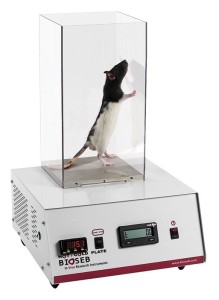
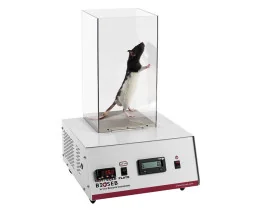
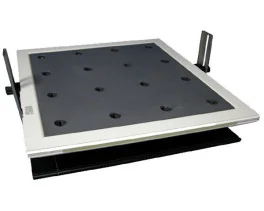
Cold Hot Plate Test (BIO-CHP)
Source :
https://www.biorxiv.org/content/10.64898/2026.02.27.708254.abstract