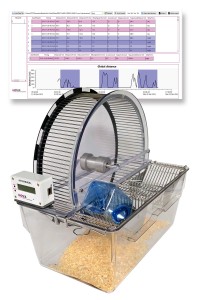
 Activity, Motor Control & Coordination
 Pain - Thermal Allodynia / Hyperalgesia
 Pain - Spontaneous Pain - Postural Deficit
 Pain - Mechanical Allodynia / Hyperalgesia
 Anxiety & Depression Disorder
 Learning/Memory - Attention - Addiction
 Physiology & Respiratory Research
 Metabolism & Nutrition
![Dynamic Weight Bearing 2.0 – Postural Module [Add-on]](https://bioseb.com/733-home_default/dynamic-weight-bearing-20-add-on-postural-module.jpg)



 Pain
Pain Central Nervous System (CNS)
 Neurodegeneration
 Sensory system
 Motor control
 Mood Disorders
 Other disorders
 Muscular system
 Joints
 Metabolism
 Cross-disciplinary subjects
 CONFERENCES & MEETINGS 2026
 Authors
Hiroki Kawai, Nanami Wada, Shinji Sakamoto, Kenji Miyazaki, Taro Kato, Yoshihiro Horiuchi, Hiroshi Kirii, Hoang Duy Nguyen, Kenji Hinotsu, Yoshio Ohya, Takahiro Asada, Akiyoshi Yokode, Yuko Okahisa, Haruko Miyazaki, Toshitaka Oohashi, Manabu Takaki
Lab
Journal
International Journal of Eating Disorders
Abstract
To assess the impact of DSOK on the gut bacteria, we analyzed the microbiota alterations in vehicle- or DSOK-treated ABA mice compared to the control group. The composition of gut microbiota at both the family and genus levels was presented using stacked bar plots, displaying the top 10 most abundant taxa based on relative abundance in control mice (Figure4A). Taxa with < 1% relative abundance were grouped as “Others,†and unidentified bacteria were labeled as “Unclassified.†Notably, the relative abundance of theLachnospiraceaefamily showed a stepwise increase across the groups (Figure4Bleft). While the difference between the control and vehicle groups was not statistically significant (p= 0.106, effect sizer= 0.44), a significant increase was observed in the DSOK group (vs. control:p= 0.0004,r= 0.82; vs. vehicle:p= 0.05,r= 0.54). Consistent with this result, a genus-level analysis ofLachnospiraceae_NK4A136_groupalso significantly increased in the DSOK group (control vs. DSOK:p= 0.0001,r= 0.82; vehicle vs. DSOK:p= 0.05,r= 0.54; control vs. vehicle:p= 0.12,r= 0.42), but no other genera belonging to theLachnospiraceaefamily showed significant differences. Conversely, theAnaerovoracaceaefamily showed a stepwise decrease across the groups (Figure4Bright). Although the reduction from control to vehicle was not statistically significant (p= 0.244,r= 0.4), the abundance was significantly lower in the DSOK group compared to other groups (vs. control:p= 0.0003,r= 0.73; vs. vehicle:p= 0.029,r= 0.67). These findings suggest that the bidirectional changes inLachnospiraceaeandAnaerovoracaceaereflect treatment-dependent modulation of specific microbial taxa in ABA mice. Furthermore, we conducted the differential abundance analysis based on log2fold change to broadly assess changes in ABA mice compared to controls (Figure4C, left: vehicle; right: DSOK; presented families shown FDR-correctedp< 0.05). Several families, includingLachnospiraceaeandAnaerovoracaceae, exhibited significant changes in both ABA groups, indicating a potential microbial response to ABA-induced FR and/or physical activity. Moreover, to assess alpha diversity (within-sample), we calculated the Shannon and Chao1 indices (Figure4D). Both indices were significantly higher in the vehicle and DSOK groups compared to controls (Shannon: vehicle,p= 0.012; DSOK,p< 0.0001; Chao1: vehicle,p= 0.001; DSOK,p= 0.018), suggesting increased microbial richness and evenness. However, no significant differences were observed between the vehicle and DSOK groups for either index. This contrasts with previous studies, which have reported either no change or only slight increases in alpha diversity in patients with AN (Di Lodovico et al.2021; Yuan et al.2022), and similarly in ABA rodent models (Breton et al.2021; Trinh et al.2021). This discrepancy suggests that the oral administration of vehicle or DSOK may have influenced microbial diversity independently of the ABA condition. Beta diversity (between-sample) was evaluated using principal coordinate analysis (PCoA) based on UniFrac distances (Figure4E). PERMANOVA with Bray–Curtis dissimilarity and weighted UniFrac distances (Figure4Eleft and center) revealed significant separation between the controls and both ABA groups (Bray–Curtis: vs. vehicle,p= 0.0001,F= 11.37,R2= 0.43; vs. DSOK,p= 0.0001,F= 15.98,R2= 0.48; weighted UniFrac: vs. vehicle,p= 0.001,F= 31.41,R2= 0.67; vs. DSOK,p= 0.001,F= 46.58,R2= 0.73), but no significant difference between the vehicle and DSOK groups (Bray–Curtis:p= 0.092,F= 1.34,R2= 0.087; weighted UniFrac:p= 0.095,F= 2.22,R2= 0.13). In contrast, unweighted UniFrac distances showed significant differences among all groups (control vs. vehicle:p= 0.0001,F= 5.57,R2= 0.27; control vs. DSOK,p= 0.0001,F= 7.45,R2= 0.30; vehicle vs. DSOK,p= 0.038,F= 1.42,R2= 0.092). These findings suggest that while the ABA paradigm could alter the overall community structure, DSOK treatment further altered the composition of low-abundance or rare taxa. Finally, we examined whether the two bacterial families that showed significant differences between the vehicle and DSOK groups,LachnospiraceaeandAnaerovoracaceae, were associated with plasma corticosterone levels.Lachnospiraceaeabundance positively correlated with corticosterone levels (Spearman'srs= 0.433,p= 0.027; Figure4F), whereasAnaerovoracaceaeshowed no significant correlation (rs= −0.2,p= 0.307; data not shown). These results suggest thatLachnospiraceaemay play a role in promoting corticosterone synthesis, potentially via the 11β-HSD1 activity under ABA conditions.
Keywords/Topics
11β-HSD1; activity-based anorexia; anorexia nervosa; corticosterone; eating disorders; microbiota
BIOSEB Instruments Used:
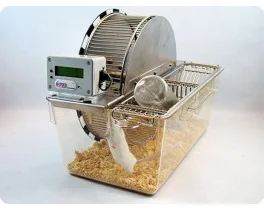
Premium spontaneous activity wheels (BIO-ACTIWH2)
Source :