 Activity, Motor Control & Coordination
 Pain - Thermal Allodynia / Hyperalgesia
 Pain - Spontaneous Pain - Postural Deficit
 Pain - Mechanical Allodynia / Hyperalgesia
 Anxiety & Depression Disorder
 Learning/Memory - Attention - Addiction
 Physiology & Respiratory Research
 Metabolism & Nutrition
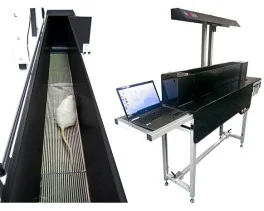
![Dynamic Weight Bearing 2.0 – Postural Module [Add-on]](https://bioseb.com/733-home_default/dynamic-weight-bearing-20-add-on-postural-module.jpg)


 Pain
Pain Central Nervous System (CNS)
 Neurodegeneration
 Sensory system
 Motor control
 Mood Disorders
 Other disorders
 Muscular system
 Joints
 Metabolism
 Cross-disciplinary subjects
 CONFERENCES & MEETINGS 2026
 Authors
Alessandro Contestabile, Giulia Casarotto, Benoit Girard, Beatrice Righetti, Clément Solié, Camilla Bellone, Stamatina Tzanoulinou
Lab
Journal
European Journal of Neuroscience
Abstract
While scrShank3mice spent significantly more time in the chamber associated with social stimuli during the post-test, shShank3mice failed to develop this preference (Figure3b–d). Importantly, no differences were observed between groups in the total distance moved, and no correlation was found between distance moved and the preference index (Figure3e). These findings confirm that the impairment in shShank3mice is specific to the acquisition of the social CPP and not attributable to differences in locomotion or their initial motivation to explore the chambers. Together with the SIT results, these data suggest that the deficits observed in shShank3mice reflect impaired social reward conditioning. To gain deeper insights into potential behavioral differences during the CPP assay, we performed an analysis of locomotor motifs to assess exploratory strategies during the post-TEST session in the absence of social stimuli. Using DeepLabCut (Mathis et al.2018) for tracking 10 body points and VAME (Luxem et al.2022) for behavioral classification (cf. Materials and Methods), we identified 41 discrete motifs exhibited by the mice (Figure3f). Control mice showed a significantly increased usage of specific motifs (3, 7, 11, 12, 24, 37, and 39) within the chamber associated with the social stimulus (Figure3g). These motifs appeared to correspond to exploratory behaviors, principally used to investigate the environment, such as walking, and walking while sniffing and rearing during the test phase. Interestingly, shShank3mice displayed a different pattern. While they preferentially employed certain “exploratory motifs†in the chamber paired with the social stimulus similarly to control mice (motifs 3, 12, and 39), shShank3mice also exhibited a significant preference for using some of these motifs in the unpaired (empty) chamber (motifs 24 and 37, Figure3gright). Moreover, shShank3mice exhibited chamber-specific preferences for additional motifs. More precisely, they showed increased use of walking-related motifs (16 and 23) in the chamber associated with no stimulus and displayed a unique preference for sniffing-related motifs (10, 14, 18, and 27) in the social-associated chamberâ€â€a pattern absent in control mice. These differences suggest that early postnatalShank3-NAcKDalters how mice allocate exploratory behaviors between environments with different saliency. While controls showed focused investigation in the social-paired chamber, shShank3 mice displayed more distributed exploration, indicating potential deficits in social associative conditioning.
Keywords/Topics
autism spectrum disorder; behavioral classification; nucleus accumbens; Shank3; social conditioned place preference; social instrumental task
BIOSEB Instruments Used:
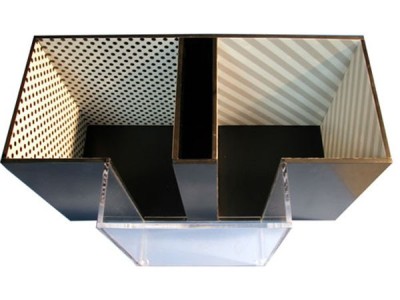
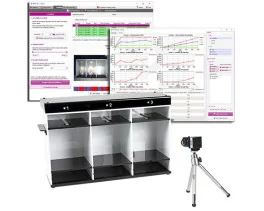
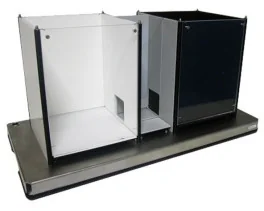
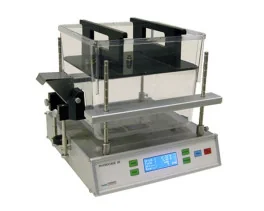
Spatial place preference Test (BX-SPP)
Source :