 Activity, Motor Control & Coordination
 Pain - Thermal Allodynia / Hyperalgesia
 Pain - Spontaneous Pain - Postural Deficit
 Pain - Mechanical Allodynia / Hyperalgesia
 Anxiety & Depression Disorder
 Learning/Memory - Attention - Addiction
 Physiology & Respiratory Research
 Metabolism & Nutrition



 Pain
 Central Nervous System (CNS)
 Neurodegeneration
 Sensory system
 Motor control
 Mood Disorders
 Other disorders
 Muscular system
 Joints
 Metabolism
 Cross-disciplinary subjects
 CONFERENCES & MEETINGS 2026
Authors
Park, Wonjung, Seo, Hunkyu, Kim, Jeongho, Hong, Yeon-Mi, Song, Hayoung, Joo, Byung Jun, Kim, Sumin, Kim, Enji, Yae, Che-Gyem, Kim, Jeonghyun, Jin, Jonghwa, Kim, Joohee, Lee, Yong-ho, Kim, Jayoung, Kim, Hong Kyun, Park, Jang-Ung
Lab
Journal
Nature Communications
Abstract
Tears have emerged as a promising alternative to blood for diagnosing diabetes. Despite increasing attempts to measure tear glucose using smart contact lenses, the controversy surrounding the correlation between tear glucose and blood glucose still limits the clinical usage of tears. Herein, we present an in-depth investigation of the correlation between tear glucose and blood glucose using a wireless and soft smart contact lens for continuous monitoring of tear glucose. This smart contact lens is capable of quantitatively monitoring the tear glucose levels in basal tears excluding the effect of reflex tears which might weaken the relationship with blood glucose. Furthermore, this smart contact lens can provide an unprecedented level of continuous tear glucose data acquisition at sub-minute intervals. These advantages allow the precise estimation of lag time, enabling the establishment of the concept called topersonalized lag time'. This demonstration considers individual differences and is successfully applied to both non-diabetic and diabetic humans, as well as in animal models, resulting in a high correlation. The correlation between tear glucose and blood glucose is still controversial. Here, the authors demonstrated the correlation between tear glucose and blood glucose in both animal models and human subjects using smart contact lenses.
Keywords/Topics
in-depth;correlation;between;glucose;blood;wireless;smart;contact;tears;emerged
BIOSEB Instruments Used:
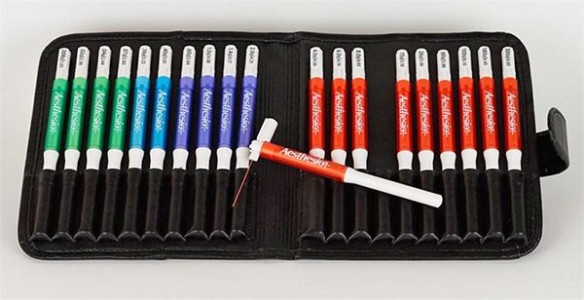
Von Frey Filaments (BIO-VF-M)
Source :