 Activity, Motor Control & Coordination
 Pain - Thermal Allodynia / Hyperalgesia
 Pain - Spontaneous Pain - Postural Deficit
 Pain - Mechanical Allodynia / Hyperalgesia
 Anxiety & Depression Disorder
 Learning/Memory - Attention - Addiction
 Physiology & Respiratory Research
 Metabolism & Nutrition
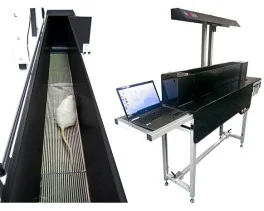
![Dynamic Weight Bearing 2.0 – Postural Module [Add-on]](https://bioseb.com/733-home_default/dynamic-weight-bearing-20-add-on-postural-module.jpg)


 Pain
Pain Central Nervous System (CNS)
 Neurodegeneration
 Sensory system
 Motor control
 Mood Disorders
 Other disorders
 Muscular system
 Joints
 Metabolism
 Cross-disciplinary subjects
 CONFERENCES & MEETINGS 2026
 Authors
Calvin C. Smith, Filipe Nascimento, M. Gorkem Azyurt, Marco Beato, Robert M. Brownstone
Lab
Journal
iScience
Abstract
Summary
The increased muscular force output required for some behaviors is achieved via amplification of motoneuron output via cholinergic C-bouton synapses. Work in neonatal mouse motoneurons suggested that modulation of currents mediated by post-synaptically clustered KV2.1 channels is crucial to C-bouton amplification. By focusing on more mature motoneurons, we show that conditional knockout of KV2.1 channels minimally affects either excitability or response to exogenously applied muscarine. Similarly, unlike in neonatal motoneurons or cortical pyramidal neurons, pharmacological blockade of KV2 currents has minimal effect on mature motoneuron firing invitro. Furthermore, invivo amplification of electromyography activity and high-force task performance was unchanged following KV2.1 knockout. Finally, we show that KV2.2 is also expressed by spinal motoneurons, colocalizing with KV2.1 opposite C-boutons. We suggest that the primary function of KV2 proteins in motoneurons is non-conducting and that KV2.2 can function in this role in the absence of KV2.1.
Keywords/Topics
channels;function;canonical;delayed;rectifiers;spinal;motoneurons;summary;increased;muscular
BIOSEB Instruments Used:
Grip strength test (BIO-GS4)
Source :