 Activity, Motor Control & Coordination
 Pain - Thermal Allodynia / Hyperalgesia
 Pain - Spontaneous Pain - Postural Deficit
 Pain - Mechanical Allodynia / Hyperalgesia
 Anxiety & Depression Disorder
 Learning/Memory - Attention - Addiction
 Physiology & Respiratory Research
 Metabolism & Nutrition
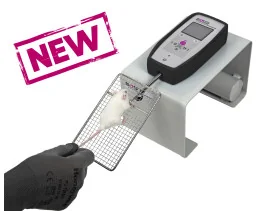

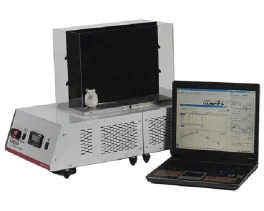

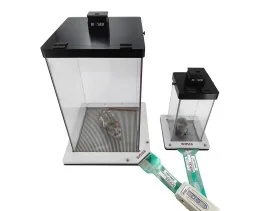

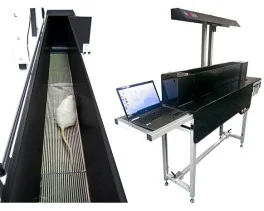
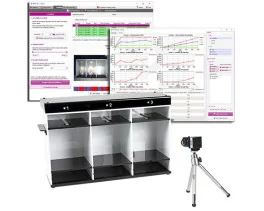
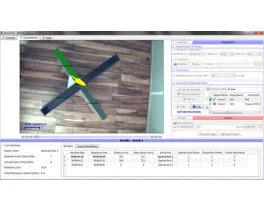
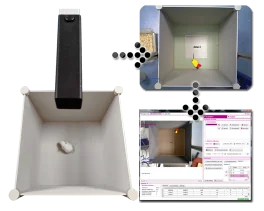
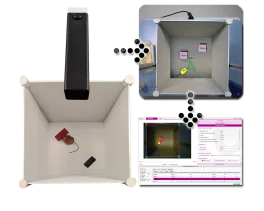
![Dynamic Weight Bearing 2.0 – Postural Module [Add-on]](https://bioseb.com/733-home_default/dynamic-weight-bearing-20-add-on-postural-module.jpg)








 Pain
Pain Central Nervous System (CNS)
 Neurodegeneration
 Sensory system
 Motor control
 Mood Disorders
 Other disorders
 Muscular system
 Joints
 Metabolism
 Cross-disciplinary subjects
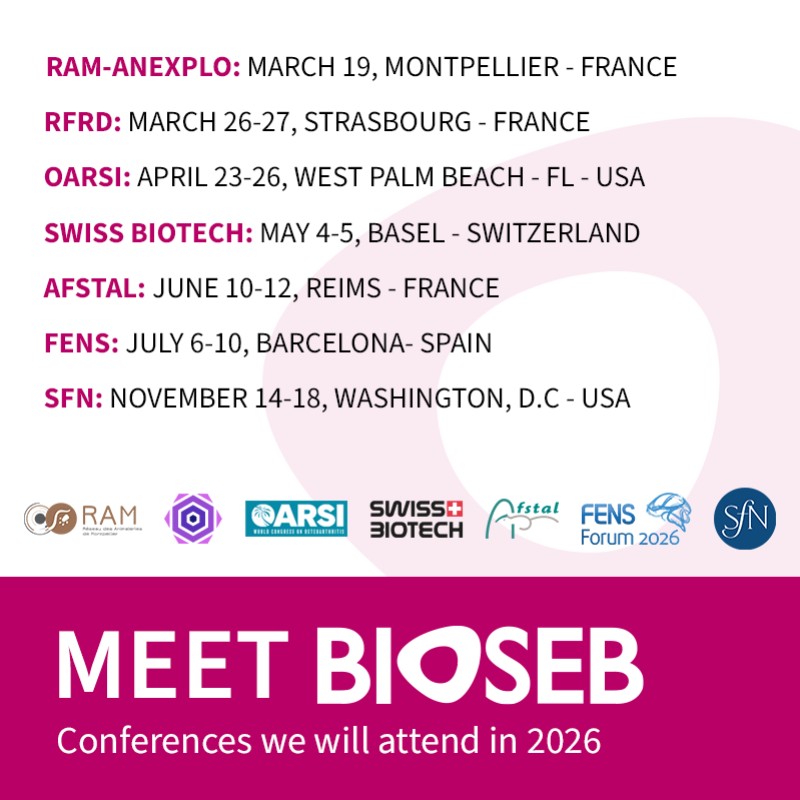 CONFERENCES & MEETINGS 2026
 Authors
Marion Nicol, Emilie Lahaye, Mouna El Mehdi, Jean-Luc do Rego, Jean-Claude do Rego, Serguei O. Fetissov
Lab
Journal
European Eating Disorders Review
Abstract
A trend of increasing body weight was seen in the control but not in the probiotics-treated group during the CMS protocol, a phenomenon which may be partly related by a tendency of lower food intake in the probiotic group but most likely to the differences in stress-associated sugar craving. In fact, also a tendency of increased total sugar consumption during stress was observed in both groups, the size of each sugar intake was significantly increased only in the control group which can be interpreted as stress-induced sugar craving. Importantly, the total sugar intake was significantly reduced by about 19% in the probiotics group during the CMS protocol. A decrease of total sucrose consumption in the LS+LG mix-treated mice was due mainly to a significant decrease in daily number of sucrose intakes. Such changes in the sucrose intake pattern goes well along with a significant decrease of meal number and indicates an increase of satiety between individual intakes of both sugar and food. However, if in the case of food intake, a compensatory increase of meal size was observed, size of sucrose intake did not increase, suggesting that the Lactobacilli mix had a more selective effect to reduce sugar than food consumption. Although we cannot presently confirm, these results point to a mechanistic link between the tested Lactobacilli strains and intake of carbohydrates. The GMBA mechanisms linking probiotic bacteria to the regulation of motivated behaviour, mood and emotion remain obscure, the key neurotransmitter systems seems to be affected (Bravo etal.,2011). Regarding the appetite control, several possibilities of interactions between gut microorganisms and the host pathways of hunger and satiety exist both in the gut and in the brain (Fetissov,2017). In this study, we analysed the postmortem concentrations of two monoamines, dopamine and serotonin as well as L-DOPA, the precursor of dopamine in several brain regions known for their role in the regulation of appetite, mood and emotion (Elias etal.,2022; Meguid etal.,2000). No significant differences were found between the study groups, suggesting that other molecular pathways underlying the observed behavioural effects should be more critically involved. Nevertheless, we cannot exclude that modified acute release of monoamines could contribute to these changes. A putative mechanism linking Lactobacilli supplementation with selective reduction of sugar intake may involve the brain oxytocin system. In fact, while oxytocin was shown to selectively inhibit carbohydrateintake, provision of Lactobacilli in mice increased their oxytocin levels in the hypothalamus (Buffington etal.,2016; Olszewski etal.,2010). Further studies should clarify such possibility.
Keywords/Topics
lactobacillus;salivarius;gasseri;supplementation;reduces;stress-induced;sugar;craving;trend;increasing
BIOSEB Instruments Used:
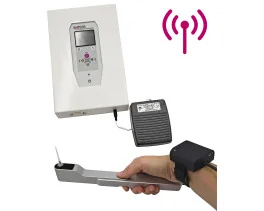
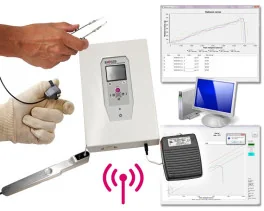
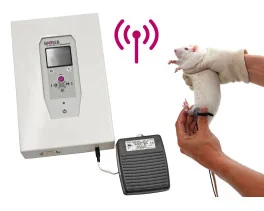
Forced Swimming Test: New FST DUAL SENSOR (BIO-FST-DSM),Tail Suspension Test - Wireless (BIO-TST5)
Source :