
 Activity, Motor Control & Coordination
 Pain - Thermal Allodynia / Hyperalgesia
 Pain - Spontaneous Pain - Postural Deficit
 Pain - Mechanical Allodynia / Hyperalgesia
 Anxiety & Depression Disorder
 Learning/Memory - Attention - Addiction
 Physiology & Respiratory Research
 Metabolism & Nutrition




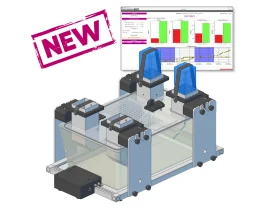
![Dynamic Weight Bearing 2.0 – Postural Module [Add-on]](https://bioseb.com/733-home_default/dynamic-weight-bearing-20-add-on-postural-module.jpg)








 Pain
Pain Central Nervous System (CNS)
 Neurodegeneration
 Sensory system
 Motor control
 Mood Disorders
 Other disorders
 Muscular system
 Joints
 Metabolism
 Cross-disciplinary subjects
 CONFERENCES & MEETINGS 2026
 Authors
Ruiyi Yuan, Emmanuel Roze, Mohamed Doulazmi, Caroline Dubacq, Sophie Longueville, Marine Delmas, Boutheyna Khelaifia, Julia Micaux, Yuki Nakamura, Marco Romanato, Clément Tarrano, Noël Zahr, Assunta Pelosi, Marie Vidailhet, Jean-Antoine Girault, Aurélie Méneret, Denis Hervé, Louise-Laure Mariani
Lab
2018
Journal
iScience
Abstract
Summary
Hyperkinetic movement disorders, like dystonia, chorea, myoclonus, dyskinesia, and tremor, can be extremely disabling, impairing quality of life. Our translational approach in humans and mice investigates the link between cyclic AMP (cAMP) signaling pathway alterations in striatal neurons and hyperkinetic movement disorders. ADCY5 encodes adenylyl cyclase 5, key enzyme for striatal cAMP synthesis. Pathogenic variants result in mixed hyperkinetic movement disorders (MxMD-ADCY5). We prove caffeine therapeutic effect in a prospective trial in two patients with MxMD-ADCY5 and generated an Adcy5R419W mouse model harboring the most frequent human pathogenic variant to understand underlying mechanisms. In patients, movements' severity is increased in absence of caffeine. In mice, caffeine improves motor symptoms through adenosine A2A receptor blockade. Mutation increases cAMP signaling in striatal projection neurons, an effect selectively corrected by A2A receptor antagonism in indirect pathway neurons. Fine modulation of neuronal cAMP levels represents a key target to treat hyperkinetic disorders, especially dystonia/dyskinesia.
Keywords/Topics
Pharmacology; Molecular biology; Neuroscience
BIOSEB Instruments Used:
Elevated Plus Maze : EPM3C - 3 clicks only ! (BIO-EPM3C),Grip strength test (BIO-GS4),Rotarod for rats and mice (BX-ROD)
Source :
https://www.cell.com/iscience/fulltext/S2589-0042(25)02718-X


