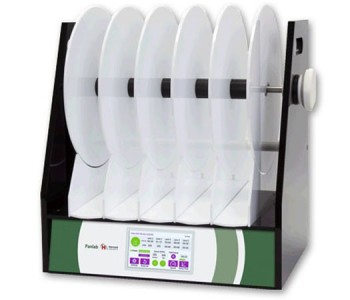
 Activity, Motor Control & Coordination
 Pain - Thermal Allodynia / Hyperalgesia
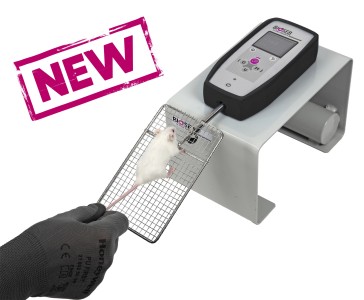
 Pain - Spontaneous Pain - Postural Deficit
 Pain - Mechanical Allodynia / Hyperalgesia
 Anxiety & Depression Disorder
 Learning/Memory - Attention - Addiction
 Physiology & Respiratory Research
 Metabolism & Nutrition
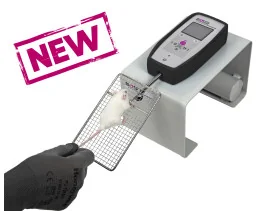
![Dynamic Weight Bearing 2.0 – Postural Module [Add-on]](https://bioseb.com/733-home_default/dynamic-weight-bearing-20-add-on-postural-module.jpg)


 Pain
Pain Central Nervous System (CNS)
 Neurodegeneration
 Sensory system
 Motor control
 Mood Disorders
 Other disorders
 Muscular system
 Joints
 Metabolism
 Cross-disciplinary subjects
 CONFERENCES & MEETINGS 2026
 Authors
Julia M. Harrison, Borbala Podor, Asal Yans, Victor F. Rafuse
Lab
Dalhousie University; Brain Repair Centre
Journal
Journal of Neuroscience
Abstract
Understanding factors contributing to neuromuscular junction (NMJ) stability postdevelopment will shed light on how this stability is lost during aging and in neuromuscular diseases. Previous work in Drosophila suggests that morphogens within the bone morphogenic protein (BMP) family are potential candidates because the BMP homolog, gbb, along with its receptor, wit, have key roles in NMJ structure, stability, and function. Whether BMPs have similar roles at vertebrate NMJs is currently unknown. To examine this question, we generated doxycycline-inducible, muscle-specific BMP4 null mice, referred to here as HSACreBMP4fl/fl mice. Motor behavior tasks were examined pre- and postinduction while electrophysiological and morphological characteristics were examined 4 months later in mice of both sexes. Soleus muscles from HSACreBMP4fl/fl mice had significantly reduced contractile force compared with wild-type (WT) littermates. Cross-sectional areas of type I, but not type IIa, muscle fibers were reduced. NMJs were also larger in HSACreBMP4fl/fl muscles compared with controls due to a significant increase in acetylcholine receptor fragment number and distribution. HSACreBMP4fl/fl NMJs displayed reduced amplitude and frequency of miniature endplate potentials (mEPPs), evoked EPP amplitude, and quantal content and had increased failure rates when stimulating at high frequencies. Behaviorally, HSACreBMP4fl/fl mice performed increasingly worse over time on the rotarod after doxycycline administration compared with their WT littermates. Finally, muscle spindle structure and proprioceptive function were significantly compromised in HSACreBMP4fl/fl mice. These results indicate that muscle-derived BMP4 regulates morphological and electrophysiological attributes of the NMJ in adult mice as well as the structure and function of muscle spindles.
Keywords/Topics
adult mice understanding factors; vertebrate nmjs; motor behavior tasks; mice; increased failure rates; doxycycline administration; adult mice; grip strength measurements; muscle-derived bmp4; morphology
BIOSEB Instruments Used:
Grip strength test (BIO-GS4),Rotarod for rats and mice (BX-ROD)
Source :