
 Activity, Motor Control & Coordination
 Pain - Thermal Allodynia / Hyperalgesia
 Pain - Spontaneous Pain - Postural Deficit
 Pain - Mechanical Allodynia / Hyperalgesia
 Anxiety & Depression Disorder
 Learning/Memory - Attention - Addiction
 Physiology & Respiratory Research
 Metabolism & Nutrition



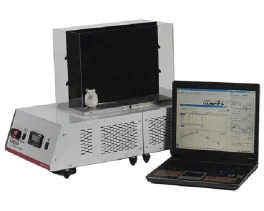

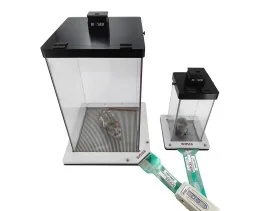
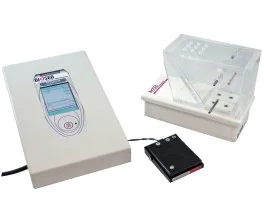
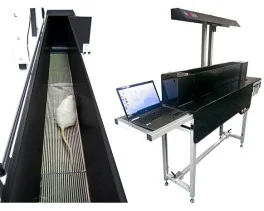
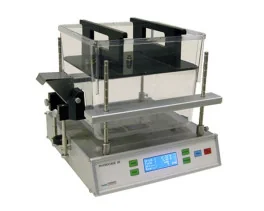
![Dynamic Weight Bearing 2.0 – Postural Module [Add-on]](https://bioseb.com/733-home_default/dynamic-weight-bearing-20-add-on-postural-module.jpg)










 Pain
Pain Central Nervous System (CNS)
 Neurodegeneration
 Sensory system
 Motor control
 Mood Disorders
 Other disorders
 Muscular system
 Joints
 Metabolism
 Cross-disciplinary subjects
 CONFERENCES & MEETINGS 2026
 Authors
Katsuumi, Goro, Shimizu, Ippei, Suda, Masayoshi, Yoshida, Yohko, Furihata, Takaaki, Joki, Yusuke, Hsiao, Chieh-Lun, Jiaqi, Liang, Fujiki, Shinya, Abe, Manabu, Sugimoto, Masataka, Soga, Tomoyoshi, Minamino, Tohru
Lab
Journal
Nature Aging
Abstract
It has been reported that accumulation of senescent cells in various tissues contributes to pathological aging and that elimination of senescent cells (senolysis) improves age-associated pathologies. Here, we demonstrate that inhibition of sodium-glucose co-transporter 2 (SGLT2) enhances clearance of senescent cells, thereby ameliorating age-associated phenotypic changes. In a mouse model of dietary obesity, short-term treatment with the SGLT2 inhibitor canagliflozin reduced the senescence load in visceral adipose tissue and improved adipose tissue inflammation and metabolic dysfunction, but normalization of plasma glucose by insulin treatment had no effect on senescent cells. Canagliflozin extended the lifespan of mice with premature aging even when treatment was started in middle age. Metabolomic analyses revealed that short-term treatment with canagliflozin upregulated 5-aminoimidazole-4-carboxamide-1-Beta-d-ribofuranoside, enhancing immune-mediated clearance of senescent cells by downregulating expression of programmed cell death-ligand 1. These findings suggest that inhibition of SGLT2 has an indirect senolytic effect by enhancing endogenous immunosurveillance of senescent cells. Katsuumi, Shimizu, Suda et al. report that SGLT2 inhibition reduces the senescence burden and alleviates aging traits in mice. The authors demonstrate an indirect mechanism of senescent cell removal, through enhancing immunosurveillance.
Keywords/Topics
inhibition;eliminates;senescent;cells;alleviates;pathological;aging;reported;accumulation;various
BIOSEB Instruments Used:
Grip strength test (BIO-GS4)
Source :