 Activity, Motor Control & Coordination
 Pain - Thermal Allodynia / Hyperalgesia
 Pain - Spontaneous Pain - Postural Deficit
 Pain - Mechanical Allodynia / Hyperalgesia
 Anxiety & Depression Disorder
 Learning/Memory - Attention - Addiction
 Physiology & Respiratory Research
 Metabolism & Nutrition
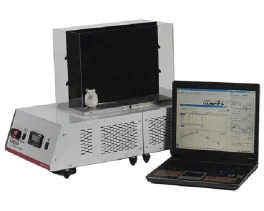
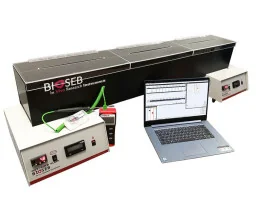
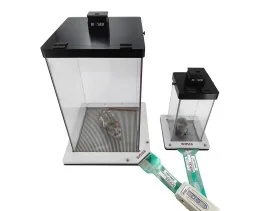
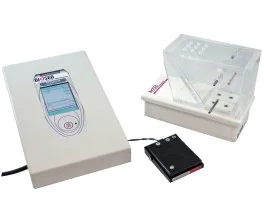
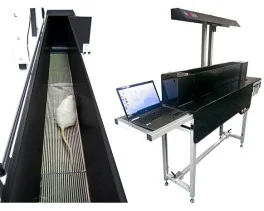
![Dynamic Weight Bearing 2.0 – Postural Module [Add-on]](https://bioseb.com/733-home_default/dynamic-weight-bearing-20-add-on-postural-module.jpg)
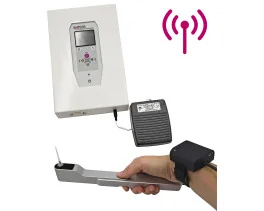
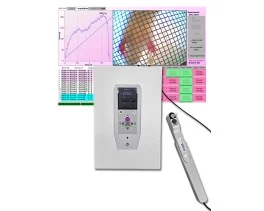
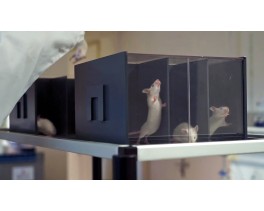



 Pain
Pain Central Nervous System (CNS)
 Neurodegeneration
 Sensory system
 Motor control
 Mood Disorders
 Other disorders
 Muscular system
 Joints
 Metabolism
 Cross-disciplinary subjects
 CONFERENCES & MEETINGS 2026
 Authors
Kaldewaij, Reinoud, Salamone, Paula C., Enmalm, Adam, stman, Lars, Pietrzak, Michal, Karlsson, Hanna, Löfberg, Andreas, Gauffin, Emelie, Samuelsson, Martin, Gustavson, Sarah, Capusan, Andrea J., Olausson, Hukan, Heilig, Markus, Boehme, Rebecca
Lab
Journal
Neuropsychopharmacology
Abstract
A coherent sense of self is crucial for social functioning and mental health. The N-methyl-D-aspartate antagonist ketamine induces short-term dissociative experiences and has therefore been used to model an altered state of self-perception. This randomized double-blind placebo-controlled cross-over study investigated the mechanisms for ketamine's effects on the bodily sense of self in the context of affective touch. Thirty healthy participants (15 females/15 males, age 19-39) received intravenous ketamine or placebo while performing self-touch and receiving touch by someone else during functional MRI - a previously established neural measure of tactile self-other-differentiation. Afterwards, tactile detection thresholds during self- and other-touch were assessed, as well as dissociative states, interoceptive awareness, and social touch attitudes. Compared to placebo, ketamine administration elicited dissociation and reduced neural activity associated with self-other-differentiation in the right temporoparietal cortex, which was most pronounced during other-touch. This reduction correlated with ketamine-induced reductions in interoceptive awareness. The temporoparietal cortex showed higher connectivity to somatosensory cortex and insula during other- compared to self-touch. This difference was augmented by ketamine, and correlated with dissociation strength for somatosensory cortex. These results demonstrate that disrupting the self-experience through ketamine administration affects neural activity associated with self-other-differentiation in a region involved in touch perception and social cognition, especially with regard to social touch by someone else. This process may be driven by ketamine-induced effects on top-down signaling, rendering the processing of predictable self-generated and unpredictable other-generated touch more similar. These findings provide further evidence for the intricate relationship of the bodily self with the tactile sense.
Keywords/Topics
ketamine;reduces;neural;distinction;between;other-produced;affective;touch;randomized;double-blind
BIOSEB Instruments Used:
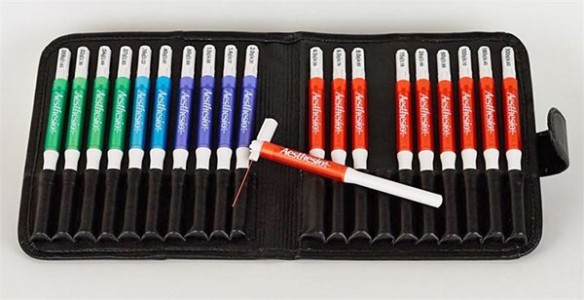
Von Frey Filaments (BIO-VF-M)
Source :