
 Activity, Motor Control & Coordination
 Pain - Thermal Allodynia / Hyperalgesia
 Pain - Spontaneous Pain - Postural Deficit
 Pain - Mechanical Allodynia / Hyperalgesia
 Anxiety & Depression Disorder
 Learning/Memory - Attention - Addiction
 Physiology & Respiratory Research
 Metabolism & Nutrition
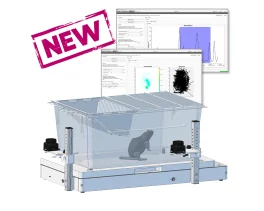

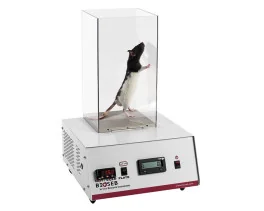
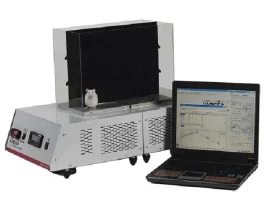
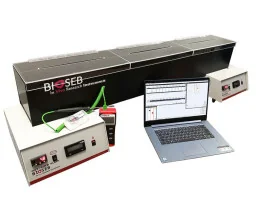



 Pain
 Central Nervous System (CNS)
 Neurodegeneration
 Sensory system
 Motor control
 Mood Disorders
 Other disorders
 Muscular system
 Joints
 Metabolism
 Cross-disciplinary subjects
 CONFERENCES & MEETINGS 2026
Authors
Jade Dunot, Sebastien Moreno, Carine Gandin, Paula A. Pousinha, Mascia Amici, Julien Dupuis, Margarita Anisimova, Alex Winschel, Magalie Uriot, Samuel J. Petshow, Maria Mensch, Ingrid Bethus, Camilla Giudici, Heike Hampel, Benedikt Wefers, Wolfgang Wurst, Ronald Naumann, Michael C. Ashby, Bodo Laube, Karen Zito, Jack R. Mellor, Laurent Groc, Michael Willem, H©l¨ne Marie
Lab
Journal
Neuron
Abstract
Summary
NMDA receptors (NMDARs) are ionotropic receptors crucial for brain information processing. Yet, evidence also supports an ion-flux-independent signaling mode mediating synaptic long-term depression (LTD) and spine shrinkage. Here, we identify AETA (A·), an amyloid-Beta precursor protein (APP) cleavage product, as an NMDAR modulator with the unique dual regulatory capacity to impact both signaling modes. AETA inhibits ionotropic NMDAR activity by competing with the co-agonist and induces an intracellular conformational modification of GluN1 subunits. This favors non-ionotropic NMDAR signaling leading to enhanced LTD and favors spine shrinkage. Endogenously, AETA production is increased by invivo chemogenetically induced neuronal activity. Genetic deletion of AETA production alters NMDAR transmission and prevents LTD, phenotypes rescued by acute exogenous AETA application. This genetic deletion also impairs contextual fear memory. Our findings demonstrate AETA-dependent NMDAR activation (ADNA), characterizing AETA as a unique type of endogenous NMDAR modulator that exerts bidirectional control over NMDAR signaling and associated information processing.
Keywords/Topics
NMDA receptors non - ionotropic signaling amyloid; precursor protein APP eta ;secretase; synapse; hippocampus ;spine ;shrinkage
Source :