
 Activity, Motor Control & Coordination
 Pain - Thermal Allodynia / Hyperalgesia
 Pain - Spontaneous Pain - Postural Deficit
 Pain - Mechanical Allodynia / Hyperalgesia
 Anxiety & Depression Disorder
 Learning/Memory - Attention - Addiction
 Physiology & Respiratory Research
 Metabolism & Nutrition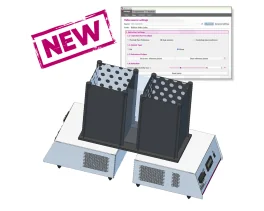
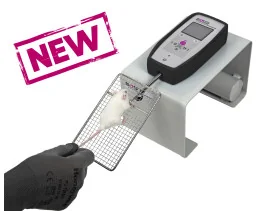
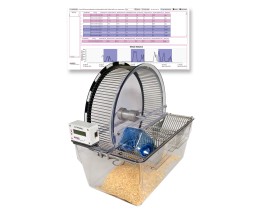
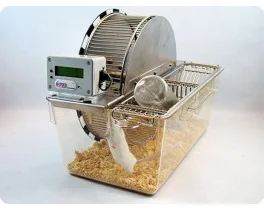
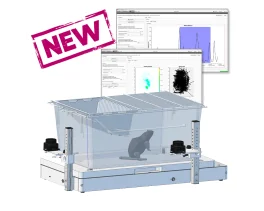

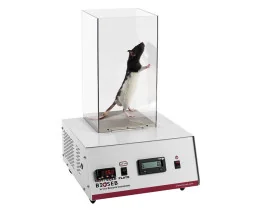
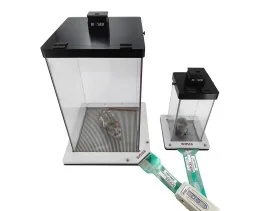
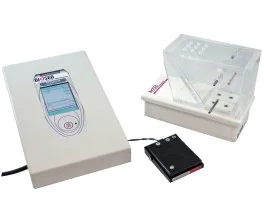
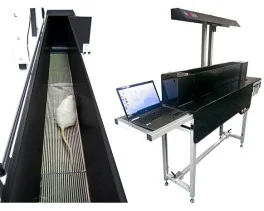
![Dynamic Weight Bearing 2.0 – Postural Module [Add-on]](https://bioseb.com/733-home_default/dynamic-weight-bearing-20-add-on-postural-module.jpg)
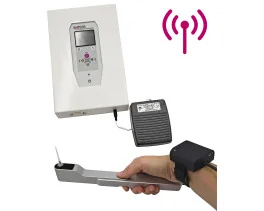





 Pain
Pain Central Nervous System (CNS)
 Neurodegeneration
 Sensory system
 Motor control
 Mood Disorders
 Other disorders
 Muscular system
 Joints
 Metabolism
 Cross-disciplinary subjects
 CONFERENCES & MEETINGS 2026
 Authors
Douglas W. Brown, Ping Wee, Prakash Bhandari, Amirali Bukhari, Liliya Grin, Hector Vega, Maryam Hejazi, Deborah Sosnowski, Jailal Ablack, Eileen K. Clancy, Desmond Pink, Jitendra Kumar, Maria Paola Solis Ares, Suellen Lamb, Rodrigo Quevedo, Bijal Rawal, Fahed Elian, Natasha Rana, Luis Morales, Natasha Govindasamy, Brendan Todd, Angela Delmage, Somnath Gupta, Nichole McMullen, Duncan MacKenzie, Perrin H. Beatty, Henry Garcia, Manoj Parmar, Jennifer Gyoba, Chandra McAllister, Matthew Scholz, Roy Duncan, Arun Raturi, John D. Lewis
Lab
Journal
Cell
Abstract
Summary
Genetic medicines show promise for treating various diseases, yet clinical success has been limited by tolerability, scalability, and immunogenicity issues of current delivery platforms. To overcome these, we developed a proteolipid vehicle (PLV) by combining features from viral and non-viral approaches. PLVs incorporate fusion-associated small transmembrane (FAST) proteins isolated from fusogenic orthoreoviruses into a well-tolerated lipid formulation, using scalable microfluidic mixing. Screening a FAST protein library, we identified a chimeric FAST protein with enhanced membrane fusion activity that improved gene expression from an optimized lipid formulation. Systemically administered FAST-PLVs showed broad biodistribution and effective mRNA and DNA delivery in mouse and non-human primate models. FAST-PLVs show low immunogenicity and maintain activity upon repeat dosing. Systemic administration of follistatin DNA gene therapy with FAST-PLVs raised circulating follistatin levels and significantly increased muscle mass and grip strength. These results demonstrate the promising potential of FAST-PLVs for redosable gene therapies and genetic medicines.
Keywords/Topics
encapsulation FAST ;proteins FAST - PLV ;gene therapy ;nucleic acid delivery ;proteolipid vehicle PLV ;p14endo15; follistatin; extra - hepatic biodistribution
BIOSEB Instruments Used:
Grip strength test (BIO-GS4)
Source :
